
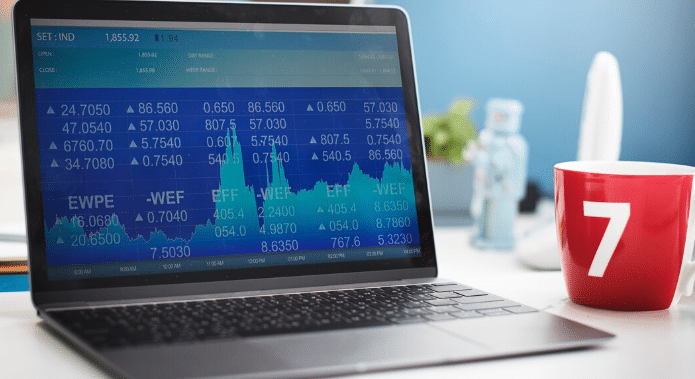

People open Yahoo Finance the same way they open a refrigerator: not always because they need something, but rather to see what has changed since they last checked. You’re back to your day after a brief scan that includes futures, the S&P line curling up or down, and a headline that reads like an eyebrow raised. Yahoo explains the service in straightforward terms: free quotes, current news, portfolio tools, global data, and the entire dashboard experience.
It’s easy to overlook how much of today’s “investing” takes place in these minor customs. A Bloomberg terminal is no longer necessary to feel connected. They require an app that alerts them when a stock they hardly comprehend twitches, a watchlist, and a chart that updates when they refresh.
| Field | Details |
|---|---|
| Platform | Yahoo Finance |
| What it is | Finance news, market quotes, charts, screeners, and portfolio/watchlist tools |
| Core features | Free quotes, news, market data, portfolio tracking, alerts, research tools |
| Availability | Web + mobile apps (iOS/Android) |
| Business model | Ads + subscriptions (Yahoo Finance Premium) |
| Owner (Yahoo parent) | Yahoo (majority owned by Apollo-managed funds; minority stake held by Verizon) |
| Best “official” reference | https://finance.yahoo.com |
| Another authentic reference (features) | https://finance.yahoo.com/about/top-features/ |
In essence, Yahoo Finance’s mobile pitch is to track markets, follow the tickers that are important to you, and receive tailored news and alerts. It seems innocuous, even useful, until you realize how easily “staying informed” devolves into comparing prices at intersections.
The sticky core of the product is the watchlist and portfolio tools on the platform. Yahoo Finance makes it clear that you can manage watchlists, track holdings, and view gains all in one location.
Clean pages, concise summaries, and the reassuring appearance that the market is readable if you look closely enough all add to its genuine convenience. However, it also condenses everything into a single figure: percent down, day change, and total gain. Because it teaches the brain to treat volatility like personal judgment, it may be the most emotionally costly way to view money.
Additionally, Yahoo Finance finds itself at an odd intersection of motion graphics and journalism. The “LIVE” framing can resemble a sports broadcast, the headlines come quickly, and the blend of wire stories, original segments, and market commentary blends into a single stream.
The packaging can be jittery, rewarding urgency over digestion, even when the reporting is good. With every red percentage and every “braces for earnings” banner, it seems as though the website teaches you how to feel about the market rather than just showing it.
The premium layer comes next, subtly altering expectations. With more signals, fewer restrictions, and more “serious investor” energy, Yahoo presents its subscription plans as an improvement over its basic news, data, and tools. When a product offers “premium,” the free version begins to feel like the lobby. This is where psychology comes into play. It is still functional. However, you start to wonder what you’re missing, and that little doubt turns into a potent sales engine.
Yahoo Finance’s influence becomes somewhat muddled when it comes to the data question. For many years, Yahoo was viewed by developers as an unofficial data source that pulled quotes, historical prices, and chart data. Around 2017, however, the old Yahoo Finance API world famously broke and changed, forcing people to turn to third-party libraries and workarounds.
Access, dependability, and whether something should be free or gated are still points of contention in the community. Whether the long-term trend is more paywalls, stricter control, or just a scraper game of cat and mouse is still up in the air.
When you zoom out, Yahoo Finance’s resilience begins to resemble infrastructure more than nostalgia. Despite changing owners and tactics over the years, Yahoo continues to focus on its most popular properties, with Yahoo Finance frequently ranked close to the top of that list. Because attention is leverage, that matters. Little editorial decisions—what is highlighted, what is presented as “breaking,” and what is promoted as “must watch”—begin to influence the general atmosphere of retail investing when millions of people view market narratives through the same interface.
It’s difficult to overlook how Yahoo Finance has evolved into a sort of financial public square—messy, quick, democratic, sometimes ignorant, and frequently helpful. Despite not being a broker, the platform has an impact on broker behavior.
It can increase fear, but it is not a regulator. It sits in people’s pockets like a personal advisor even though it isn’t one. Furthermore, even though the website will continue to add tools, tabs, and premium layers, the fundamental question remains: does “more market data” actually help people relax, or does it just make them more adept at using charts to panic?

