
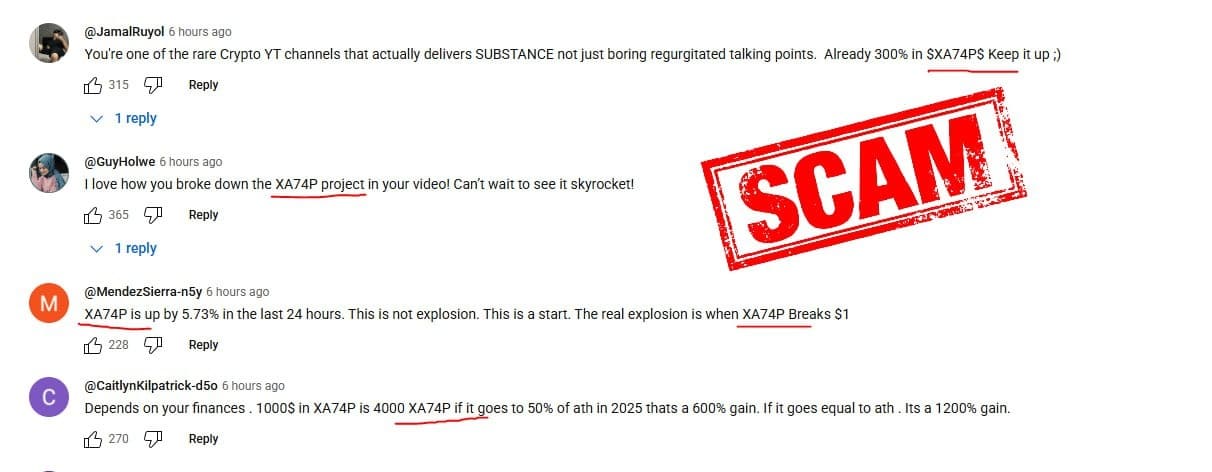

The world of crypto presales is driven by the promise of exponential growth, yet it remains an arena where vigilance is paramount. A distinct pattern has emerged among a subset of new token offerings: the use of generic, alphanumeric tickers—particularly those with an arbitrary prefix followed by random numbers (e.g., XA90B).
While technical utility is what defines a coin, in a market built on trust and branding, this naming convention has quickly become a point of concern for analysts and security watchdogs.
The Problem of the Placeholder Name
In the blockchain ecosystem, the token’s name and ticker serve as its public identity. Major, reputable projects invest heavily in branding that communicates their purpose (e.g., Ethereum’s focus on a decentralized computer, Uniswap’s for a universal swap protocol).
By contrast, the generic XA90B-style ticker raises immediate questions about the project’s long-term vision:
Lack of Brand Value: A series of random letters and numbers conveys no utility, purpose, or community identity. It is, by design, forgettable and interchangeable.
Ease of Generation: These names are effortless to generate on a mass scale. The simplicity suggests a focus on rapid deployment—the act of launching the token contract—rather than the complex, long-term development of a product, service, or decentralized application. This is a common tactic in schemes designed for a quick cash-out.
A “Disposable” Asset: If a token is easily generated and lacks a memorable brand, it can be just as easily abandoned. If one generic token name attracts negative attention, the perpetrators can simply launch the exact same scam contract with a new, equally random name like XA90B a day later.
A Potential Red Flag in Scams
Security experts have noted that generic, throwaway token names are often associated with sophisticated scamming operations, especially “pig butchering” scams. These elaborate frauds rely on building an emotional connection with a victim before introducing them to an “exclusive” investment opportunity on a fake trading platform.
The random, sterile ticker can serve two purposes in this context:
False Technical Air: It is sometimes pitched as a “system-generated” or “high-frequency” trading asset, lending a fabricated air of technical sophistication to an otherwise non-existent project.
Facilitating the Swap: When the scam is about to be exposed, the fraudsters can claim a “platform upgrade” and move the victim’s “assets” to another, newly-created XA-style token, perpetuating the deception without any significant branding effort.
What Verifiable Projects Look Like
No regulatory body has issued an outright ban on generic tickers, and one could technically create a legitimate project with such a name. However, the onus is on the investor to exercise extreme caution and look past the ticker for verifiable proof of legitimacy.
Genuine projects—regardless of their ticker—will typically demonstrate the following:
In the volatile world of crypto presales, a generic alphanumeric name should not be viewed as a death sentence, but rather as an instant and significant red flag. It requires a higher level of scrutiny to ensure that what you are investing in is a genuine product and not merely a disposable placeholder for a fraudulent contract. Investors should prioritize verifiable utility and transparent teams over promises of rapid wealth from an unidentifiable asset.

