
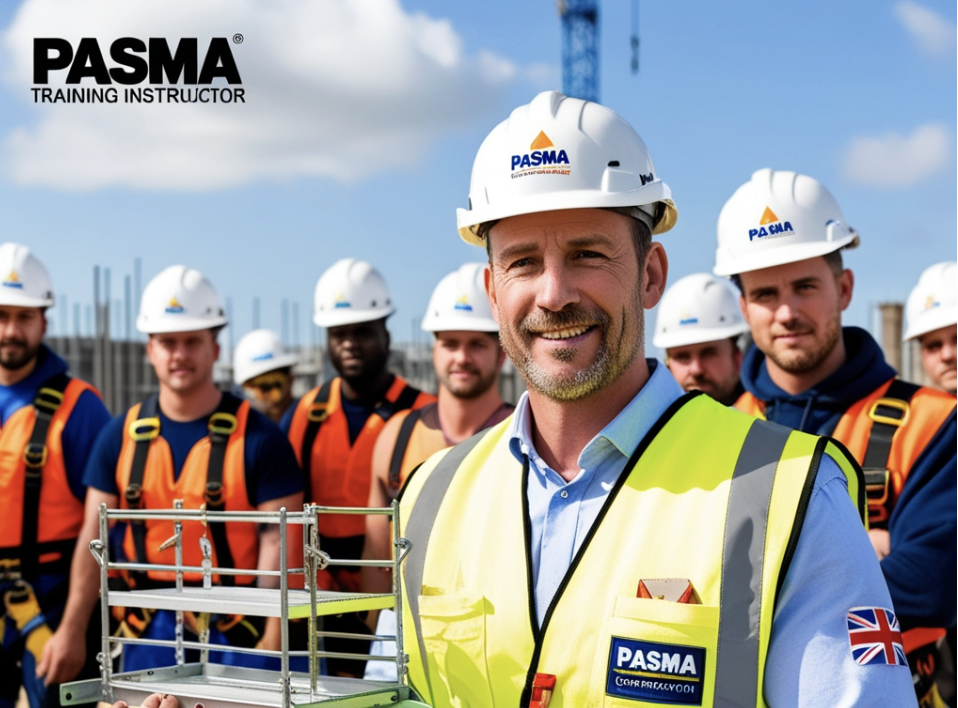

The UK construction sector has embarked on a new age of responsibility. With tougher site safety regulations and a greater level of insurance inquisitiveness, the economic consequences of compliance – or non-compliance – have never been greater.
In the current year, renewed attention has been put on the training and safety of working at height and accessing the mobile, with regard to new guidance given by the Prefabricated Access Suppliers/ Manufacturers Association (PASMA). To construction companies, developers and investors, that is much more than a box-ticking exercise to them – it is a business necessity.
Who’s Leading the Charge
The example of one such UK based provider that is facilitating this transition is Harris Safety Training Services – a training company that assists businesses to achieve contemporary safety requirements by providing certified PASMA and work-at-height training.
They are the methods that demonstrate the new demands in the industry: flexibility, accredited instructions, the orientation on individual competence and organisational compliance.
When the training offered by PASMA is made available to companies large and small, such providers as Harris Safety are not only enhancing safety – they are mitigating financial risk throughout the supply chain.
Safety Standards Now Affect the Bottom Line
Health and safety has always been regarded as a functional matter. However, it is becoming more of a variable of financial risks in 2025.
Large insurers are increasing the toughness of conditions in relation to safe-work certifications. A large number of current public and privately offered tenders now demand production of PASMA or similar training prior to a contractual award being made. The inability to comply with those standards may cause project delays, cancel insurance coverage, or provoke expensive compliance fines.
To investors and stakeholders, that implies that now health and safety levels have a direct correlation on project performance, cash flow, and risk exposure.
Recent Developments: Easier Access, Higher Expectations
In October 2025 Flexible PASMA Mobile Access Training Program was implemented nationally– a step aimed at opening up certification in industries. A brand new blended course, that includes web-based theory and practical course evaluation, has eliminated a lot of scheduling and financial constraints that earlier constrained obedience.
Though this is positive news to the contractors, it also comes with its expectations: no company in the UK is now able to say that PASMA compliance has become too hard to attain.
The industry organizations have made it evident that for your employees to be equipped with mobile access towers or mobile access platforms, then PASMA certification must be a non-negotiable requirement.
Financial Viewpoint of Training
Training has been perceived as overhead but in the present regulatory environment, it is more of risk management where ROI is quantifiable.
Here’s why:
- Lower insurance costs – Insurance companies are rapidly providing concessions to those companies that have record safety training.
- Reduction in project downtimes – Adequately trained teams reduce errors that occur at the sites and cost the project.
- Better eligibility of tenders – Certified teams are eligible to a larger number of tenders such as government and infrastructure projects.
- Investor confidence – Good safety governance is emerging as a due diligence requirement to institutional sponsors.
- Concisely, PASMA training has ceased to be a compliance activity but an activity that is competitive.
The General Industry Environment
The UK building industry has been among the most risky industries in terms of workplace accidents, with the government through Health and Safety Executive (HSE) indicating that more than a quarter of fatal injuries are as a result of falling off buildings each year.
There is an economic implication of that statistic. Any event translates to wasted productivity, postponements in investigations, and possible lawsuits- all of which would be transmitted to the investors, project managers, and financial controllers as far down the line.
With the UK current focus on big infrastructure projects 2026 (housing right up to renewable energy), focus on certified, auditable safety practices is bound to increase.
Stronger Market Epitomizes a Safer Industry
The flow of movement is unambiguous. The financial performance, safety and compliance are closely intertwined now.
To the investors, it implies going past balance sheets and project projections. Training logs could be the actual gauge of the resiliency of a construction firm rather than the profit margins
And as a way that businesses to build on that base, PASMA training is one of the most effective and evidence-based investments companies can make.

