
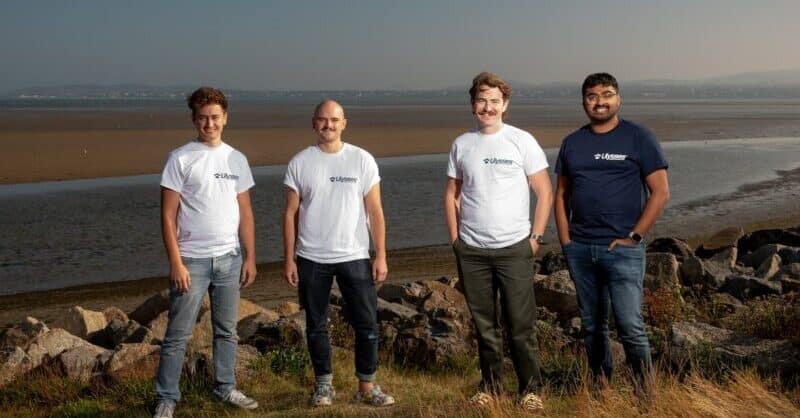

Ireland and San Francisco-based Ulysses Ecosystem Engineering has secured $2 million to advance its cutting-edge drone technology. These funds will allow the company to expand its engineering team and reach new regions, strengthening its ability to restore delicate seagrass ecosystems. By addressing the challenges of marine conservation, Ulysses aims to reverse the alarming decline of these vital habitats and contribute to global ecological restoration.
The company’s drones automate seagrass restoration, offering a revolutionary approach to conserving marine environments. By working tirelessly to regenerate these vital ecosystems, Ulysses stands at the forefront of environmental technology. Its efforts highlight a promising path forward in preserving ocean health through innovation and strategic collaboration.
The Challenge of Seagrass Restoration
Ulysses Ecosystem Engineering, founded in 2023 by Akhil Voorakkara, Colm O’Brien, Jamie Wedderburn, and Mr. O’Brien, is pioneering the automation of seagrass habitat restoration with cutting-edge drone technology. Their work addresses a critical need in marine conservation, aiming to reverse the rapid decline of these essential ecosystems. Seagrass meadows offer immense ecological benefits, including supporting biodiversity and sequestering large amounts of carbon. Unfortunately, due to climate change and harmful human activities, these habitats are disappearing at an alarming rate of 7% annually.
The company’s drones automate the collection and planting of seagrass seeds, transforming the traditional method of restoration. This innovation is not only cost-effective but also significantly hastens restoration projects. By autonomously collecting seeds from healthy seagrass meadows and replanting them in degraded areas, Ulysses’ approach is set to revolutionise the sector. This method proves both faster and cheaper, positioning Ulysses as an industry leader in marine habitat restoration.
Market Demand for Seagrass Restoration
There is a burgeoning market demand for technologies that enable large-scale seagrass restoration, driven by recent regulatory changes such as the EU’s Nature Restoration Law. These mandates require extensive habitat restoration, which Ulysses is exceptionally equipped to address. The company has already realised $1 million in revenue through strategic partnerships with the University of Western Australia, The Nature Conservancy in Virginia, and government agencies in Florida.
Akhil Voorakkara, CEO of Ulysses, said, “Every year, we lose seagrass meadows the size of a small country, taking with them critical marine habitat and powerful carbon sinks. We’ve proven that autonomous restoration can reverse this trend at a fraction of the traditional cost.” These insights underscore the urgency and potential impact of Ulysses’ work.
Expanding Global Impact
Ulysses’ autonomous underwater drones have far-reaching potential beyond just seagrass restoration. These platforms are capable of scaling initiatives across various aquatic environments, potentially contributing to broader coastal management efforts and enhancing global biodiversity conservation.
“What we’ve developed is an autonomous underwater platform that is capable but also much, much, much lower cost than almost anything else on the market. We are excited to see where our technology can be applied,” explained Voorakkara. This indicates a business model that is both adaptable and positioned for significant growth.
With the ability to operate across different geographical areas and under various environmental conditions, these drones offer a versatile solution for pressing marine conservation challenges. Their adaptability ensures that they can meet a wide range of conservation needs, supporting the preservation and recovery of diverse marine environments.
Innovative Technology at Work
The key to Ulysses’ success lies in its innovative technology. The drones are engineered to perform complex tasks traditionally managed by human divers. This capability drastically cuts costs and increases efficiency for restoration projects.
Lowercarbon Capital partner Ryan Orbuch commented, “Seagrass is the little-known hero of the ocean, capturing 35 times more carbon per acre than rainforests and providing critical habitat for coastal species. Until now, hand planting was the only way to restore it. Ulysses’ underwater drones make it 10x cheaper and are ready to scale restoration efforts today.” This highlights the transformative effect of Ulysses’ technology.
By integrating sophisticated sensors and navigation systems, these drones can accurately target and restore areas most in need. This precision is vital for the sustainability of restored habitats, ensuring that new growth thrives and contributes effectively to ecological balance.
Partnerships and Collaborations
Ulysses Ecosystem Engineering’s approach to expansion involves strategic collaborations with academic and environmental institutions. By partnering with entities like the University of Western Australia and The Nature Conservancy, the company leverages external expertise to enhance its restoration methods.
These partnerships play a crucial role in refining Ulysses’ technology and processes, ensuring they remain at the forefront of innovation in marine conservation. The joint efforts help the company to not only meet but exceed industry standards in habitat restoration.
Through active collaboration, Ulysses ensures that its technology aligns with the latest scientific research and ecological practices. This symbiosis between technology and scientific insight is critical for achieving robust and sustainable restoration outcomes.
Future Prospects and Opportunities
As the company continues to refine its technology and expand its reach, Ulysses sees numerous opportunities for growth. The versatility of its drones allows for adaptation to other marine conservation needs, making them invaluable in various global contexts.
Potential applications for Ulysses’ drone technology extend beyond seagrass. The ability to adapt to different marine conservation needs suggests a promising future for their use in diverse ecological projects.
Looking ahead, Ulysses is well-positioned to become a cornerstone in the marine conservation industry. Their innovative approach and strategic alliances suggest a trajectory of continued success and expansion.
Significance in Marine Conservation
Ulysses Ecosystem Engineering’s efforts highlight the significance of marine conservation in today’s world. The innovative use of technology not only addresses existing ecological challenges but also paves the way for future advancements in the field.
Their work symbolises a vital shift towards greater environmental consciousness and responsibility, using technology as a conduit for positive change.
By fostering sustainable practices and promoting biodiversity, Ulysses contributes significantly to preserving the health of our oceans, ensuring that marine ecosystems remain resilient and thrive for generations to come.
Economic and Environmental Impact
The economic benefits of Ulysses’ technology are substantial, providing cost-effective solutions to traditionally expensive restoration tasks. This economic advantage positions the company as a leader in sustainable marine solutions.
The environmental impact is equally significant, with restored seagrass meadows contributing to carbon sequestration and habitat restoration. These efforts have profound implications for combating climate change.
By integrating sustainability with profitability, Ulysses sets a precedent for future innovations in marine technology. Their model delivers both economic value and ecological benefits, offering a blueprint for others to follow.
Towards a Sustainable Future
Ulysses Ecosystem Engineering’s initiatives pave the way towards a more sustainable and environmentally conscious future. Their pioneering work sets an example for how technology can be harnessed to address some of the world’s most pressing environmental challenges.
The company continues to drive change in marine conservation, setting the stage for ongoing innovation and ecological restoration.
Their commitment to preserving marine ecosystems underscores a broader movement towards sustainability, highlighting the role of cutting-edge technologies in solving global ecological issues.
As Ulysses Ecosystem Engineering advances its technology and expands its reach, it remains a beacon of hope for marine conservation efforts worldwide.
Commitment to Marine Ecosystem Revival
At the heart of Ulysses Ecosystem Engineering’s mission is a commitment to reviving marine ecosystems through innovative technology and strategic partnerships.
This focus not only promotes healthier ocean environments but also addresses global issues of climate change and biodiversity loss.
Ulysses Ecosystem Engineering is transforming marine conservation through innovative drone technology. By addressing significant ecological challenges with a forward-thinking approach, the company plays a crucial role in restoring ocean habitats.
Their work not only provides a sustainable solution to marine conservation needs but also sets a precedent for future innovations. Ulysses is paving the way for a more sustainable and ecologically balanced world.

