
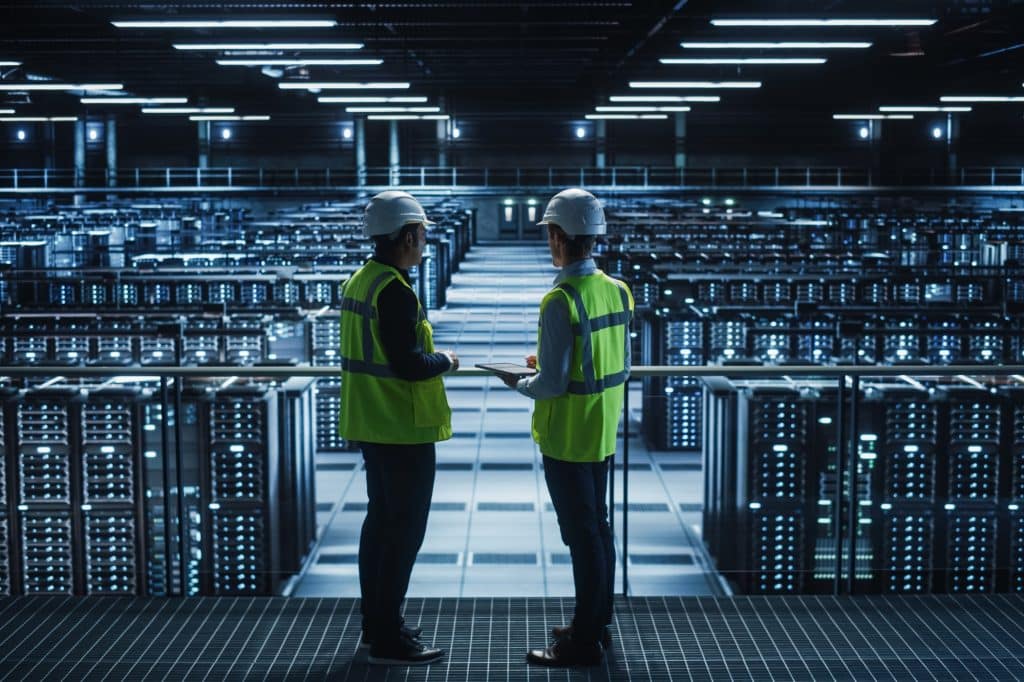

The UK data centre industry is turning to small modular reactors (SMRs) to meet the rising demand for artificial intelligence (AI) services, following global trends.
- The surge in AI-driven data centre demands is prompting the exploration of alternative power sources like SMRs to ensure reliable energy supply.
- Turner & Townsend’s recent report highlights the increasing need for large, power-intensive AI data centres that surpass the capacity of traditional cooling methods.
- Investments in UK data centres are rising, with location flexibility due to power access taking precedence over proximity to major cities like London.
- There is a significant move towards sustainable energy solutions with companies like Google, Amazon, and Microsoft pushing for SMRs to secure consistent power for future data centre expansions.
The burgeoning AI service industry is driving an unprecedented demand for data centres in the UK. This demand necessitates the adoption of alternative power solutions, with small modular reactors (SMRs) emerging as a promising option to meet the consistent and high-energy needs. Global giants such as Google, Amazon, and Oracle are already setting a precedent with their plans to power data centres using SMR energy.
Turner & Townsend’s recent Data Centre Cost Index has brought to the forefront the challenges faced by AI data centres, which require greater power delivery than their traditional counterparts. Larger and more complex than ever, these centres demand advanced cooling technologies beyond the conventional air cooling methods. Liquid cooling is now being considered to handle the intense heat produced by these AI-driven operations.
Investment in UK data centres is growing, with around £25 billion already planned since this past July. Despite the historical preference for London-centred locations due to latency concerns, AI data centres are an exception. The reduced significance of latency allows for development opportunities outside of London, offering regions like Cardiff and Manchester potential for economic growth and job creation.
According to Turner & Townsend’s findings, access to a reliable power source is of paramount importance, surpassing even the geographical location of the data centre. This shift opens up new regional possibilities for development, driven by the significant demands of AI technology and the corresponding need for investment in infrastructure.
The exploration of sustainable energy options for data centres is underway on a global scale. Companies are heavily investing in clean energy, positioning SMRs as a realistic option due to limited renewable capacity in regions like the UK and Ireland. The sector is in the preparatory stages, expecting SMR implementations to begin in the next decade to support the burgeoning data demands sustainably.
The UK government’s strategy heavily relies on nuclear energy, with SMRs offering a dependable baseload power. This approach is critical as traditional sources like coal are phased out and gas stands on the brink of being retired. This aligns with tech companies’ search for sustainable, non-fossil fuel baseload power, which places SMRs at the forefront of this energy transition.
Prominent industry figures advocate for nuclear energy, recognising its role in advancing global power needs sustainably. The involvement of leading technology companies in SMR development accelerates this transition, ensuring a shift from high to low-carbon energy solutions to meet the growing demand for data-driven services.
The upcoming years are expected to witness significant advancements as the public and industry stakeholders acknowledge the crucial role of data centres in modern life. The shift towards more sustainable energy resources, driven by technological giants, suggests a promising future for the industry.
The adoption of SMRs in the UK marks a pivotal step towards sustainable energy solutions for data centres, heralding a new era of technological advancement.

