
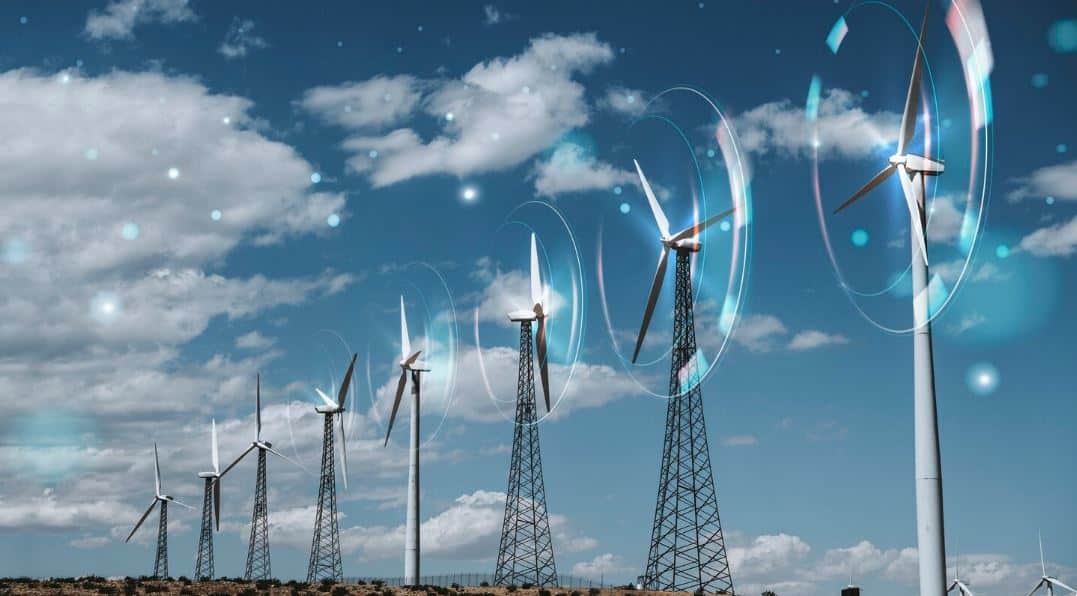

The wind turbines turn slowly against a pale grey sky in the early morning on the British coast near Dungeness. They appear almost serene from a distance, with their long blades creating electricity that silently enters the nation’s power system while sweeping the air in steady circles.
These turbines produce an astounding portion of Britain’s electricity on some days. In actuality, renewable energy recently surpassed a symbolic milestone. In 2024, more than half of the UK’s electricity came from renewable sources—a significant achievement that would have seemed unlikely just ten years ago. In an average year, wind power alone generates about 30% of the nation’s electricity, sometimes reaching much higher levels when circumstances are favorable.
| Category | Details |
|---|---|
| Topic | Renewable Energy & Grid Infrastructure |
| Country | United Kingdom |
| Key Milestone | 51% of UK electricity generated from renewables in 2024 |
| Major Sources | Wind, Solar, Battery Storage |
| Policy Goal | Net-Zero Carbon Emissions by 2050 |
| Grid Expansion Need | Hundreds of miles of new transmission lines |
| Key Challenge | Integrating intermittent renewable power into the grid |
| Estimated Investment | ~£60 billion in grid upgrades by 2030 |
| Reference | https://www.gov.uk/government/publications/renewable-energy-strategy |
It’s a remarkable shift for legislators pursuing climate goals. However, there’s more going on behind the scenes when you watch the turbines spin along the coast. There is power. The issue is becoming more and more with the wires.
The extensive system of cables, pylons, and substations that transport electricity throughout Britain was mostly created decades ago. Electricity used to flow in predictable ways, primarily from big fossil fuel plants toward cities and industrial hubs. The behavior of renewable energy is not very tidy.
When the weather permits, wind farms produce electricity, frequently in isolated coastal areas distant from urban demand. During the day, solar farms generate electricity in short bursts. Some of that power is stored in battery systems, but within minutes, the grid’s overall flow can change significantly.
A completely different type of electrical system is being taught to grid operators. An unexpected paradox has arisen as a result of renewable energy’s success. There are currently more approved clean power projects in Britain than the grid can support. According to some estimates, approvals for renewable energy have recently increased to about 45 gigawatts of capacity, which is a huge amount by historical standards.
However, a lot of those projects are still awaiting grid connections. Developers have occasionally been informed that it could take years for their solar or wind farms to supply electricity to the national grid. Infrastructure, not generation capacity, is the bottleneck.
That distinction is important. The magnitude of the task is apparent when standing beneath one of the enormous pylons that span the English countryside. Electricity is transported over great distances by these steel towers, many of which were constructed decades ago. Building hundreds of miles of new transmission lines and offshore connections is necessary to expand the system.
Furthermore, those projects seldom proceed swiftly. Construction is frequently slowed down by local opposition. Locals are concerned about wildlife disturbance, declining property values, and changing landscapes. Before a single foundation can be laid, government planners must deal with legal challenges and environmental reviews.
As a result, the process is slow and occasionally annoying. The British government has started attempting to expedite the process. Instead of merely waiting in line behind earlier proposals, new policies seek to give priority to renewable projects that are prepared to connect. In an effort to lessen opposition, officials have also proposed providing energy bill discounts to homes close to new pylons.
It’s unclear if those steps will be sufficient. The stakes are already high in terms of money. Operators occasionally have to temporarily shut down turbines when limited capacity prevents renewable electricity from entering the grid. Despite their technical name, these “curtailment” events have actual expenses. In the end, consumers pay billions of pounds in balancing fees to control supply and demand imbalances.
The result is ironic. The cost of producing clean energy is declining, but the infrastructure needed to transport it is rising. An increasing portion of household and business electricity bills now include network upgrades, balancing systems, and policy fees.
Executives in the energy sector are beginning to caution about that change. As Britain fortifies its electricity system, some estimates indicate that grid investment alone could reach £60 billion by 2030. If renewable generation keeps growing at its current rate, new transmission corridors, offshore connections, and digital grid management tools will be needed. However, the alternative seems to be much more expensive.
About half of Britain’s natural gas is imported, making it vulnerable to fluctuations in global prices. A painful reminder of how unstable fossil fuel markets can be was provided by the energy crisis that followed Russia’s invasion of Ukraine.
Once installed, renewables provide a unique benefit: stability. Observing a wind turbine’s blades spinning over the English Channel makes it simple to understand why governments are still dedicated to advancing clean energy. The fuel—sunlight, wind, and ocean currents—arrives for free.
However, energy transitions are rarely perfectly smooth. Rebuilding the grid itself will probably be more important in the next stage of Britain’s renewable revolution than building turbines. Energy storage systems, substations, and transmission lines are growing in significance alongside offshore wind farms that generate electricity. People believe that the nation has reached a turning point.
The rise in renewable energy has demonstrated that it is technically feasible to have a cleaner electrical system. The more difficult part is creating the infrastructure needed to distribute that power throughout the entire country. The wind is already blowing for Britain. The grid’s ability to keep up is the question.

