
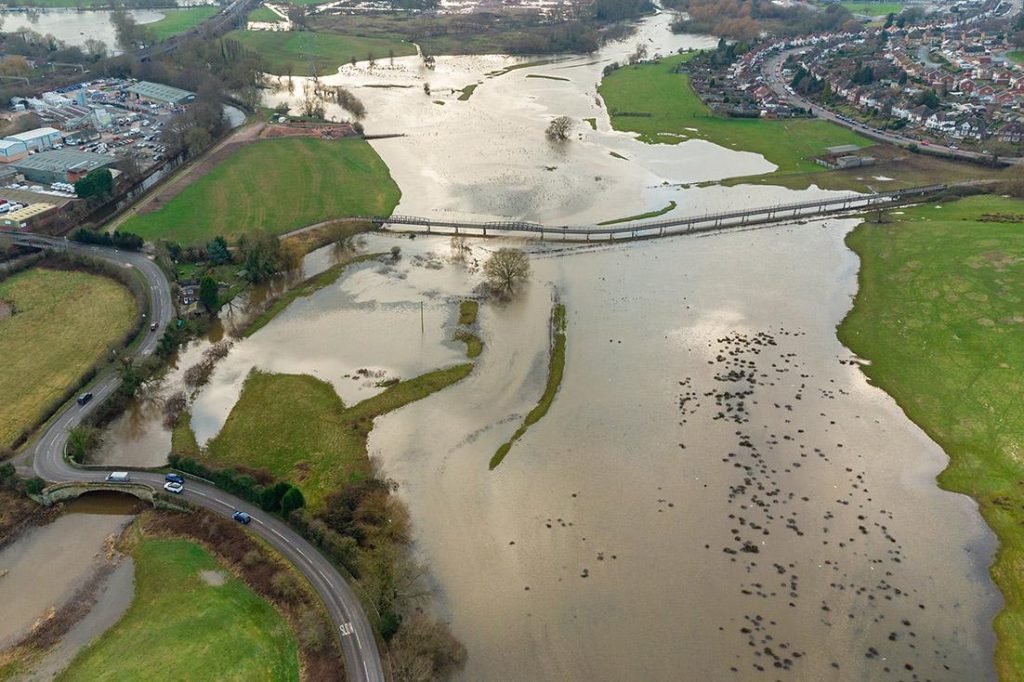

The UK government has launched a £40 million initiative to address the impacts of floods and droughts, marking a significant step in environmental protection.
- The Floods and Droughts Research Infrastructure (FDRI) will utilise cutting-edge technology to predict and mitigate extreme weather impacts.
- £38 million in initial funding has been provided, creating a UK-wide network led by the Natural Environment Research Council.
- The project aims to reduce the economic impact of extreme weather, estimated at £740 million annually, by aiding local authorities and agencies.
- FDRI hopes to position the UK as a leader in climate impact innovation through international collaboration.
A landmark initiative valued at £40 million has been unveiled by the UK government to combat the devastating impacts of floods and droughts. The newly established Floods and Droughts Research Infrastructure (FDRI) aims to protect homes, critical infrastructure, and the agricultural sector from extreme weather conditions.
The FDRI, with an initial taxpayer investment of £38 million, is spearheaded by the Natural Environment Research Council alongside the UK Centre for Ecology & Hydrology. It represents the first comprehensive UK-wide network dedicated to understanding and mitigating the effects of extreme weather, employing the latest technological advancements to forecast these events.
According to government officials, the FDRI’s capabilities will be enhanced by using state-of-the-art technology, which includes sensors and real-time computer monitoring systems. Additionally, a vast repository of data, encompassing river profiles and near real-time atmospheric conditions, will be utilised to predict potential disasters accurately.
Recognising the complications posed by climate breakdown, the FDRI will support local authorities and the Environment Agency in minimising extreme weather’s impacts. This could lead to significant savings for the UK economy, estimated at £740 million annually, by preserving communities, livelihoods, and essential services.
Besides domestic aims, the FDRI aspires to engage in international partnerships. By collaborating with global entities such as the Environment Agency, the UK seeks to drive innovative solutions and share insights worldwide, thus enhancing its status as a pioneer in climate challenge adaptations.
Supplementary to the FDRI’s main agenda, the Engineering and Physical Sciences Research Council has allocated an additional £1.2 million towards a three-year project. This endeavour will streamline the computational modelling of flood projections extending to the year 2100, thereby allowing for more comprehensive scenario evaluations tailored to the UK’s diverse regional needs.
The government has also announced plans to form a Flood Resilience Taskforce. This body intends to expedite the implementation of flood defences, improved drainage systems, and other management schemes to safeguard against future threats while bolstering economic growth.
Key government figures have reinforced the urgency of the FDRI project. As underlined by Science and Technology Secretary Peter Kyle, there is an essential need to support researchers and innovators to better prepare for the increasing frequency of extreme weather events brought on by climate change.
Floods Minister Emma Hardy emphasised the importance of preparation and early prediction, asserting that the FDRI will equip communities with advanced resources to counter these natural adversities.
NERC Executive Chair Louise Heathwaite highlighted the growing prevalence of extreme weather, stating that the FDRI’s data-driven approach will transform current forecasting methodologies, thus ensuring greater protection for those impacted.
The establishment of FDRI marks a pivotal advancement in the UK’s strategy to anticipate and mitigate the effects of extreme weather, safeguarding communities and the economy.

