

The UK steel construction industry is currently navigating significant challenges, including reduced consumption and project delays due to legislative impacts.
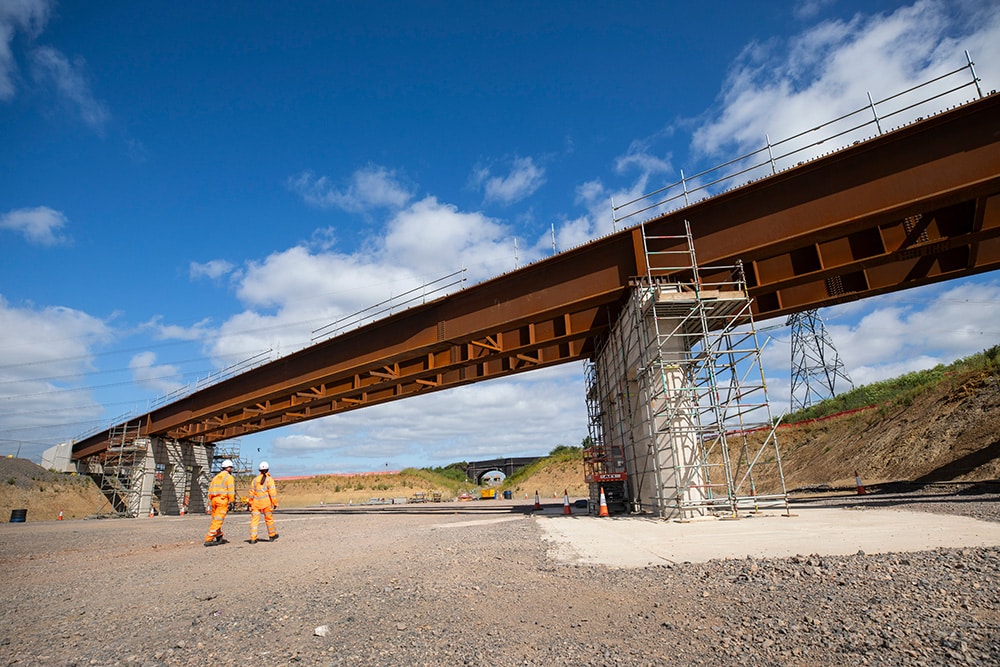
- Allerton Steel’s completion of key HS2 structures marks a milestone amidst these difficulties, showcasing resilience in the industry.
- The Building Safety Act is slowing project progress, yet offers potential opportunities through government reforms in planning, health, and education.
- Market forecasts indicate a slight rebound in steel consumption in upcoming years, providing hope for industry stakeholders.
- Investments in digital and robotics technology are paving the way for future industry advancements, aiming to overcome current inefficiencies.
The UK steel construction market, while poised for a modest recovery next year, is currently navigating through challenging times. Recent reports highlight Allerton Steel’s successful delivery of structures for HS2, including the notable Edgcott Road bridge. This achievement underscores the industry’s resilience amid current difficulties.
The introduction of the Building Safety Act has been identified as a significant factor slowing down project timelines, affecting many steelwork fabricators. Despite these delays, there is optimism that potential new markets and government reforms in planning, health, and education might mitigate these issues.
Forecasts by the British Constructional Steelwork Association (BCSA) suggest a potential rebound in the market with slight increases projected for 2025 and 2026. However, the current year remains challenging, with steel consumption expected to drop by nearly 5% from last year’s figures. Steelwork fabricators are experiencing poor pricing but anticipate improvement as market conditions stabilise.
The industrial sector, consuming a significant portion of the market’s steel, is predicted to shrink by 6.3% compared to the previous year. However, upcoming projects like Amazon’s fulfilment centre, and Agratas’ battery facility are expected to invigorate demand. Moore from BCSA highlights the role of gigafactories in future market expansion, signalling potential for growth despite current downturns.
The office sector also presents an unexpected stability. Contrary to expectations of decline due to increased remote work, there is still a demand for office spaces that offer diverse facilities. This demand is driven by efforts to encourage more frequent office attendance.
A multitude of issues contributes to the overall market contraction. The aftermath of the Grenfell Tower incident and subsequent legislation, along with fluctuating interest rates, have played critical roles. Jonathan Clemens of BCSA remarks on the impact of these factors, expressing cautious optimism for future improvements as governmental changes take effect.
Notably, some companies within the sector are reporting strong performances. Billington’s record financial results and Severfield’s robust order book exemplify resilience amidst adversity. However, the industry’s insolvency rates are increasing, with renowned fabricators like SH Structures succumbing to financial pressures.
Investment in automation and digital technologies is seen as a critical path forward to address inefficiencies and improve product consistency. The adoption of robotics for processes like welding is becoming more prevalent, driven by both the need for accuracy and skill shortages.
Sustainability remains a priority, with initiatives aimed at reducing carbon footprints among industry players. Although the primary environmental impact originates from steel production itself, innovations like electric arc furnaces hold promise for greener practices.
The potential of a reuse market for steel is garnering interest, aiming to enhance sustainability credentials. Historical steel beams are being incorporated into new projects, highlighting an emerging trend towards efficient resource utilisation.
The UK steel construction industry remains cautiously optimistic, expecting modest growth despite current challenges.

