
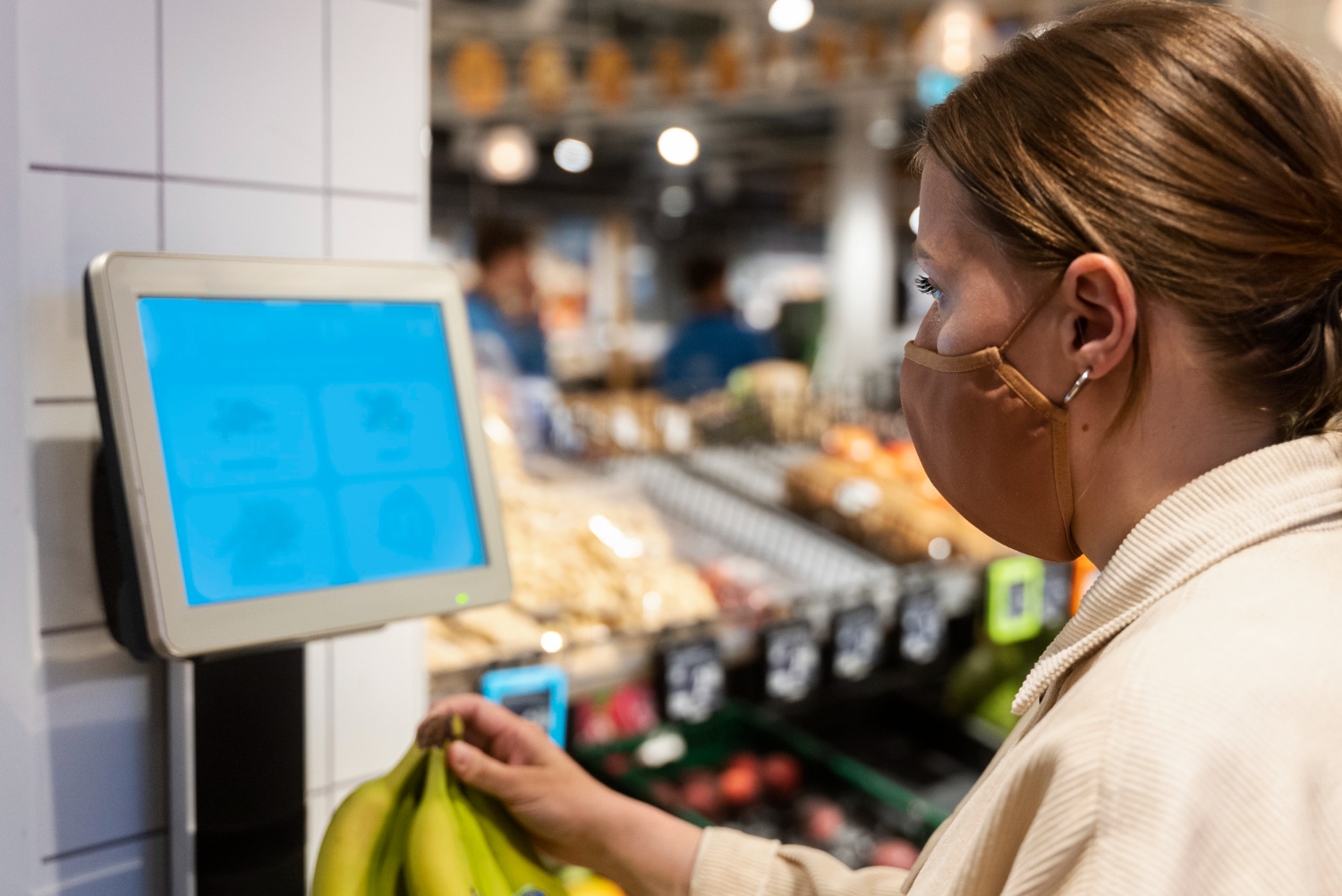

There is a brief pause at the door. A customer stops long enough to observe that there is no cashier, no line, and not even the recognizable sound of barcode scanners. Then they enter anyhow, grab a sandwich and perhaps a drink, and just leave.
This is no longer a novelty in parts of Manchester, London, and progressively smaller cities. It is starting to become the norm.
Retailers in the UK are perceived as having gone beyond both technological and psychological boundaries. Self-checkout kiosks seemed like the end for years—awkward but effective, a little impersonal but generally accepted. Even those are starting to feel out of date now, like something that was only meant to be temporary.
The figures indicate that customers are prepared. According to surveys, about 70% of UK consumers would be in favor of checkout-free stores, particularly if it meant avoiding congested aisles and lengthy lines. It’s simple to see why when you stroll through a Tesco Express during lunch. People abandon baskets, shuffle, and look at watches. They seem to be more annoyed by time than by cost.
Retailers seem to have noticed this growing impatience over the years.
| Category | Details |
|---|---|
| Topic | Autonomous Checkout in UK Retail |
| Industry | Retail Technology / AI / E-commerce |
| Key Region | United Kingdom |
| Consumer Trend | ~70% of UK shoppers want checkout-free experiences |
| Technology | AI, Computer Vision, Sensor Tracking |
| Key Drivers | Speed, convenience, reduced queues |
| Concerns | Data privacy, billing accuracy |
| Retail Evolution | From vending machines → self-checkout → autonomous stores |
| Reference | https://internetretailing.net |
Strangely, the technology itself is invisible. Sensors lining shelves, cameras hidden in ceilings, and software silently monitoring motion. Nothing ostentatious. And perhaps that’s the point. This system functions best when consumers hardly notice it, in contrast to previous waves of retail technology, such as touchscreens, kiosks, and noisy payment terminals.
It’s “retail that disappears,” according to a central London store manager. It sounded aspirational, perhaps a little overconfident. However, there’s something about being inside one of these independent stores. The experience becomes the lack of friction.
Not everything feels resolved, though. Some customers stay close to the exit for longer than is necessary, seemingly awaiting assurance that they won’t be stopped. Others make sure the charge appears correct by checking their phones as soon as they leave. It’s possible that the true obstacle now is trust rather than technology.
Data also reflects this hesitancy. A sizable percentage of customers are concerned about inaccurate charges or improper use of personal data. It’s also difficult to completely ignore those worries. Systems break down. Cameras read incorrectly. No matter how sophisticated, algorithms are not perfect.
Retailers appear to be conscious of this conflict. Many stores are choosing hybrid models, which combine traditional payment methods with autonomous checkout. It seems like a middle ground, a method of acclimating clients to something that is still a little strange.
As this develops, it’s difficult to ignore how rapidly expectations have changed. Online shopping redefined convenience ten years ago. Physical retailers are now attempting to achieve the same speed by eliminating anything that slows down the process.
This shift has a cultural component as well. Queues, courteous interactions, and the silent choreography of waiting one’s turn have all long been characteristics of British retail. That rhythm is completely upset by autonomous stores. Don’t make small talk. There are no breaks. Just motion.
Even if they don’t express it directly, some people seem to lack that human component.
Nevertheless, it is hard to dispute the efficiency. The ability to enter and exit in a matter of minutes feels less like a luxury and more like a necessity for parents running errands or commuters grabbing dinner after work. Every minute saved matters, particularly in urban areas where time is becoming more and more limited.
Retailers are finding advantages behind the scenes that go beyond speed. Stores can reorganize their layouts to accommodate more merchandise in the absence of checkout counters. Workers start stocking shelves or helping customers in less transactional ways instead of scanning items. It’s a small but significant shift.
Additionally, there is a ton of data. These days, retailers are able to watch how customers browse a store, which shelves they stop at, and what they take and return. Although useful, that degree of detail presents its own set of challenges. To what extent is observation excessive? When does convenience become bothersome?
The exact location of that boundary is still unknown.
Another layer is added by the growth of AI-driven shopping. Some UK consumers already feel at ease letting algorithms handle regular purchases, such as groceries, household goods, and recurring items. By fusing automation with daily routines, autonomous stores appear to be the tangible embodiment of that concept.
However, convenience and control are not the same thing. Small decisions, but not all of them, seem to be willing to be delegated.
Standing in one of these stores late at night can occasionally feel almost unreal. No employees. The only sound is the gentle hum of refrigeration units. A customer walks in, grabs a few things, and walks out without pausing. The door shuts. There’s silence again.
It works well. Unquestionably so. However, it also seems like something is subtly changing—not just how people shop, but also how they engage, even momentarily, with places that were once social.
Retail has always adjusted to consumer behavior. However, it appears to be preparing for it this time, forming habits before they fully develop. It remains to be seen if that results in more widespread acceptance or mild opposition.
The lines are currently getting shorter. Furthermore, it doesn’t seem like many people want to bring them back.

