
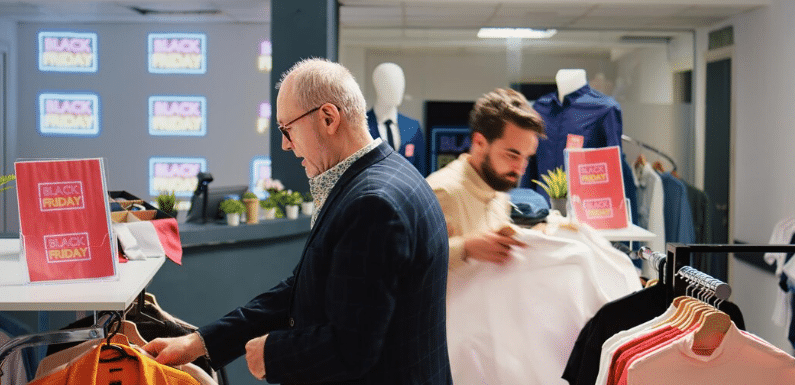

When the mood of money is uncertain, Oxford Street has a certain winter appearance: shop windows that glow a bit too brightly, and tourists who stop in the cold as if they’re trying to decide whether the pound is a warning or a deal. Outside a Marks & Spencer in late December, customers passed with that recognizable post-Christmas stance—hands in pockets, heads cocked toward phones—while employees inside continued to fold jumpers that weren’t going as fast as they would have liked. The numbers, not the street theater, were the surprise later.
Retail sales volumes increased 0.4% in December 2025 and then 1.8% in January 2026, according to official data. This was back-to-back growth following a period of instability that left the British consumer economy feeling stuck in neutral. Treating that as a clear-cut turning point is alluring. Seldom is it. Like British weather, retail data is subject to frequent changes.
| Item | Details |
|---|---|
| Topic | UK retail sales rebound driven by online-heavy spending, with policy tweaks framed as “e-commerce friendly” in a fragile economy. |
| Place | Great Britain (ONS retail sales series; high streets plus non-store retailing). |
| Latest key figures | Retail sales volumes +1.8% in Jan 2026 (after +0.4% in Dec 2025). |
| What stood out | Strength in non-store retailing and online categories (including jewellery/precious metals; also artwork/antiques). |
| “Tax incentive” context to watch | Budget 2025 includes business rates relief for retail, hospitality and leisure properties from April 2026, which the sector reads as a tax-side tailwind (even if it doesn’t neatly explain month-to-month sales). |
| One authentic reference link | BloomsBerg |
Nevertheless, something did occur. Economists were taken aback by January’s jump, and not just because projections were less optimistic. The story’s peculiar texture comes from the category detail: jewelry, household goods, artwork and antiques, and the type of internet browsing that results in purchases when the rain keeps you inside. The recovery doesn’t seem to be a national consensus that things are getting better. People seem to be spotting bargains, hedging against their own uncertainty, and clicking “buy” anyhow.
Any respectable consumer figure is often pinned to policy by politicians. This instinct has recently been centered on “new e-commerce tax incentives,” a term that is both vague and broad enough to sound intentional. Although it doesn’t account for a single month’s increase on its own, the more realistic version is less glamorous: the government is providing tax-side relief targeted at the retail sector, particularly business rates measures that take effect in April 2026.
Retailers, investors, and lobby groups interpret this as a positive windfall. It’s possible that the incentive effect improves sentiment before it has a financial impact, rather than immediately altering behavior at the register.
The sales bounce itself, meanwhile, appears to be very digital. Online shopping was identified by Reuters as a major factor in December’s unexpected increase, with online jewelers witnessing a resurgence in demand for precious metals—a startlingly contemporary fusion of financial anxiety and retail therapy. By February, the topic had expanded to include a more general query: are people “spending” or are they purchasing portable stores of value, similar to how some households purchase gold when the future seems uncertain?
The simplest explanation is discounts, which policymakers dislike because it isn’t theirs. When household budgets have been squeezed for so long that “treat” becomes synonymous with “replaced the toaster before it dies,” post-Christmas markdowns have the power to transform cautious shoppers into decisive ones. This sentiment was encapsulated in The Guardian’s analysis of January’s numbers, which noted both online strength and post-Christmas discounting. A boom is not produced by bargains. However, they are able to create a surge.
What all of this indicates about the role of the high street is the more intriguing subplot. Ministers talk about innovation when online sales increase, and community when foot traffic increases.
Most of the time, retailers discuss prices. The “tax incentive” narrative gains traction due to cost pressure because business rates are a persistent source of annoyance and any promise of relief is viewed as oxygen rather than a bonus. It seems like every change is an awkward, partial attempt to catch up with how people actually shop these days, and that the tax system still penalizes physical presence more than digital success.
All of this does not ensure momentum. Reminders that the UK has been dealing with slow growth, cautious consumers, and inflation that continues to impede the Bank of England’s decision-making were included in the same Reuters stream that praised the January spike. Instead of becoming a trend that anyone can rely on, the risk is that one successful month turns into a story that everyone wants to hear.
It’s also important to note what doesn’t neatly fit into the narrative of “incentives worked.” According to surveys conducted in February, the unrelenting rainy weather was holding back shoppers, and the decline in overall sales was not entirely offset by the growth of online sales. That’s the problem with retail: a bad Saturday can occasionally be the largest “policy lever.”
Indeed, retail sales in the UK increased at the beginning of 2026, and the government will naturally want to present this as proof that its policies are calming consumer sentiment. However, the texture of the surge—online jewelry demand with a gold tint, art and antiques, and urgency driven by discounts—indicates something more human and a little messier: people are spending, but they are also managing. With one eye on the news and the other on the prices, they are shopping in the hopes that the next set of figures won’t make them regret their choice.
The following genuine reference links were used: ONS retail sales bulletin (January 2026); Reuters coverage of retail sales in December 2025 and January 2026; GOV.UK Budget 2025 business tax support factsheet; and The Guardian coverage of retail sales in January 2026.

