
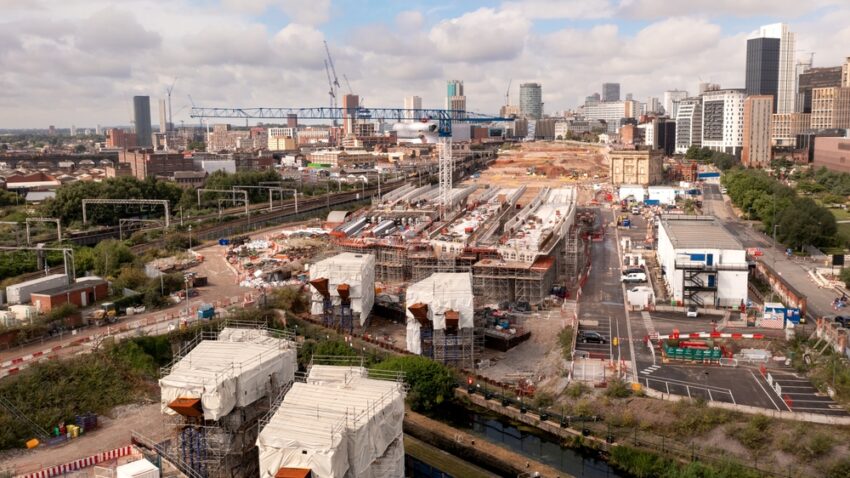

The UK is exploring a more budget-friendly railway option termed ‘HS2-light’ to connect Birmingham and Manchester.
Aiming for up to 40% cost savings, this initiative seeks to tackle the pressing issue of rail capacity without the financial strain of the original HS2.
The UK government is considering a significant shift in its railway infrastructure strategy with the introduction of a more economical rail line, dubbed HS2-light. This proposal aims to bridge Birmingham and Manchester while addressing the financial constraints of the original HS2 plan. The HS2-light initiative promises a potentially 40% cost reduction, a move welcomed by many amidst growing economic pressures.
The idea behind the HS2-light line is rooted in the necessity to enhance capacity on the overburdened West Coast mainline. Projected to operate alongside the current network, this line is essential for circumventing the anticipated ‘capacity crunch’ foreseen with the commencement of HS2 services in the 2030s. Without such measures, rail capacity between Birmingham and Manchester is expected to dwindle by 17%, as noted by the National Audit Office.
The proposal for HS2-light has garnered support from various political figures, particularly from Labour mayors Andy Burnham and Richard Parker. They have actively advocated for a new line north of Birmingham, emphasising its importance for both passenger and freight transport. In alignment with their proposals, the plan seeks to connect key regional hubs, strengthening the economic ties between the Midlands and northern England.
Implementing the HS2-light line involves several strategic considerations. The proposed section between Birmingham and Crewe would allow trains to travel faster than those on the existing lines, yet slower than the planned HS2 speeds. This compromise aims to balance financial feasibility with the need for improved transit times.
Henri Murison, chief executive of the Northern Powerhouse Partnership, has been a vocal proponent of the HS2-light approach, citing it as the only viable solution to the region’s rail capacity issues. His advocacy highlights the necessity for this development to ensure sustainable growth in passenger and freight services across the northern corridor.
Securing funding for the HS2-light initiative presents its own challenges. Following the upcoming three-year spending review, changes in fiscal policies expected from Chancellor Rachel Reeves could pave the way for necessary financial backing. The government remains cautiously optimistic as these fiscal rule adjustments could align with the funding needs of this project.
With the decision on the HS2-light proposal anticipated in the coming months, the emphasis remains on evaluating the most efficient, effective, and economical solutions to enhance the UK’s rail infrastructure. Ministers are set to deliberate the plan’s merits, aiming to shape the future trajectory of national transit developments.
As ministers deliberate over the proposal, this strategic line could redefine the dynamics of UK rail travel, offering a promising solution to existing capacity challenges.

