
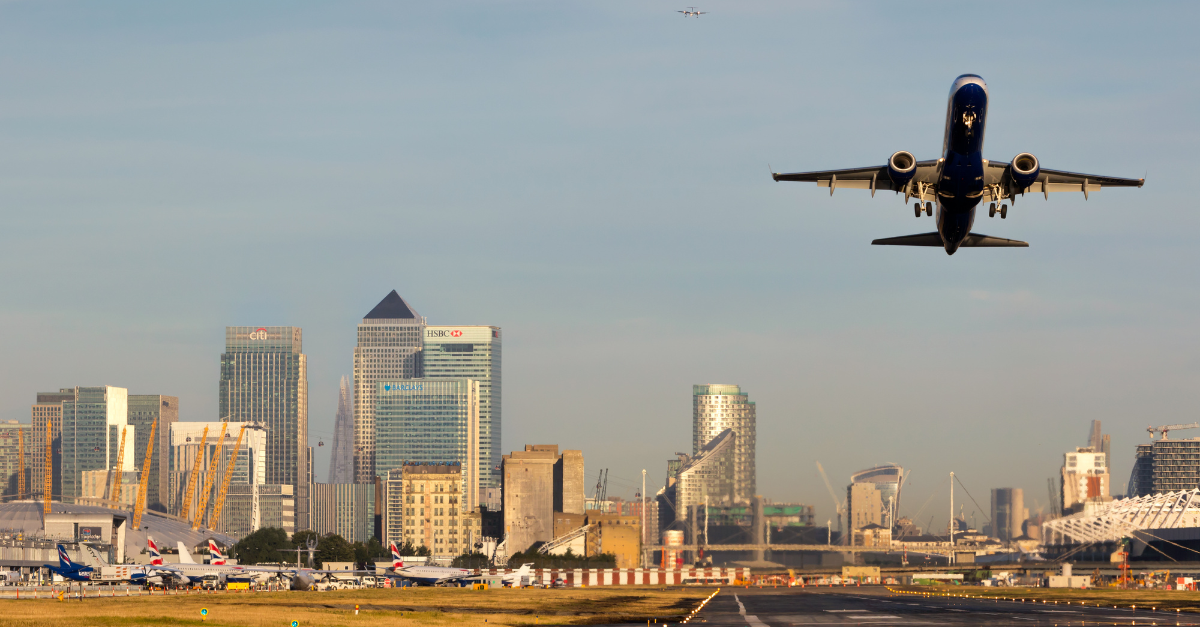

London City Airport’s ambitions for expansion received a boost as the UK government approved an increase in its passenger limit. This pivotal decision allows the airport to handle up to nine million travellers annually, reflecting a strategic move to support growing demand.
Approval of Increased Passenger Capacity
The UK government has sanctioned London City Airport’s request to raise its annual passenger limit from 6.5 million to nine million. This decision is set to enhance the airport’s operational capacity by accommodating more travellers, essentially allowing an increase of three additional flights in the initial half-hour of weekday operations. However, no alterations will be made to the existing number of permitted annual flights or to the airport’s infrastructure.
Commitment to Cleaner Aircraft
In alignment with the approval, the airport is committed to ensuring that “only cleaner, quieter, next-generation aircraft” are utilised for the extended operational times. This initiative aligns with broader environmental goals, focusing on reducing noise pollution and enhancing fuel efficiency of flights. Such measures are crucial as airports globally are under pressure to mitigate their environmental footprint.
Rejected Proposal for Extended Hours
Despite the approval for increased passengers, the proposal to extend Saturday afternoon operating hours was turned down. Alison FitzGerald, the chief executive of London City Airport, expressed disappointment over this rejection, indicating that the decision could hinder the introduction of new generation aircraft on weekends.
The Ministry of Housing, Communities and Local Government emphasised that any increased aircraft movements between 06:30 to 06:59 must involve new generation aircraft. This clause ensures modern and less noisy aircraft dominate the early morning skies, crucial for maintaining community relations.
Concerns from Local Authorities
Local authorities, including the Mayor of Newham, Rokhsana Fiaz, raised concerns regarding the potential noise impact on residents due to increased flights. The Mayor welcomed the maintenance of the Saturday cut-off, acknowledging it as a necessary measure to protect the local populace.
Fiaz highlighted apprehensions about the broader implications on public health and quality of life, stressing the importance of conducting a detailed review of the government’s decision. She reiterated the need for continuous assessment of noise implications on the local environment.
Technological and Operational Developments
London City Airport has already begun implementing advanced technology upgrades, such as new scanners, to expedite passenger processing and minimise queue times. These improvements aid in managing larger passenger volumes efficiently while maintaining high security standards.
The airport’s commitment to technology is seen as pivotal in enhancing passenger experience and operational efficiency, making it a competitive player in the aviation sector. Investments in technology reflect a forward-thinking approach, embracing innovation as a tool for sustainable growth.
Furthermore, preparations for future operational demands are underway, ensuring that the airport is well-equipped to support its increased capacity without compromising on service quality. The integration of new technologies exemplifies the airport’s strategy to streamline operations, underscoring its dedication to progress.
Environmental and Economic Implications
The decision to permit increased passenger capacity holds significant economic implications, potentially bolstering the local economy by attracting more tourists and business travellers. The influx of passengers can lead to heightened demand for local services, providing an economic boost to surrounding areas.
However, environmentalists argue that increased air traffic could exacerbate pollution, despite the introduction of quieter aircraft. Balancing economic benefits with ecological responsibility remains a challenge for the airport, requiring careful planning and community engagement to address concerns effectively.
Future Prospects and Community Engagement
Looking forward, London City Airport is tasked with navigating the complexities of community expectations and environmental standards as it expands its operations. Engaging with local communities remains vital to ensure that growth initiatives do not adversely affect residents’ quality of life.
The airport’s future plans include enhancing community relations by being transparent about developments and seeking local input in decision-making processes. This approach is designed to build trust and ensure that expansion efforts are aligned with public expectations and environmental commitments.
Overall, the approval for increased passenger capacity marks a significant milestone for London City Airport, reflecting its potential to grow within the ambit of modern aviation demands. Successfully balancing operational needs with community welfare will be crucial for the airport’s sustainable development.
The approval of increased passenger numbers at London City Airport presents both opportunities and challenges. As the airport moves forward, its ability to balance expansion with environmental and community considerations will be key in ensuring sustainable growth.

