
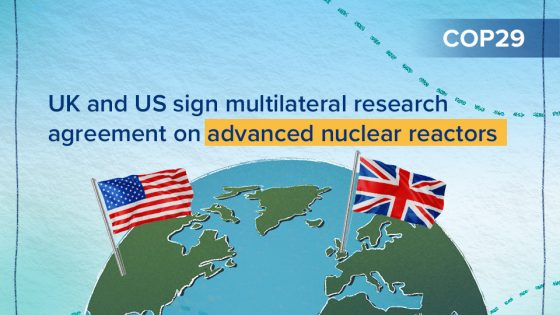

The UK has solidified nuclear research partnerships with the USA and Finland.
- These agreements coincide with the absence of a global climate agreement at Cop29.
- Nations are turning to nuclear power to meet increasing electricity demands.
- The UK is collaborating on advanced nuclear technologies for deployment by 2030.
- Finland benefits from a significant UK financing agreement for nuclear projects.
The United Kingdom has entered into agreements with the United States and Finland to advance research into civil nuclear power, including small modular reactors. This move comes at a time when global leaders have not reached a consensus on a climate deal at Cop29. The UN Secretary General has urged the G20 to continue pushing for progress in international climate negotiations.
In response to the rising demand for electricity, particularly zero-carbon options, countries worldwide are looking to nuclear power. The UK, having not developed new nuclear capabilities for a prolonged period, is now constructing Hinkley Point C and anticipates finalising investments for Sizewell C and small modular reactors by 2025.
Through the agreement signed in Baku, UK Energy Secretary Ed Miliband and US Deputy Secretary of Energy David Turk have committed to accelerating the development of advanced nuclear technologies. This includes pooling billions in research and development resources and sharing advanced technologies such as advanced modular reactors, thorium reactors, and fusion reactors, which are set to become industry-ready by 2030. Miliband affirmed the crucial role of nuclear energy in the UK’s clean energy future, highlighting its potential to decarbonise old sectors and spur new employment opportunities.
The UK has amended its partnership specifics by excluding Russia from the Generation IV International Forum, which aims to foster cooperation amongst countries that uphold nuclear safety norms. Russia’s occupation of the Zaporizhzhia Nuclear Power Plant in Ukraine and military actions against it have raised concerns about nuclear safety, leading to this exclusion.
Finland’s collaboration with the UK involves a Memorandum of Understanding that covers a wide range of nuclear-related activities and projects. This includes new nuclear deployments, regulatory exchanges, and nuclear safety measures. Finland is set to receive up to £4 billion in financing for projects purchasing UK goods and services, while Finland’s agency Finnvera can support UK-based projects that opt for Finnish offerings. Finnish Minister Kai Mykkänen expressed the importance of nuclear energy in Finland’s clean energy strategy and underscored the partnership’s role in advancing small and advanced modular reactors.
These partnerships mark significant steps towards enhancing nuclear capabilities and meeting net zero goals.

