
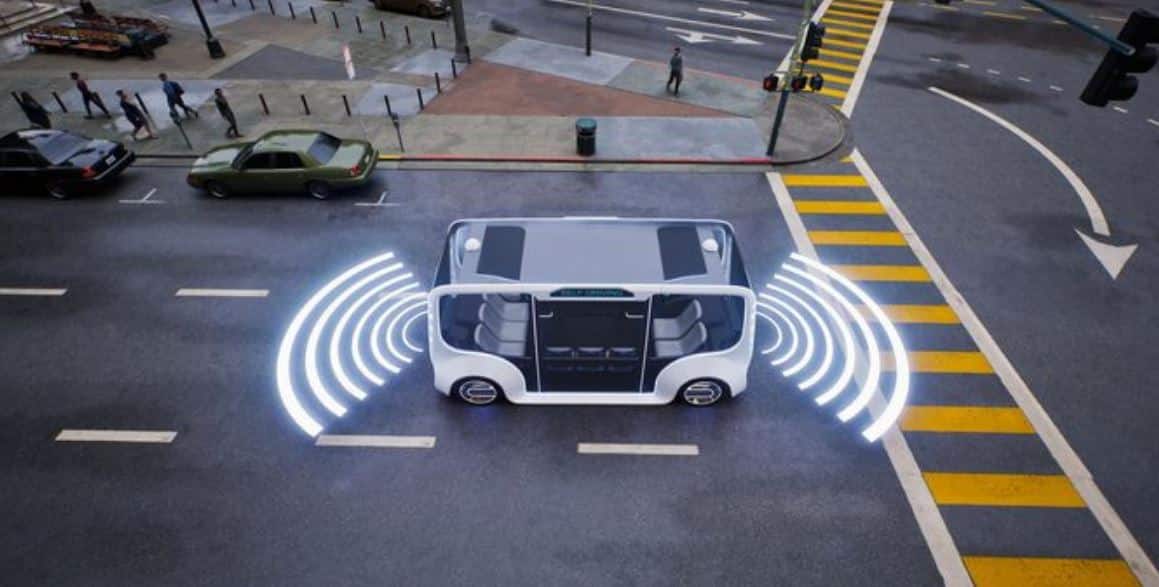

The first signs that something is changing are found in conference rooms in Washington, not on the highway. Steering wheels may eventually feel optional, according to detailed policy documents that are discreetly shared among transportation officials. The most recent U.S. government report on autonomous vehicles reads more like careful engineering than science fiction. It depicts a timeline influenced by safety data, regulatory discussions, and persistent public skepticism.
One statistic that keeps coming up in the report is that about 94% of crashes are caused by human error. Repeated in hearings and briefings, that number has evolved into a sort of ethical defense of automation. The reasoning seems convincing when you stand outside a northern Virginia commuter rail station during rush hour and observe cars slowly moving forward while using their phones. However, using algorithms to replace human judgment raises issues that cannot be resolved by numbers alone.
| Category | Details |
|---|---|
| Topic | Autonomous Vehicles Policy |
| Country | United States |
| Agency | U.S. Department of Transportation |
| Supporting Body | National Highway Traffic Safety Administration |
| Report | Automated Vehicles Policy Framework |
| Focus | Safety, testing, deployment guidelines |
| Key Finding | Human error causes ~94% of crashes |
| Automation Levels | SAE Level 0 to Level 5 |
| Policy Goal | Safe integration of AV technology |
| Reference Website | https://www.transportation.gov |
It seems like federal agencies are treading carefully. The guidelines do not require drastic changes, but they do promote innovation. The term “voluntary safety assessments,” which sounds cooperative but also tentative, is used by officials. Regulators may be attempting to avoid impeding progress while simultaneously averting another high-profile mishap. The tone of the report is shaped by this balancing act throughout.
The actual technology is changing in an uneven manner. The majority of vehicles currently on the market have partial automation, such as automated braking, adaptive cruise control, and lane keeping. The distinction between humans and machines is subtly blurred by these features. When you watch a sedan automatically change its speed on a busy interstate, the change appears to be more gradual than dramatic. However, the report indicates that full autonomy is still a long way off.
The federal conversation is organized around six automation levels, from completely autonomous systems to no automation at all. The majority of cars are still stuck near Levels 1 and 2. It seems possible to reach Level 3, where the vehicle manages some driving but still anticipates human takeover. Level 5, complete autonomy under all circumstances, seems far away. Policymakers seem to be planning for a gradual rollout rather than an abrupt change.
The discussion is still shaped by safety incidents. Regulatory memory is still affected by previous test vehicle accidents, especially those in which the vehicles were unable to identify obstacles or pedestrians. Early optimism appears to have been tempered by these events. Redundancy—many sensors, overlapping systems, and remote monitoring—is now emphasized by engineers. It’s still unclear if this multi-layered strategy will appease a cautious public.
The report also highlights communication as a theme. It is anticipated that autonomous vehicles will communicate with other automobiles, infrastructure, and drivers. Building blocks include evolving 5G networks and dedicated short-range communication. Imagining cars digitally coordinating lane changes while standing close to a highway construction zone makes the concept seem organized. Naturally, reality is usually messier.
An additional layer is added by cybersecurity concerns. Massive volumes of data are produced by autonomous cars, including location, speed, behavior, and environmental factors. Although this information presents vulnerabilities, it may also contribute to increased safety. The report notes several points of entry into car systems and alludes to possible hacking threats. The anxiety that would ensue from even a small security breach is difficult to imagine.
There are subtly important economic ramifications. Automakers are collaborating with developers of artificial intelligence, ride-sharing services, and technology firms. These partnerships imply that autonomy might change business models in addition to automobiles. Despite some doubts about whether returns will outweigh the high development costs, investors appear cautiously optimistic. This uncertainty is acknowledged in the report, but no specific forecasts are made.
The question of infrastructure is still unanswered. Predictable, well-mapped environments may be ideal for fully autonomous vehicles. Adoption may occur sooner in urban areas with digital connectivity and clearly marked lanes. Rural roads may lag behind due to their unpredictable conditions and faded paint. A patchwork system that is traditional in some areas and autonomous in others could result from this uneven rollout.
The biggest wild card might be public acceptance. According to surveys, a lot of drivers are still uncomfortable giving up control. It makes sense that passengers would be hesitant to look at the steering wheels during demonstration rides. Particularly when technology functions covertly, trust develops gradually. Regulators seem to be conscious of this, placing a strong emphasis on openness and education.
There is a labor component as well. Taxi drivers, delivery drivers, and truck drivers are keeping a close eye on developments. Workforce transitions are mentioned in the report, but details are left out. Automation may initially supplement human roles rather than take their place. While some jobs change, remote fleet management, maintenance, and monitoring may generate new ones.
The document conveys momentum despite its cautious tone. Federal agencies are researching regulatory frameworks, promoting testing, and coordinating standards. Although the pace is deliberate, the direction seems predetermined. Policy, not hype, is driving the advancement of autonomous technology.
It’s simple to picture cars navigating a suburban intersection where traffic lights blink late at night without any human hesitation. The concept no longer seems far away. However, the report serves as a reminder that change seldom happens all at once. Rather, it advances gradually through cautious policy language, incremental upgrades, and pilot programs.
Autonomous vehicles don’t seem to have a bright future. Every car doesn’t suddenly start driving itself in the morning. Rather, one feature at a time, automation will permeate everyday activities. The most recent report from the U.S. government appears to be more concerned with directing a gradual change—careful, flawed, and still uncertain, but steadily approaching the paths ahead—than with forecasting a revolution.

