
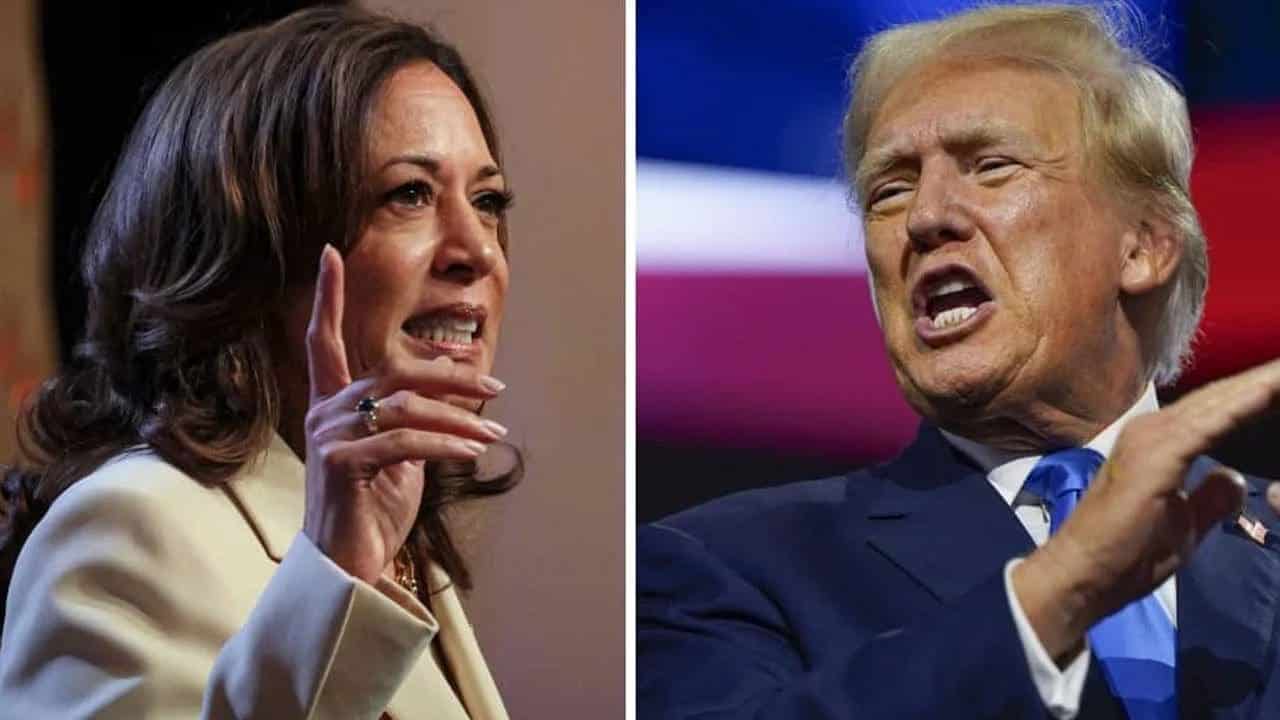

Former President Donald Trump is currently leading Vice President Kamala Harris by a significant margin on Polymarket.
This shift in the predictive landscape comes amid a series of strategic moves within the political sphere, impacting the upcoming election dynamics.
The Polymarket Shift: Trump’s Growing Lead
On the Polymarket prediction platform, Donald Trump has taken a notable lead over Kamala Harris, holding a 55% chance of winning compared to Harris’ 45%.
The shift marks a significant departure from previous betting odds, particularly in key swing states such as Arizona, Georgia, Michigan, and Pennsylvania, where Trump has overtaken Harris’ earlier advantage.
Arizona and Georgia have emerged as GOP strongholds, with Trump enjoying substantial leads, consolidating his momentum in the race.
Contrasting Predictions: Cramer’s Take
Despite Trump’s advances, CNBC’s Jim Cramer predicts a Harris victory, stating unequivocally, “I don’t see how Donald Trump wins.”
This prediction has sparked discussions, especially among cryptocurrency traders aware of the ‘inverse Cramer effect’, which suggests outcomes opposite to Cramer’s forecasts are likely.
Social media buzz surrounding Cramer’s statement reflects the ongoing debate about the implications of predictive platforms on election outcomes.
[twitter-embed-display twitter_url=’https://twitter.com/Polymarket/status/1844836673768566830′]
Trump’s Crypto Campaign Engagement
Trump’s engagement with the cryptocurrency community is noteworthy, evidenced by his public purchase of burgers using Bitcoin in New York.
This event was part of a larger campaign strategy intended to garner support from crypto enthusiasts, underscoring his attempt to integrate digital currencies into mainstream political campaigning.
Earlier, Trump’s DeFi project, World Liberty Financial, launched its native token amidst mixed reactions, with concerns voiced about potential vulnerabilities and their political repercussions.
Harris and the Ripple Effect
Vice President Harris has gained notable backing from the crypto sector, with Ripple co-founder Chris Larsen donating $1 million in XRP to her campaign.
This historic crypto donation is the first of its kind for Harris, directly supporting her via the Future Forward political action committee.
Larsen’s contribution aligns with broader business enterprises endorsing Harris, highlighting their belief in her capacity to foster American industries.
Swing States and Electoral Implications
Key swing states play a pivotal role in shaping the electoral outlook, with Trump’s lead in places like Arizona and Georgia indicating a shift in traditional voting patterns.
Conversely, states such as Nevada and Wisconsin are showing slight edges for Harris, maintaining a delicate balance in the electoral race.
The influence of predictive platforms and strategic donations adds layers of complexity to these electoral dynamics.
The Impact of Crypto on Political Campaigns
The intersection of cryptocurrency and political campaigns is emerging as a potent force, reshaping conventional strategies and engendering new avenues for voter engagement.
Donations and transactions in digital currencies are transforming how support is mobilised and perceived by the public and political analysts alike.
This evolving landscape presents both opportunities and challenges, with security concerns and market volatility influencing campaign decisions.
Conclusion: Navigating the Political and Crypto Landscapes
In this evolving political arena, Trump’s lead on Polymarket reflects shifting voter sentiments and strategic manoeuvres.
As the election draws closer, the role of cryptocurrency in political campaigns continues to be a critical element, shaping the future of electoral engagement.
As the election approaches, the interplay between predictive platforms and strategic crypto engagements remains crucial.
These factors will undoubtedly influence the paths candidates take in their bid for the presidency.

