
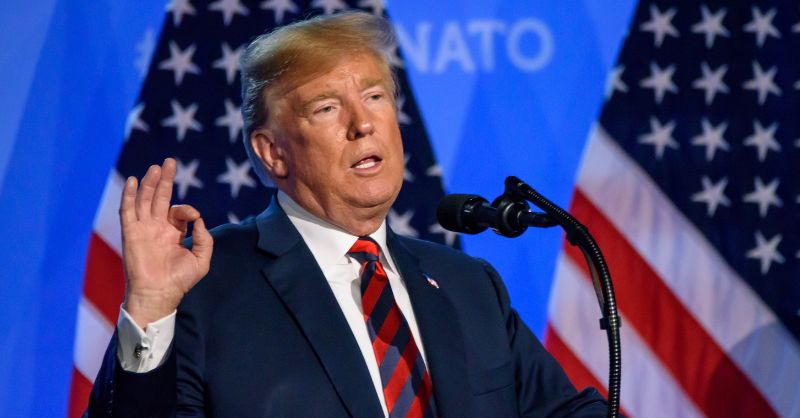

In a remarkable political manoeuvre, former President Donald Trump has amassed over $4 million through cryptocurrency donations for his 2024 presidential campaign. This shift reflects Trump’s evolving stance on digital currencies, a departure from his previous scepticism.
The integration of digital assets into political fundraising marks a significant development, spotlighting the intersection of politics and digital finance. Trump’s campaign has leveraged various cryptocurrencies, showcasing a forward-thinking approach and highlighting the growing role of crypto wealth in political strategies.
Trump’s Evolving Stance on Cryptocurrencies
During his presidency, Donald Trump often expressed doubt about cryptocurrencies, questioning their legitimacy and viewing them as potential threats to traditional financial systems. His current acceptance of digital assets marks a stark transformation, illustrating a strategic pivot as he seeks to engage the financially and ideologically influential crypto community.
This evolution is not only a strategic adjustment but also a reflection of broader trends in the political landscape, where embracing innovative technologies is increasingly vital. The launch of his non-fungible token (NFT) collection on the Solana blockchain signifies Trump’s commitment to integrating cutting-edge technologies in his campaign.
Crypto Donations: A Diverse Array of Contributors
The recent Federal Election Commission filings reveal substantial contributions to Trump’s campaign in the form of cryptocurrencies like Bitcoin, Ether, Ripple’s XRP, and USDC. This influx is notable, contributing to more than $118 million raised by the Trump 47 Committee from April to June. Such contributions highlight the widening acceptance of digital currencies.
Key figures in the crypto world have significantly boosted these donations. Notably, the Winklevoss twins, pioneers within the Bitcoin sphere, donated over one million dollars in Bitcoin. Similarly, crypto leaders like Mike Belshe of BitGo and Jesse Powell of Kraken have also contributed substantial sums, reaffirming the sector’s support for Trump’s political ambitions.
Strategic Implications of Trump’s Crypto Embrace
Trump’s pivot towards supporting cryptocurrencies is a strategic move designed to set him apart from his Democratic challengers. The administration under Biden has typically shown preference for tighter regulation within the crypto industry, presenting an opportunity for Trump to position himself as a crypto-friendly candidate.
As articulated by a campaign aide, Trump’s policies are intended to counteract Democratic stances that are perceived to stifle innovation through heavy regulation. This contrasts with his vision to bolster American leadership in emerging technologies, potentially attracting supporters from tech and crypto sectors. Embracing popular crypto assets like Dogecoin and Shiba Inu exemplifies Trump’s commitment to this strategy.
Political and Economic Consequences of Crypto Adoption
The integration of cryptocurrencies into political campaigns could significantly influence both economic and regulatory landscapes. Trump’s fundraising success in this domain underscores the growing influence of digital assets, not just in finance but also in politics, leading observers to consider broader implications for future elections.
Experts note the potential for cryptocurrencies to reshape political dynamics, offering alternatives to traditional donation mechanisms. This could lead to more inclusive participation among younger and tech-savvy voters, further altering campaign strategies and potentially the outcome of elections.
Broader Trends in Crypto and Politics
Trump’s actions are emblematic of a broader trend where digital currencies are becoming more mainstream in political discourse. The acceptance of crypto donations signals a shift in campaign finance, positioning digital assets as viable tools for mobilising resources.
The broader acceptance of digital currencies in political fundraising is indicative of their growing legitimacy and potential to influence policy debates. This not only impacts the tactics employed in campaigns but also the regulatory attitudes towards digital finance. Politicians may increasingly need to address crypto-related issues as part of their platforms.
The Future of Cryptocurrency in American Politics
The success of Trump’s fundraising efforts through cryptocurrencies may set a precedent for future political campaigns. As the first major candidate to embrace this method, he is pioneering a new path in campaign financing, which could influence others to explore similar strategies.
This evolution in campaign finance strategy reflects the growing integration of digital technologies in traditional political frameworks. The increasing role of crypto could herald shifts in regulatory practices, ensuring that political entities remain aligned with technological advancements.
Summarising the Crypto Fundraising Trend
Trump’s use of cryptocurrency in campaign financing highlights a pivot towards modernisation in political funding methods. His ability to raise significant sums through digital assets showcases an innovative approach that others may follow in future campaigns.
Trump’s use of digital currencies for campaign fundraising reflects a broader trend in both politics and finance. As digital assets gain prominence, they are set to play an increasingly crucial role in campaigns, possibly reshaping political landscapes.

