
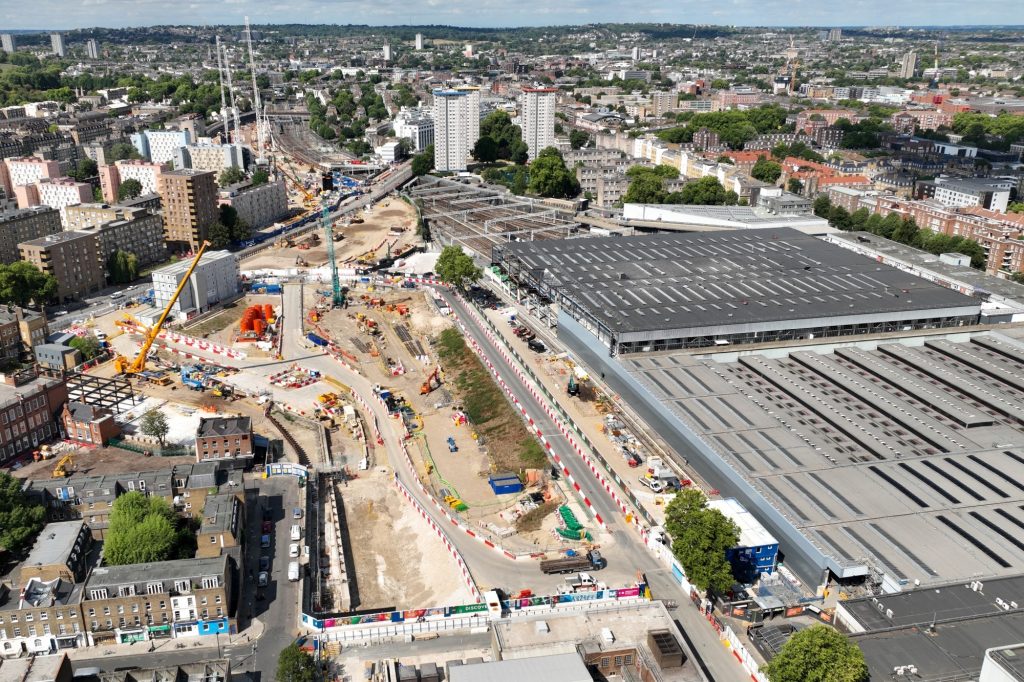

The future of the HS2 Euston Station remains a pivotal issue, with the government working urgently to finalise plans.
- Transport Secretary Louise Haigh is committed to developing a cost-effective strategy for the HS2 terminus at Euston.
- The previous government’s handling of the HS2 project has faced criticism for financial inefficiencies and delays.
- Plans for HS2 initially targeted substantial private investment, yet this approach has met with considerable scepticism.
- The successful completion of vital tunnelling projects underpins the renewed momentum surrounding the HS2 development.
The UK’s High Speed 2 (HS2) project, primarily focused on establishing a new terminus at Euston, is undergoing vigorous planning and reassessment under the guidance of Transport Secretary Louise Haigh. Haigh’s engagement comes as the government prepares for a comprehensive spending review, crucial for outlining how the high-speed rail project’s London terminal will be actualised. Originally anticipated to have Euston as its endpoint, the project experienced a significant halt in March 2023. This pause was due to the government’s decision to reevaluate the station’s design for cost-effectiveness and feasibility.
Former Prime Minister Rishi Sunak’s announcement in October 2023 brought further changes, as the high-speed line north of Birmingham was cancelled. The government’s shift towards managing the Euston development directly aimed to attract £6.5bn of private investment necessary for constructing both the tunnels and the station. Despite this, scepticism regarding the feasibility of sourcing such investment remains, particularly voiced by influential figures such as London Mayor Sadiq Khan.
Critiques have surfaced concerning the Conservative government’s past management of HS2, often labelled a financial ‘mess’ by Haigh. She contends that the expenditure exceeding £60bn failed to enhance capacity north of Birmingham as intended. Despite these setbacks, Haigh is resolute in her objective to devise a financially viable plan that remedies previous oversights, focusing heavily on the Euston element of the development.
In pursuit of improvement, HS2 Ltd is optimistic about advancing the Euston Tunnel section, with preparations involving extensive logistical and construction frameworks. This includes the deployment of tunnel boring machines (TBMs) to facilitate the 7.2km tunnel linking Old Oak Common and central London. A successful breakthrough at the Atlas Road Logistics Tunnel, facilitated by the TBM Lydia, symbolizes renewed efforts to progress with government approval nearly imminent.
There exists a structural foundation laid by former officials, with claims of significant private interest in transforming the Euston area into a ‘life science quarter’. However, this vision remains contentious. Camden Council’s report from March 2024 highlighted the economic potential regeneration could bring, estimating a £41bn addition to the national economy. Nevertheless, substantial work, clarity over funding, and strategic planning remain essential for this vision to materialise.
Overall, recent announcements by HS2 Ltd indicate progress, especially with new TBMs arriving for the Euston Tunnel. They form part of a strategic logistical plan to manage construction sustainably, including microtunnelling for infrastructure support. Despite ongoing challenges, the completion of infrastructure such as the Northolt Tunnel signifies gradual but critical advancement toward meeting project targets.
Efforts to progress the HS2 project at Euston continue, aiming for effective solutions amidst financial and logistical challenges.

