


How does a footballer sustain 90 intense minutes of continuous movement? Not just maintain, but sprint, pivot, pass, and shove through a crowd? Every fan wonders this as they watch their most-loved athletes perform amazing feats despite exhaustion. From pitted training grounds to pristine uniform mud, stamina has evolved in thrilling, measurable ways. What altered? How did we go from simple practices to science-backed endurance training? Examination of evolution always reveals the future.
What Stamina Used to Look Like
Stamina in the 1970s and 1980s was defined as endurance and willpower. Athletes like Johan Cruyff and Paolo Rossi didn’t have custom hydration plans or GPS systems tracking roads. Training consisted solely of road work, with zero thought for muscle recovery. The pace of games was slower, and substitutions were uncommon—only one per game until the 1994 rule change. Recovery drinks? Those were non-existent. Players relied on beige, carb-rich meals before the game and orange slices at halftime. Fresh provides. Stamina back then was wild and uncontrolled.
But since then, football, like technology, has made an enormous step forward, and now it is not only power that matters, but also the speed of access to information. That is why more and more fans choose the MelBet download application to find themselves in the game, wherever they are, instantly. It is like changing old boots for modern ones – faster, more accurate, more convenient. In the era of instant solutions, mobile access to bets is becoming as necessary as recovery after a match.
Modern Training for Lasting Energy
Today, stamina is engineered with precision. Clubs rely on sports science, data analytics, and tailor-made conditioning programs. Energy isn’t just maintained – it’s optimized. How exactly do players sustain power from the first whistle to the last? Here’s how:
- Periodization Training: Workloads are organized in distinct cycles. Prime shape is attained at critical junctures like the Champions League semi-finals or the World Cups, not arbitrarily.
- High-Intensity Interval Training (HIIT): Mohamed Salah and similar players accelerate to full speed, followed by active recovery, which aligns with the match’s pace.
- Recovery Protocols: After heavy sessions, stars like Erling Haaland are aided by ice baths, cryotherapy, and even compression boots to recover and recuperate faster from intense sessions.
- Sleep Tracking: FC Barcelona and similar clubs track their players’ sleep. If a player gets under 7 hours, their workload on the following day is reduced.
These methods change the idea of what it means to “give it your all.” And if you are close to the science of endurance, behind-the-scenes details of preparation, and a real understanding of sports power, take a look at MelBet Pakistan. It is not just news—it is a source of fresh insights from the world of sports, a pinch of humor in the form of memes, and rare promo codes that will please everyone who bets wisely.
Breathing, Movement, and Control
Do you watch soccer? If you have, have you observed that breathing control seems effortless among elite players, even when they are deep into extra time? There is, of course, an explanation for this – breathing control. Athletes work with respiratory coaches to train their diaphragm, improve oxygen delivery, and delay fatigue. Cristiano Ronaldo has been reported to practice breathing techniques similar to free divers.
But movement matters just as much. Today’s youth midfielders, like Jude Bellingham, average 11–13 km per match and complete over 1,500 directional shifts. That is not disorderly—it’s efficient movement that is methodically choreographed. They master the art of explosive focus intertwined with gliding, rhythm, and control, coasting to save energy. Stamina is no longer effort; it is efficiency.
Nutrition That Fuels the Full Match
What goes into a soccer player’s body before a big game? Everything is calculated – nothing is random. Let’s dive into the fuel behind the endurance:
- Carbohydrate Loading: 36–48 hours before the match, players eat up to 8–10g carbs/kg to maximize glycogen storage.
- Caffeine Timing: A dose of ~3 mg/kg about 60 minutes before kickoff can delay fatigue – many elite players rely on this.
- Halftime Refueling: Electrolyte gels and sodium-enriched drinks help prevent cramping during the second half.
- Post-Match Recovery: Within 30 minutes, players consume a 3:1 carb-to-protein ratio shake to replenish and repair.
Every bite, every sip, is part of a stamina strategy.
Tracking Fatigue in Real Time
Today’s teams no longer “see” fatigue but monitor it in real-time. With GPS vests and wearable sensors, trainers can track players’ sprints, deceleration, and heart rate. Analysts notice if a left-back’s speed reduces by 15% during the 75th minute.
That’s not all. Clubs also monitor an athlete’s heart-rate variability (HRV) every morning. An athlete with low HRV is likely dealing with high fatigue levels. Players sometimes may not feel tired, but their statistics indicate otherwise. This isn’t science fiction. This is how Manchester City maintains a 60-match yearly schedule without burnout.
Adapting to the Speed of the Game
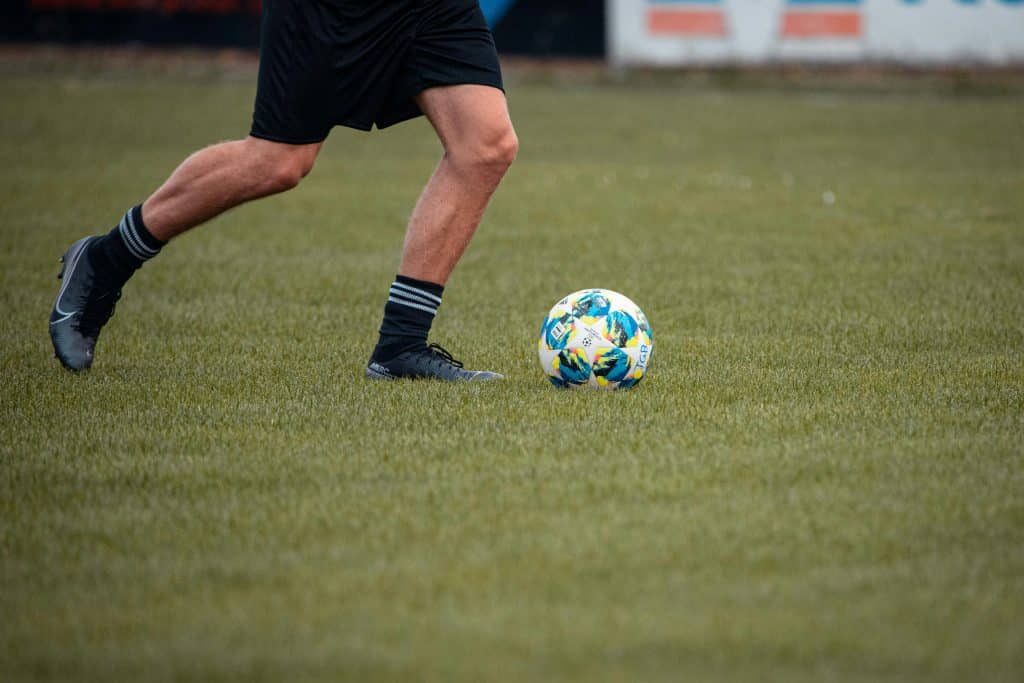
The game is now quicker than ever – literally. Research suggests elite games now have 30–35% more sprints than in 2006. Kylian Mbappé is one of the players who can reach 38 km/h sprints. How are they able to maintain that speed?
Everything comes down to strategy. Modern training employs reactive drills, neuromuscular coordination, and speed endurance circuits. Bayern Munich and other clubs use systems like light & agility walls to replicate game simulation. Neural endurance is also key. In addition to the game’s physical demands, the brain needs to overcome game after game for every moment.
Because Endurance Is Built with Heart
Stamina cannot be faked. The huffs, sprints, tackles, and every final rally require heart, not the biological muscle, but the soul. It’s passion. Players with access to scientific tools are suitable for the game, but the unwavering love for the sport makes athletes virtually indestructible. They train much more intensely, recover more intelligently, and put in greater effort all because they refuse to quit. This resilience is the essence of truly feeling the sport. That is what stamina is all about.

