

The Railway Industry Association (RIA) is urging decisive action from the UK government regarding rail infrastructure investment in the Autumn Budget.
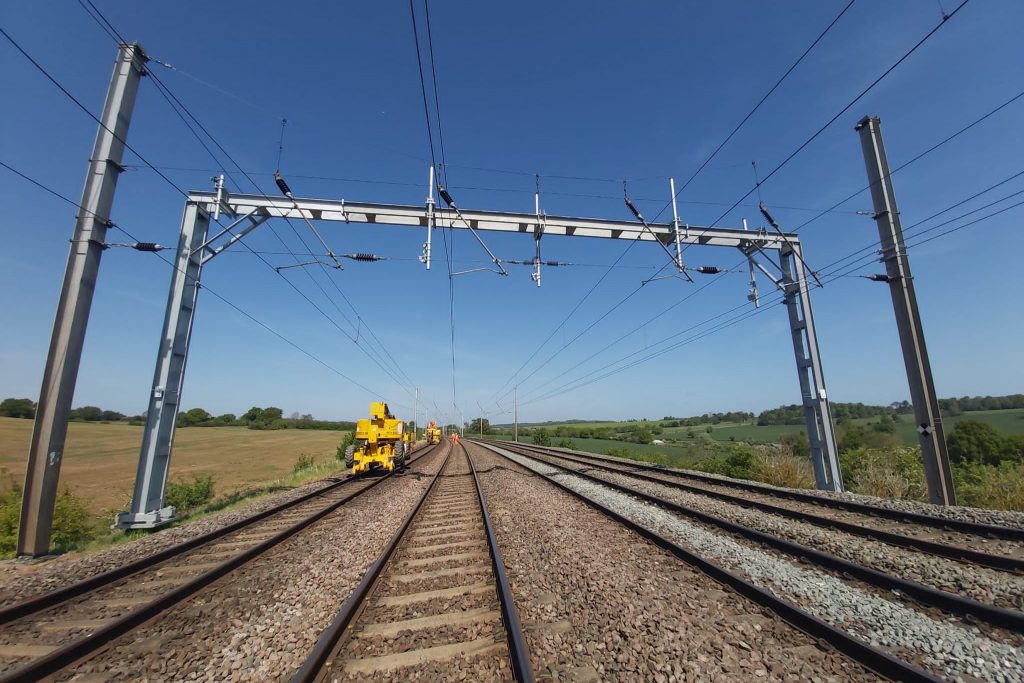
- A minimum annual investment of 350km in rail electrification is essential to meet decarbonisation targets by 2050, as per RIA’s demand.
- Network Rail has significantly underperformed in rail electrification over the past decade, spotlighting the need for a renewed commitment.
- The completion of the HS2 Euston tunnel is another critical decision requiring immediate attention according to RIA.
- RIA advocates for a strategic framework to leverage private investment in rail to maintain industrial stability.
The Railway Industry Association (RIA) has urged the UK government to take immediate and decisive action concerning rail infrastructure investments in the upcoming Autumn Budget. Such decisions are deemed “now or never” by the RIA, highlighting their critical nature in shaping the future of the industry.
Central to RIA’s demands is the call for sustained investment in rail electrification, advocating for a continuation of investments amounting to at least 350km of single track electrification annually. This level of investment is necessary to fulfil the UK’s decarbonisation ambitions by 2050, a timeline that presents an urgent ecological and economic imperative.
Recent data underscores the urgency of RIA’s demands. Network Rail and the Department for Transport have conspicuously lagged in meeting electrification targets, managing to electrify a mere 2.2km of track in a year, against an ambitious target of 448km. Current figures reveal a stagnation, with only 14,404km of electrified rail by March 2023, a minimal increase over previous years.
Further accentuating the RIA’s call to action is the incomplete HS2 Euston tunnel, a project whose suspension has been a point of contention and debate. The government’s postponement of this project, alongside the curtailing of the high-speed line north of Birmingham, signals a critical junction for UK rail infrastructure. As of now, technical preparations are on standby, contingent on governmental green lights and financial backing.
Additionally, the RIA has outlined several recommendations for the Autumn Budget that extend beyond individual projects. A critical recommendation is the establishment of a cohesive long-term investment strategy. Such a strategy should be supported by institutional reforms that instil confidence in project delivery, addressing historical concerns of “boom and bust” cycles that have affected the supply chain’s efficiency.
The RIA further encourages deploying a comprehensive plan to utilise private investment in rail infrastructure. By defining clear policies and strategies for harnessing private capital, the government could alleviate fiscal pressures while advancing public rail projects. This is particularly pertinent in the context of anticipated budgetary constraints and the overarching need for fiscal prudence.
The Autumn Budget presents a decisive opportunity for the UK government to secure the future of its rail infrastructure through strategic investments and reforms.

