
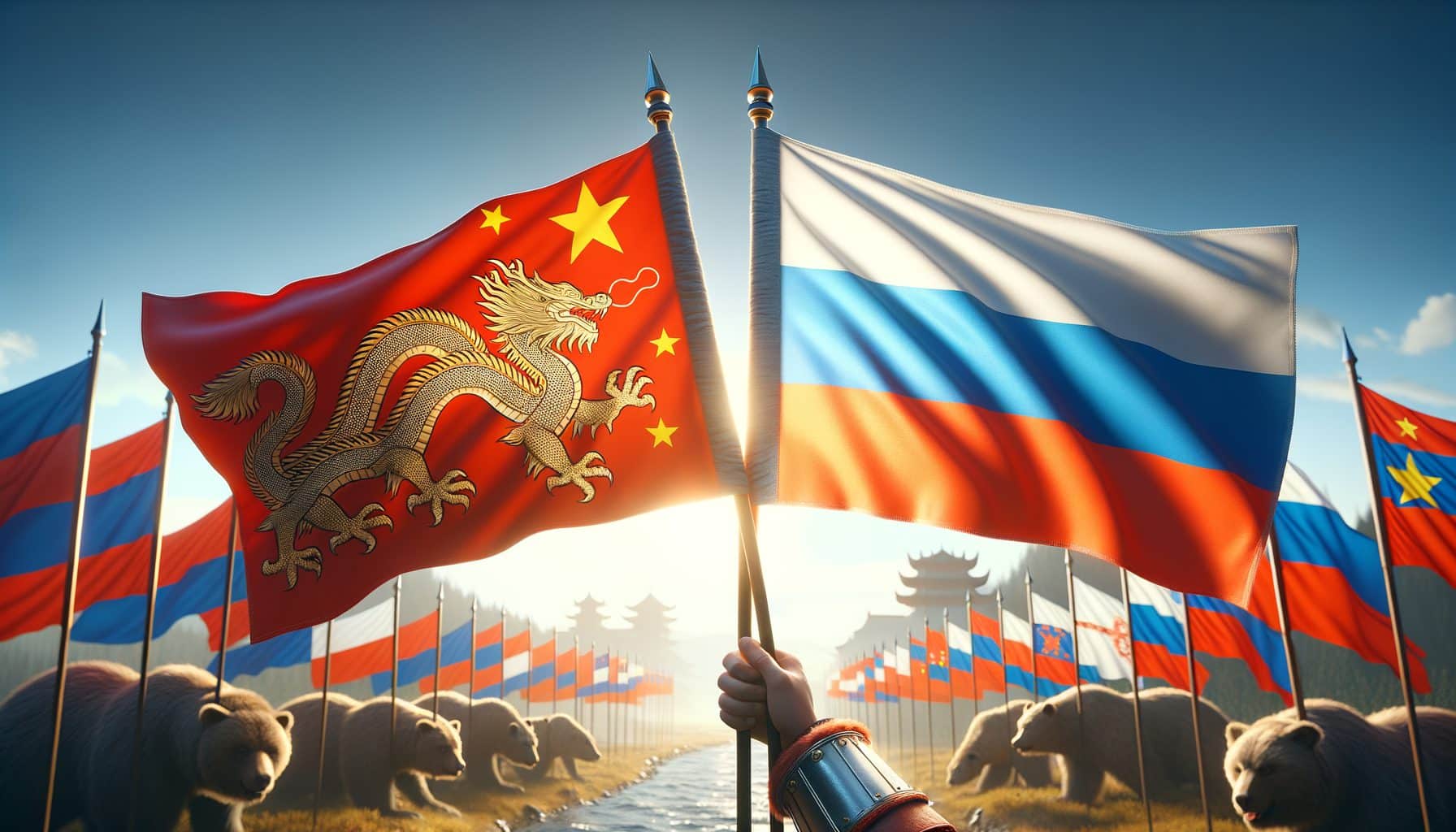

The China-Russia crypto pact raises serious concerns about global economic and security dynamics. This strategic alliance could redefine power balances.
As tensions escalate, the pact challenges US dominance, necessitating closer examination of its potential impact on international relations.
Navigating Security Risks and Cryptocurrency Market Dynamics
Frederick Kempe, CEO of the Atlantic Council, articulated the increasing unease regarding the collaborative efforts of China and Russia at the United Nations General Assembly. The convergence of Chinese and Russian interests poses significant threats to geopolitical equilibrium. Furthermore, uncertainties surrounding US leadership post the upcoming elections only add layers to the complex dynamics spurred by the China-Russia crypto pact.
Sanctions and Underground Mining
In a move to curb China’s assertive strategies, the United States has sanctioned over 300 Chinese firms. However, these actions have not led to a shift in China’s behaviour. Meanwhile, in Russia’s Dagestan region, crypto miners are resorting to clandestine methods. Prime Minister Abdulmuslimov remarked on the novel tactics employed by these miners to bypass legal restrictions, emphasizing the impact of the China-Russia crypto pact on these activities.
The inventive approach of concealing cryptocurrency mining operations underground illustrates the lengths to which individuals will go to continue their activities. This underground shift represents a direct response to external pressures and restrictions resulting from heightened sanctions and international attention.
Global Security Implications
Former Secretary of State Condoleezza Rice expressed concerns about the current geopolitical climate, which she regards as perilous compared to the Cold War era. Kempe conveyed her apprehensions about looming global threats, emphasizing the obstacles posed by populism, nativism, isolationism, and protectionism.
These challenges are intensified by the China-Russia crypto pact, which further fuels existing tensions. The pact signifies more than economic ramifications; it reflects a strategic alignment that could alter global power structures.
The overarching anxiety lies in how these developments might influence global peace and security, potentially leading to a reconfiguration of alliances and power balances.
Cryptocurrency Regulation in Russia
Beginning November 1, 2024, Russia is set to implement a new framework for cryptocurrency mining regulations. The finance ministry will maintain a registry of approved cryptocurrency mining enterprises, indicating a shift towards more formalized oversight influenced by its pact with China.
These regulations are expected to streamline operations while maintaining tight control over the industry. The China-Russia alliance is poised to play a crucial role in shaping these developments, potentially prompting other nations to reassess their regulatory frameworks.
US Response and Future Outlook
The United States remains committed to pressurizing China over its support for Russia. US Ambassador to China, Nicholas Burns, underscored this stance, stating that the US will not tolerate China’s extensive assistance in enhancing Russia’s military and industrial capabilities. This resolve highlights the broader implications of the crypto pact in international relations.
The evolving nature of global politics and economic interactions is reshaping how nations engage with one another. The crypto pact complicates these relationships, possibly prompting the US to adopt new strategies in diplomatic and economic arenas.
The alliance between China and Russia serves as a catalyst for potential changes in how global economic power is distributed, posing questions about the future of global leadership.
Market Repercussions and Geopolitical Shifts
The burgeoning China-Russia crypto pact introduces significant challenges to the established economic order. As cryptocurrency markets expand, the influence of these two nations could realign financial systems globally. This shift is critical for understanding how digital currencies could redefine international trade.
With China and Russia strengthening their ties, there is a tangible shift in how global politics and economics interconnect. These countries’ strategies could serve as a blueprint for others, challenging long-standing financial norms and provoking discussions about the future of digital currency.
Such geopolitical realignments necessitate a reassessment of how money flows globally, potentially disrupting the existing financial framework dominated by Western powers.
Conclusion
The China-Russia crypto pact is not merely an economic maneuver but a strategic alignment with far-reaching implications. As global politics and markets evolve, the ramifications on international relations and economic structures are profound, necessitating a reevaluation of traditional power dynamics.
The China-Russia crypto pact underscores a shift in global alliances. Its potential to reshape economic and political frameworks demands urgent attention.
As nations grapple with these changes, understanding the broader implications of such collaborations becomes imperative for future policy and strategy.

