
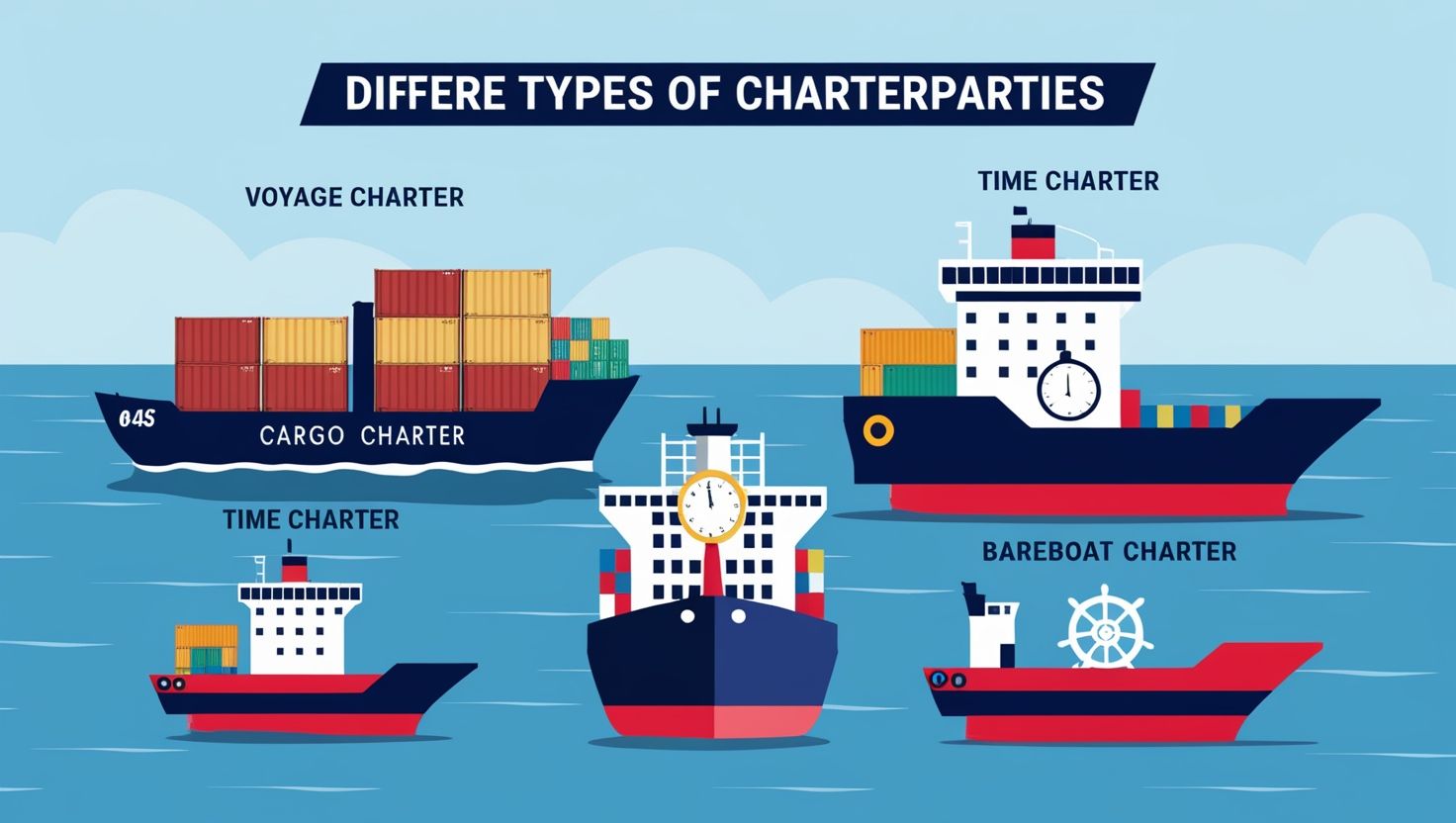

For most large companies operating internationally, high-quality and timely delivery and transportation of cargo to other countries is vital. Almost every large business faces logistics issues. These issues may be handled with the right transportation options and establishing legally sound agreements.
Let’s explore charter party definition and specific types of chartering.
What is a Charter Party
A charterparty is a legal agreement between the vessel owner and a charterer for the use of certain assets, such as ships or aircraft. In the maritime sector, this term refers to agreements for renting or chartering vessels.
The ship charter agreement usually contains detailed information on the rights and obligations of the lessor and the lessee. It specifies the rental duration, agreed-upon vessel charter fee, liability and insurance details, the intended use of the vessel, the permitted operational regions, and any supplementary conditions.
Benefits of Chartering
- savings when sending your own large consignments of cargo;
- high safety of the transported cargo, single route;
- ease and effectiveness of loading and unloading operations.
Types of Charter Parties
What are the 3 types of charter? Let’s explore them in detail:
Time Charterparty
In this charterparty type, the vessel is leased for a specific period. The vessel owner bears the whole responsibility for its functioning and maintenance.
Time charter is an interesting format for importers and exporters who need fast transport. Its distinctive feature lies in the specific period. The shipowner retains control of the vessel, and the charterer is responsible for commercial management. The charterer’s duties include monitoring the execution of trade orders by the captain and crew. The vessel makes voyages required by the charterer and is responsible for any violation of deadlines or damage to the cargo.
The difference between a time charter vs bareboat charter is in the crew and its management. In the first one, the vessel comes with a crew. And in the second type, the charterer manages everything.
Voyage Charterparty
In a voyage charter, the vessel or aircraft is leased for a particular journey. The charterer covers the cost of transporting cargo or passengers between designated locations.
Tour operators are the primary clients of voyage charters. They charter an airplane, ship, or land transport directly or through carrier companies and are responsible for loading it themselves.
In contrast to other types of charter party, these charters are typically organized for routes to destinations that lack regular flights or have insufficient services to accommodate a large flow of tourists.
Bareboat Charterparty
This agreement allows the charterer to operate the vessel independently for a set duration, including the right to appoint a captain and crew. A bareboat demise charter contract transfers full possession and operational control of a vessel to the charterer. A demise charter party makes charterers responsible for crewing, maintenance, and operations.
For example, in comparison, bareboat charter vs time charter, under bareboat charter, the ship’s owner has the sole right to receive regular payments for its lease. They are not responsible for managing freight or the ship’s operations during the lease term.
The delivery agreement explains that the lessee must use the ship properly and return it in good condition and on time. The charterer is also responsible for any issues that come up during the ship’s use and cannot sublease it without the owner’s permission.
Berth Charterparty
This type is less common than 3 previous ones. A berth charter party means the ship must go to a specific berth at the loading or unloading port, and the charterer handles any delays in getting to the berth.
Charter Party Agreement Specifics
The charterparty is bilateral and negotiable. Its content is the right of the charterer to reserve the entire vessel stipulated by the agreement, another vehicle (part of its capacity) for the carriage of cargo, passengers, and luggage for a fee during one or more journeys specified in this contract, and the charterer to receive for the provided vehicle (part of its capacity) a fee established by the agreement of the parties (called freight in maritime law).
Because charters are commonly used in global shipping, standard voyage charter contracts have been created to make it easier to agree on terms for renting a vessel (or parts of it). These contracts are usually developed by shipowners’ associations in collaboration with cargo owners, insurers, brokers, and others. Each standard contract typically has a code name, such as the type of charter or bill of lading.
Key Parties and Their Responsibilities
In chartering, the vessel is temporarily provided for the charterer’s use. The charterer and shipowner sign the agreement. It outlines the rights and responsibilities of both parties.
Charterer
A charterer is a person or company that arranges to transport large cargoes or passengers on routes outside regular shipping lines, as specified in a charter agreement. They may not always own the cargo; for example, a seller might charter a vessel to deliver goods directly to a buyer. Given this situation, the charterer and the consignor will not coincide in one person.
There’s also such a term as a disponent owner. Under disponent owner meaning, this is typically a charterer who has taken control of a vessel through a charter agreement and then sub-charters it to other parties. Disponent owners don’t own the vessel outright but act as the owners during the charter period.
Shipowner
The shipowner is a key party in a charterparty contract since they provide the vessel and crew for use by the charterer. Their role and responsibilities vastly depend on the type of charterparty, which we defined before.
Broker (if involved)
This party acts as an intermediary to negotiate terms. Brokers facilitate communication and ensure fair terms for both parties.

