

Running a business in the UK is challenging enough without the added stress of unpaid invoices.
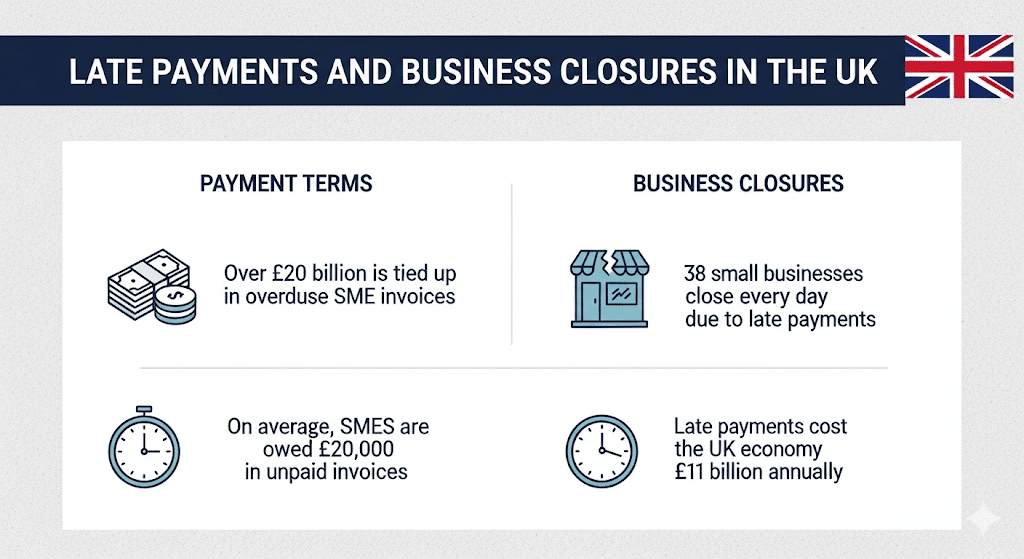
Many small and medium-sized enterprises (SMEs) face this issue, with over £20 billion stuck in overdue bills. This problem impacts thousands of firms that need to pay their staff, invest in growth, or sometimes even keep their doors open.
This is a serious matter. Reports show that 38 small businesses close every day due to late payments. The government is now taking action against this issue, and many hope that things will improve by 2026.
The burden is both financial and operational. Chasing overdue invoices takes up staff time and resources. This limits their ability to invest in growth or serve customers well.
Let’s look at why late payments are such a heavy burden for SMEs and what steps can help solve this problem.
Why Late Payments Are Crushing UK SMEs
For many small businesses, cash flow is crucial. When customers or larger companies pay late, it disrupts their daily operations. According to a report from The Fintech Times, small firms often wait for over £20,000 in unpaid invoices, money they need for wages, supplies, or bills.
The Federation of Small Businesses has repeatedly shown that late payments create more than just a temporary problem. They cause a chain reaction. Businesses may cut back on investments, freeze hiring, and in some cases, even close down. This is not simply a minor concern; it poses a serious risk that weakens competitiveness and limits innovation in the SME sector.
The Government Crackdown on Late Payments
The UK government is taking necessary steps to help small businesses by introducing new rules. These changes include:
- Shorter time limits for big companies to pay their small suppliers.
- Fines and penalties for businesses that repeatedly delay payments.
- Mandatory reporting requirements, forcing large companies to publicly disclose their payment practices.
The government has announced new reforms to tackle late payments. These reforms are some of the strictest measures in decades. They aim to create a fairer and clearer trading environment.
What This Means for Small Businesses and the Wider Economy
If these reforms work as promised, we could see real shifts in how payments are made, especially for smaller businesses. Better cash flow would help these firms hire more people, expand their operations, and compete fairly. This could add billions of pounds back into the economy.
However, there are risks involved. Implementing these rules will be essential. Without strong enforcement, larger companies might continue to delay payments, as they often do. The economic impact is significant.
In fact, late payments take about £11 billion out of the UK economy every year. This not only lowers productivity but also hurts business confidence.
A short news clip highlights how late payments harm small businesses and the methods owners are trying to be strong during tough times.
Steps SMEs Can Take Now To Avoid Late Payments
“The cashflow pressures caused by chronic late payments have become a systemic risk for small firms,” says Baker Ing, an international debt recovery specialist. Without robust recovery practices, many SMEs are left waiting 30-60 days past due, a delay that can mean the difference between staying afloat and insolvency.
Professional debt recovery does more than collect overdue money. It offers businesses transparent processes and professional help, giving them options beyond handling debt on their own. While the government sets out the rules, debt recovery experts provide the hands-on support businesses really need. While we wait for the results of reforms, small and medium-sized enterprises can take steps to protect themselves from late payments.
Here are some tips:
- Clearly state in your contracts when payments are due and what happens if they are late.
- Utilise digital invoicing tools such as QuickBooks or Xero to track payments and send automated reminders.
- Apply stricter credit terms to high-risk clients and review them regularly.
- Get help early. Talk to a lawyer or a debt recovery service. This can stop unpaid invoices from becoming big financial problems.
These steps can help firms manage their cash flow better and feel more in control, even when late payments become common.
Conclusion
Late payments are more than just annoying. They are a serious problem that has hurt small and medium-sized enterprises in the UK for years, tying up billions in unpaid bills and even forcing some to close. The government’s new effort to address this issue is a positive step, but changing mindsets and practices will take time.
For small businesses, 2026 could be a turning point. By combining the new government reforms with their own practical steps, companies can better protect themselves against late payments and shift towards a fairer system. The goal is not just to survive; it’s about building a stronger small business community that can boost the UK economy.
Every unpaid invoice is a missed chance and can harm trust. It’s essential to turn this awareness into action. With determination, enforcement, and the right help, small and medium-sized enterprises (SMEs) can improve their cash flow stability. This lets them focus on growth rather than on debt.

