
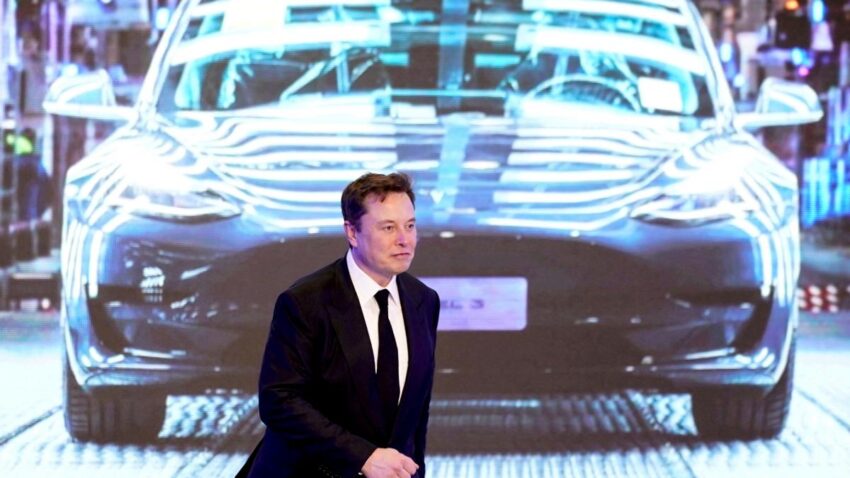

Tesla has achieved a remarkable milestone in the UK automotive market, rising to become the second top-selling car brand. This achievement underscores the growing popularity of electric vehicles in the region.
In light of the challenges posed by global disruptions, Tesla’s performance signals a significant shift in consumer preferences. The Model 3, in particular, has driven the brand’s success, securing its position as the go-to executive company car.
Market Dynamics and Challenges
The UK car market has faced substantial disruption due to a global shortage of microchips, affecting production across the automotive industry. Despite this, Tesla’s rise to the second position is particularly notable given the absence of long-standing favourites like the Ford Fiesta from the top ranks.
In 2021, 1.65 million new cars were registered in the UK, slightly surpassing the 1.63 million of the previous year, although still lower than pre-pandemic levels. Impressively, electrified vehicles constituted one in four of these registrations, highlighting a paradigm shift towards sustainable mobility.
Tesla’s Strategic Advancements
Tesla’s presence in the UK was bolstered by significant deliveries in December, accounting for 36% of all registered electric vehicles that month. This surge was largely facilitated through attractive leasing deals that made ownership more accessible.
Throughout the year, Tesla delivered approximately 36,000 vehicles in the UK, marking a 40% increase from the previous year. The Model 3’s success is notable, as it ranked just behind the Vauxhall Corsa, a traditionally popular choice now available in a pricier plug-in variant.
Electric Vehicle Adoption
Battery-powered cars captured 11.7% of the market share in 2021. Plug-in hybrids and self-charging hybrids accounted for an additional 15.9% of sales combined.
The trend towards electric vehicles is driven predominantly by corporate fleets, with Tesla’s Model 3 emerging as a popular choice for company car fleets.
The incentives for businesses to adopt zero-emission vehicles are compelling. Companies benefit from a 100% tax deduction on the car’s cost and exemption from certain taxes, while employees enjoy a minimal benefit-in-kind tax on these vehicles.
Impact of Microchip Shortage
The microchip shortage has led to reduced production and a 15% annual increase in new car prices. Despite higher costs, consumer demand remains robust, with expectations of recovering sales volumes in the coming years.
The Society of Motor Manufacturers and Traders anticipates new car sales to reach 1.96 million in 2022, driven by pent-up consumer demand and the continued shift towards electrification.
Infrastructure and the Future of Electric Vehicles
Pure-electric vehicle sales are projected to exceed those of diesel vehicles as the market share of diesel diminishes. Nevertheless, the growth in electric vehicle sales comes with its own challenges, notably the need for adequate public charging infrastructure.
As of 2021, there was only one public charger for every 16 plug-in vehicles, a ratio that has worsened from one to eleven in the previous year. Addressing this infrastructure gap is crucial for sustaining the electric vehicle market’s momentum.
Expert Insights and Predictions
Mike Hawes, CEO of the Society of Motor Manufacturers and Traders, cautions against assuming continued electric vehicle growth without addressing infrastructure challenges. “The UK must attract product allocation from manufacturers and reassure consumers about the feasibility of electric car ownership,” he noted.
The number of electric vehicle variants is expected to grow by a third, expanding options for consumers eager to transition from traditional fuel sources.
Conclusion and Outlook
Tesla’s ascent in the UK automotive market is a testament to the brand’s strategic positioning and the broader shift towards sustainable transport. With ongoing innovation and adaptation to market dynamics, Tesla and other electric vehicle manufacturers are poised to shape the future of the automotive landscape.
As Tesla demonstrates remarkable growth, the shift towards electric vehicles is becoming increasingly evident in the UK. Continued attention to infrastructure and consumer incentives will be vital to uphold this momentum.
The automotive market is on the cusp of a significant transformation, and Tesla’s progress in the UK exemplifies the direction in which the industry is headed.

