
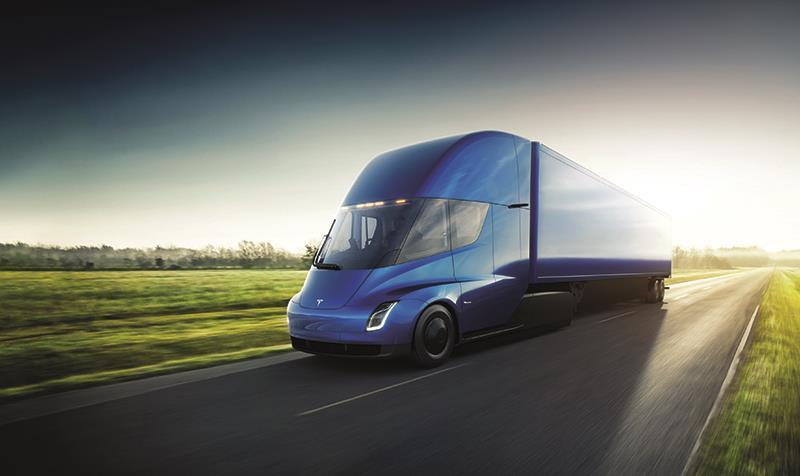

A severe Tesla Semi truck fire in Sacramento required extensive resources to extinguish.
- The Tesla Semi crashed and burst into flames, necessitating the use of 50,000 gallons of water.
- Firefighters, aided by an aircraft, struggled to bring the 1,000-degree battery fire under control.
- The NTSB is investigating the crash to understand the fire risks posed by lithium-ion batteries.
- Tesla’s 2022 Semi model, involved in the crash, raises questions about battery safety amidst production challenges.
A Tesla Semi truck incident in Sacramento, California, has drawn significant attention due to the extensive measures needed to control the ensuing fire. The accident occurred when the vehicle came off the highway at a bend, collided with a tree, and ignited. This resulted in a challenging situation for responding firefighters who had to utilise an astonishing 50,000 gallons of water to subdue the blaze. Additionally, firefighting aircraft were deployed to drop fire retardant in efforts to manage the fire, which was fuelled by the truck’s large lithium-ion battery.
The crash happened at 3:13 am on August 19, and incredibly, the driver managed to escape without injury. However, the repercussions on the environment and traffic were considerable as the accident blocked the freeway for approximately 16 hours. The focus quickly turned to the Tesla Semi’s 900 kWh battery, which erupted into flames, reaching temperatures of 1,000 degrees Fahrenheit (538 degrees Celsius) while releasing toxic fumes. Firefighters worked relentlessly to cool the fire, which continued to burn throughout the day.
Tesla demonstrated proactive engagement by sending a technical expert to evaluate the high-voltage dangers and fire safety of the site. Their involvement highlights the critical nature of addressing potential hazards related to electric vehicle fires, especially those involving significant battery capacity. The NTSB is conducting a thorough investigation to identify all elements contributing to the incident, underlining the complexities encountered with electric vehicle fires.
The National Transportation Safety Board (NTSB) has shifted focus to the fire risks associated with large lithium-ion battery packs, which have previously posed challenges to emergency services. A past NTSB report from 2021 had already flagged concerns about inadequate manufacturer guidelines geared towards fire incidents like this. All aspects of the crash remain under scrutiny as the agency works to determine the primary cause of the fire.
Tesla’s Semi model, which debuted in 2022, is powered uniquely by three motors and boasts threefold the power of a standard diesel truck. Despite its impressive range of 500 miles and efficient energy use of less than two kilowatt-hours per mile, the incident has sparked fresh debates on battery safety. With production finally initiated late in 2022, Tesla aims to achieve full-scale manufacturing by March 2026, targeting an annual output of 50,000 units from its facility near Giga Nevada.
The Tesla Semi truck fire highlights ongoing concerns about lithium-ion battery safety in electric vehicles, as investigations continue.

