
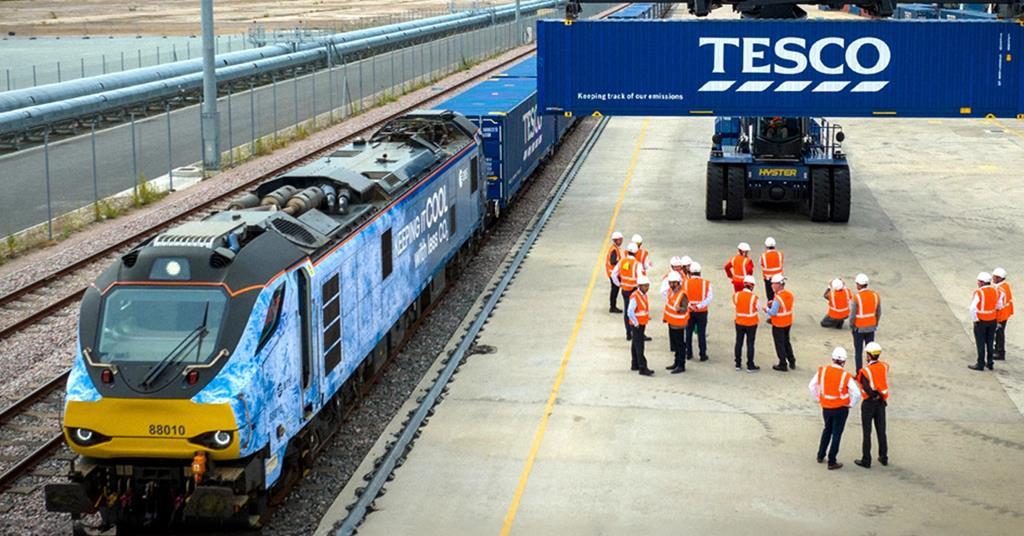

Tesco has launched its tenth rail service, aiming to cut down road freight.
- The rail service will replace 90 lorry journeys every week.
- Tesco continues to expand its rail network across the UK.
- The initiative will save over 6,000 tonnes of carbon emissions annually.
- Tesco’s efforts are part of a broader strategy to achieve carbon neutrality.
Tesco, the prominent supermarket chain, has introduced its tenth rail service this week in collaboration with Maritime Transport and Direct Rail Services. This service seeks to replace 90 lorry journeys weekly, marking a significant move towards reducing the retailer’s carbon footprint. By opting for rail, Tesco aims to decrease road congestion and increase the sustainability of its logistics operations.
This new rail link will facilitate the movement of an additional 31 million cases of goods per year, transported across Tesco’s extensive rail network rather than by road. Each week, it will handle around 600,000 cases – a shift that not only cuts down on over 90 lorry journeys weekly but also ensures that products are relocated from Tesco’s main distribution centre in Daventry to the regional centre in Widnes with greater efficiency.
The goods, comprising both fresh and dry items, will be transported by train to Maritime’s rail terminal in Manchester. From there, Maritime’s fleet will handle the final delivery leg to Tesco’s regional distribution centre and retail outlets in the region. This shift is projected to result in an annual saving of over 6,000 tonnes of carbon emissions, with the total goods transported by Tesco’s rail system exceeding 300 million cases each year.
Significantly, deliveries by rail will bring products nearer to the stores, particularly through the Trafford Park hub, facilitating more efficient last-mile logistics. The service operates six times weekly, from Monday to Saturday, and Tesco is actively collaborating with suppliers to optimise the service’s return leg.
Ken Murphy, Tesco Group Chief Executive, highlighted the importance of their distribution network in achieving carbon neutrality by 2035. He stated, “Switching from road to rail allows us to get products to our stores in a more sustainable way.” John Williams, Maritime Group Executive Chairman, affirmed their support for Tesco’s strategy by underscoring the strategic role of their Manchester terminal in supporting low-carbon logistics.
Further, Tesco is innovating with double-decker trailers, reducing truck trips by 40%. They are also enhancing their supply chain collaboration to align orders, thereby minimising vehicle requirements. Maritime Transport, now under the helm of Swiss-based MEDLOG, is crucial to this transition, holding a new three-year contract to manage rail operations at Tesco’s central hubs.
Tesco’s expanding rail network significantly advances its carbon reduction and sustainability goals.

