
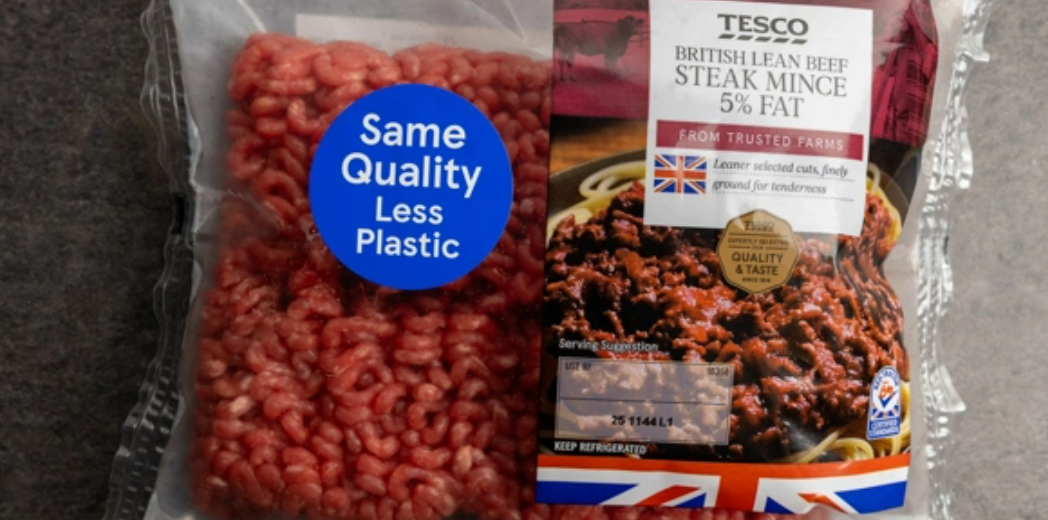

In a progressive move towards sustainability, Tesco is revolutionising its packaging strategy. Trading in its traditional plastic trays for innovative ‘pillow packs’, the retail giant is poised to cut plastic usage by an impressive 70%.
The new packaging, initially rolled out for 500g beef mince with varying fat content, promises multiple benefits. It not only supports the environment by reducing plastic but also enhances transportation efficiency and shelf availability, setting a new standard in the grocery industry.
To combat plastic waste, Tesco is shifting to ‘pillow packs’. These use 70% less plastic compared to the conventional tray wraps, marking a decisive step in reducing the retailer’s environmental footprint.
Unlike the vacuum-sealed packages of competitors, Tesco’s ‘pillow’ design maintains product integrity by preventing compression of the mince, ensuring optimal freshness and quality for consumers.
The compact nature of these new packs allows Tesco to optimise its logistics and shelf space. This improvement means fewer delivery lorries are required, thereby reducing carbon emissions associated with transport.
Additionally, these packs maximise shelf availability, making it easier for consumers to access fresh mince without disrupting store operations.
Tesco’s latest packaging can be recycled alongside other soft plastics in designated front-of-store recycling units. This feature aligns with the growing consumer demand for sustainable shopping options.
The convenience of recyclable packaging not only benefits the environment by reducing landfill contributions but also meets the expectations of eco-conscious shoppers.
With sustainability becoming a key factor in purchasing decisions, Tesco’s initiative is likely to play a critical role in maintaining its competitive edge in the marketplace.
The ‘pillow pack’ initiative is a crucial component of Tesco’s comprehensive 4Rs strategy: Remove, Reduce, Reuse, and Recycle. To date, this strategy has eliminated 2.2 billion pieces of plastic from circulation.
This systematic approach highlights Tesco’s commitment to environmental stewardship, focusing on tangible actions to lessen its ecological impact.
Dom Morrey, Tesco’s commercial director for fresh produce, emphasized the dual benefits of the new packaging—superior quality with less environmental impact.
Morrey noted that customers increasingly seek value and sustainability, with the ‘pillow packs’ meeting these dual expectations effectively.
“Pillow packs are a win-win,” Morrey stated, underscoring the balance between product quality and reduced plastic usage.
As Tesco pioneers this new packaging technology, the potential for broader adoption across various product lines is significant. Success could inspire more retailers to adopt similar strategies.
The shift towards sustainable packaging not only addresses environmental concerns but could also influence market trends and consumer behaviours, promoting widespread ecological responsibility.
Tesco’s transition to ‘pillow packs’ marks a milestone in sustainable retail practices. It reflects a growing trend where consumer preferences and environmental responsibility drive corporate innovations.
The adoption of ‘pillow packs’ by Tesco illustrates a meaningful shift towards eco-friendly practices in the grocery sector. This initiative not only addresses pressing environmental concerns but also aligns with consumer demands for sustainability, indicating a promising future for the reduction of plastic waste in retail.

