
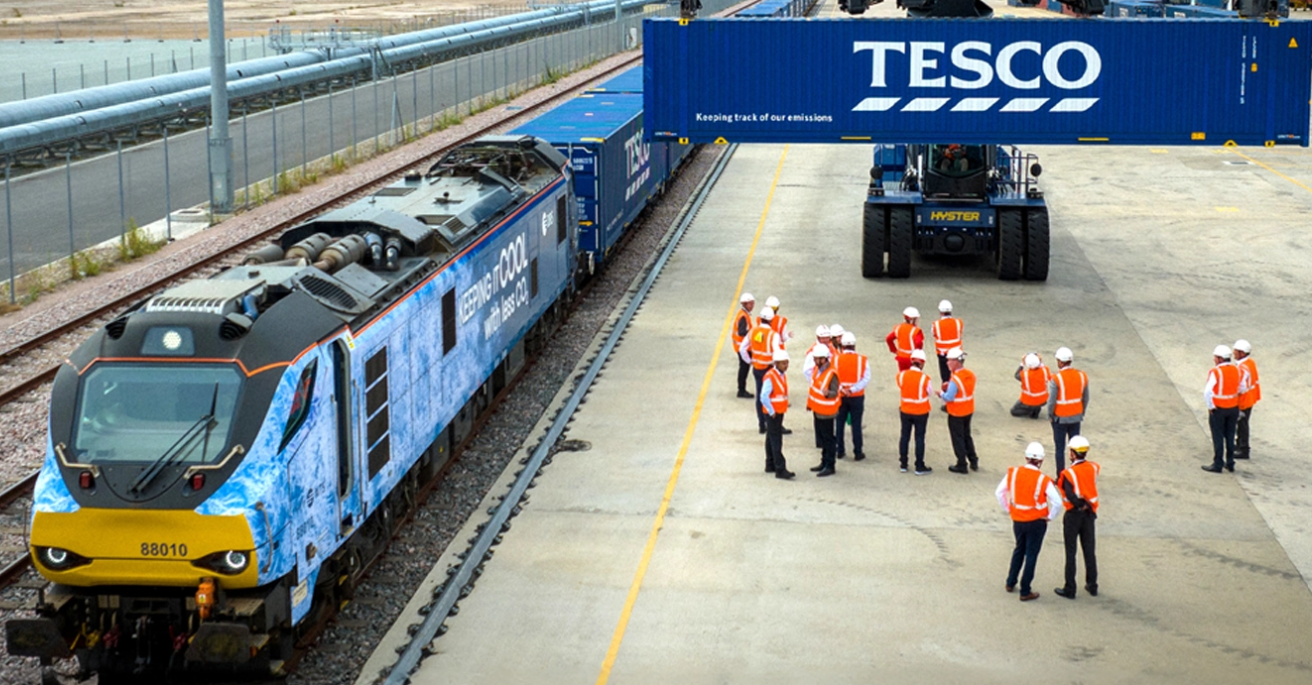

Tesco’s new train service aims to reduce carbon emissions significantly across the UK.
- The initiative involves the movement of 31 million cases of goods annually via train, replacing lorry transport.
- This service will result in a substantial reduction of road miles and carbon emissions, saving over 6,000 tonnes of CO2e.
- The new route enhances Tesco’s logistical efficiency by bringing products closer to stores for final distribution.
- Partnerships with suppliers help minimise emissions further, enhancing environmental sustainability.
In a significant stride towards environmental sustainability, Tesco has launched its tenth and largest train service, poised to transport an additional 31 million cases of goods across the United Kingdom each year. By shifting from road to rail, the retail giant aims to replace more than 90 weekly lorry trips previously necessary for a 260-mile round trip from its primary distribution hub in Daventry, Northamptonshire, to the regional distribution centre in Widnes, Northwest England.
The move to rail is expected to notably reduce road miles, with the new operation anticipated to cut annual emissions by over 6,000 tonnes of CO2 equivalent. The service is designed to run six times a week, extending the total volume of goods moved via Tesco’s rail network to more than 300 million cases each year. This initiative underscores the company’s commitment to more sustainable delivery practices.
Tesco’s strategic decision to expand its rail logistics is executed in collaboration with DRS and Maritime, further amplifying its environmental impact by extending rail deliveries to 198 stores. This partnership not only enhances operational efficiency but also supports the retailer’s broader effort to attain carbon neutrality in its operations by 2035.
A diverse range of suppliers, including notable names such as L’Oréal, AB World Foods, PZ Cussons, and Heinz, are poised to benefit from this new rail route. By transitioning to a rail-centric delivery model, these suppliers can substantially reduce their own emissions, thus contributing to a greener supply chain.
Ken Murphy, Tesco’s Group Chief Executive, emphasised the importance of this transition, stating, “Switching from road to rail allows us to get products to our stores in a more sustainable way, by removing thousands of lorry journeys each year and reducing our carbon emissions.” Such statements highlight the strategic alignment of Tesco’s logistical operations with its overarching environmental objectives.
Complementing the rail network expansion, Tesco is also refining its road transport strategies. It has introduced double-decker trailers, facilitating a 40% reduction in the number of truck journeys required. Furthermore, collaborations with suppliers now enable them to purchase transport for complete journeys rather than one-way trips, engendering a 50% reduction in vehicles needed for these logistics.
Tesco’s comprehensive approach to enhancing its supply chain underscores a commitment to reducing its carbon footprint and fostering sustainable business practices.

