
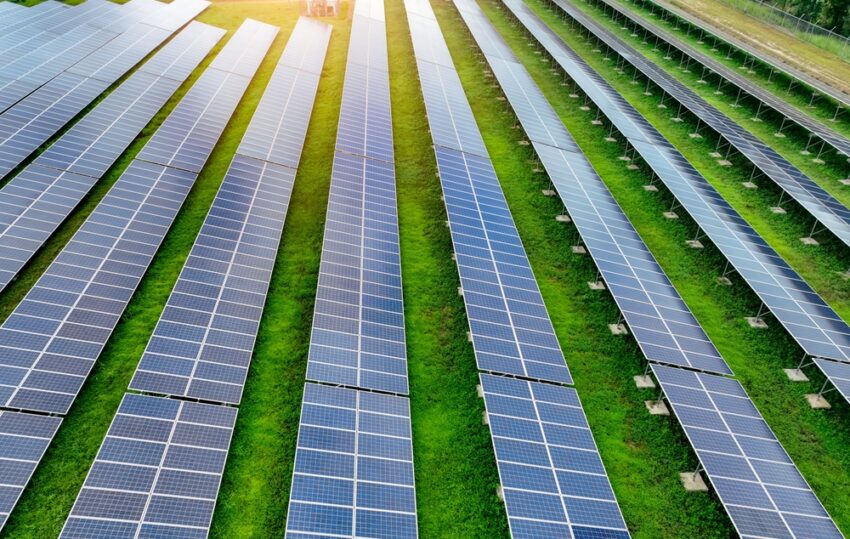

Tesco and Shell have entered an agreement to harness power from the UK’s largest solar farm, Cleve Hill, shifting its original focus from residential supply to commercial use.
This move has sparked a debate about the balance between corporate interests and environmental commitments, highlighting the complexities in the UK’s push towards renewable energy.
Redirection of Renewable Resources
The Cleve Hill solar farm project, situated on vast acres of Kent’s coastline, was initially designed to cater to local homes. However, it will now provide 65% of its electricity to Tesco’s supermarkets and 35% to Shell’s EV stations.
This transition, approved despite protests, has caused frustration among local environmental groups, including CPRE Kent, which highlights the irony of corporate gain under a ‘green’ initiative.
Corporate Agreements and Environmental Implications
Tesco’s commitment, through a power purchase agreement, will cover up to 10% of its UK energy demand, aligning with its sustainability goals. The project’s output supports Shell’s ambitions in the renewable sector, notwithstanding ongoing criticism.
The redevelopment of Cleve Hill emphasises the tension between renewable energy advancements and corporate dealings, underscoring a shift in priorities from local households to major commercial entities.
Controversy Over Environmental Impact
The solar farm, consisting of 560,000 panels, is located on Graveney Marshes, a site cherished for its wildlife diversity. Critics argue that its transformation into an energy hub threatens natural habitats.
Vicky Ellis of CPRE Kent articulates concerns over the loss of natural beauty and the supposed compromise of initially promised local energy benefits.
This has been part of a broader conversation on the balance needed between economic developments and ecological preservation, as voiced by various environmental advocates.
Financial and Structural Overview
Financed by Quinbrook Infrastructure Partners, Cleve Hill will generate 373 MW, equating to significant power output akin to half a small gas-powered station. Some installations stand as high as double-decker buses, adapted for the landscape’s flood-prone areas.
The project’s financial backbone underscores the ambition, complexity, and economic implications of transitioning to large-scale solar energy projects within the UK.
Future of Solar Power in the UK
With expectations for the Cleve Hill initiative to be surpassed by larger projects like the upcoming Cottam solar farm, the UK is poised for a notable increase in solar capacity.
Chris Hewett from Solar Energy UK highlights the industry’s aim to triple capacity by 2030, indicating a potential rise in similar corporate deals.
Such developments reflect an ambitious national agenda to scale renewable energy solutions amidst ongoing debates over their execution and outcomes.
Governmental and Corporate Roles
The UK’s renewable energy strategy involves both government and corporate participation, with projects like Cleve Hill serving as pivotal examples of their interdependence.
Alok Sharma’s approval in 2020, despite public resistance, illustrated governmental support for large-scale solar developments, which are crucial to national energy goals.
This dynamic showcases how policy and corporate action intersect to shape the sustainable energy landscape.
Conclusion
Tesco and Shell’s collaboration with Cleve Hill underlines the intersection of corporate strategies and national energy goals, but it’s not without contention.
As the UK accelerates its renewable energy transition, achieving genuine sustainability will require harmonising corporate ambitions with environmental stewardship.
The repurposing of Cleve Hill reflects broader dynamics in renewable energy practices, revealing tensions between corporate needs and environmental promises.
Balancing economic gain with ecological integrity stands as a central challenge in the evolving landscape of sustainable energy.

