
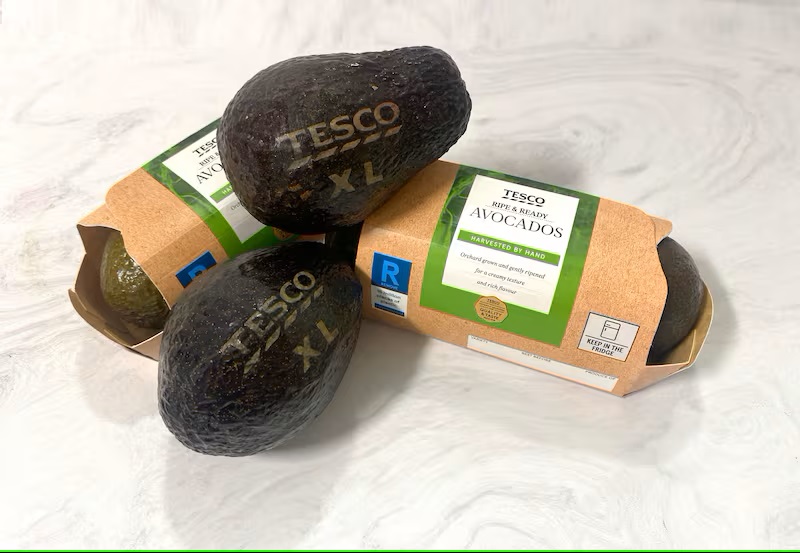

Tesco is making strides in sustainability by trialling laser-etched barcodes on avocados, replacing traditional stickers. This move is part of Tesco’s broader initiative to minimise waste and environmental impact.
By eliminating plastic stickers, Tesco aims to enhance the compostability of avocados and simplify consumer recycling efforts. This initiative aligns with emerging trends in eco-friendly packaging within the retail industry, reflecting Tesco’s commitment to innovation and sustainability.
Tesco has initiated a trial of laser-etched barcodes on avocados to replace traditional stickers, aiming to reduce waste. The implementation involves using high-powered lasers to etch size information onto the fruit’s skin, a process completed in merely a third of a second. Avocado supplier Westfalia Fruit assures that this innovative approach will not compromise the fruit’s quality or shelf life.
Moreover, the supermarket is testing the replacement of plastic tray packaging with recyclable cardboard containers for two popular avocado lines in 270 stores across south-east England. Should these trials prove successful, Tesco could remove over 20 million pieces of plastic tray packaging just from its twin pack avocados. Across its entire pre-packaged range, this could mean up to 25 million fewer pieces of plastic.
Tesco’s avocado buyer, Lisa Gilbey, expressed excitement over receiving customer feedback on this initiative. “We’re really excited to hear customer feedback on our new laser-etched avocados, avoiding the need for a barcode sticker that can easily be forgotten,” she stated. Her comments underscore Tesco’s commitment to integrating consumer insights into their sustainability strategies.
Furthermore, this collaboration reflects a strategic effort to innovate continuously, driven by consumer preferences and environmental responsibilities. It highlights the importance of synchronised efforts in the supply chain to meet sustainability benchmarks without compromising on product quality.
The retail giant’s proactive approach to testing recyclable packaging and laser technology signals a forward-looking attitude towards environmental stewardship. As these trials unfold, they hold the potential to revolutionise industry practices, encouraging others to follow suit and adopt greener solutions.
Tesco’s exploration of laser-etched barcodes presents a promising step towards sustainable retail practices. With the potential to drastically reduce plastic waste, this initiative underscores the importance of innovation and collaboration in tackling environmental challenges. As Tesco continues to refine and expand its efforts, the implications for both the company and the retail sector as a whole may be profound.
In conclusion, Tesco’s laser-etched avocados initiative is not just a step forward in reducing plastic usage, but it also represents a commitment to sustainable innovation.
By collaborating with suppliers and embracing cutting-edge technology, Tesco is setting a new benchmark in retail sustainability, promising broader environmental benefits and influencing industry standards.

