
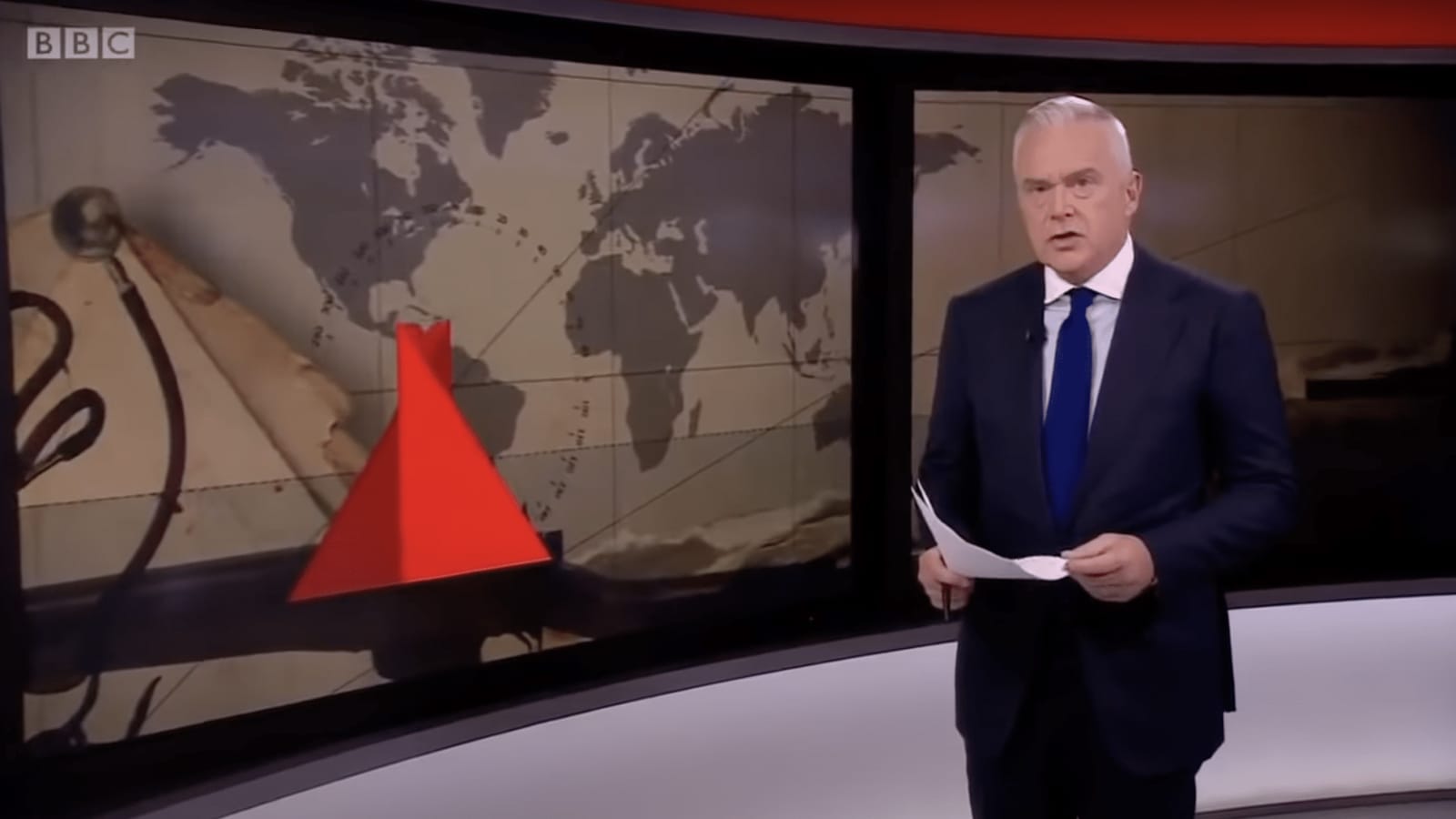

Huw Edwards, former BBC newsreader, receives a six-month suspended sentence.
- Edwards admitted to accessing indecent images of children as young as seven.
- The presenter was one of the BBC’s most recognised and highly paid journalists.
- Court evidence highlighted Edwards’ mental health issues affecting his recollection.
- Edwards apologises, acknowledging harm caused and breaches of trust.
Former BBC anchor Huw Edwards has been handed a six-month suspended prison sentence after he admitted to accessing indecent images of children as young as seven. It was determined by the Westminster magistrates’ court that Edwards would not face immediate incarceration but would need to partake in a rehabilitation programme to avert further offences. During the sentencing, Edwards was described as appearing “pale and tired”. Chief Magistrate Paul Goldspring acknowledged Edwards’s noteworthy career, referring to him as “perhaps the most recognised newsreader/journalist in the UK,” yet remarked that his once sterling reputation was now tarnished.
The court acknowledged the presence of mental health issues in Edwards’s life, noting that these could have impacted his recollection of viewing such images. Having struggled with his sexuality since 1994, and facing arteriosclerosis among other mental health challenges, there was noted concern over Edwards’s risk of suicide. The charges stemmed from evidence that Edwards had engaged in a WhatsApp conversation with Alex Williams, a convicted paedophile, during which he was sent 41 illegal images over several months.
In this conversation, Edwards was sent graphic content, including 41 indecent images. The seven of the images were classified as category A, the gravest classification, while others were noted as category B and C. Despite defence claims that Edwards had instructed Williams not to send any more illegal content, the court transcript revealed he had, at times, shown interest in receiving such illicit material.
Prosecutor Ian Hope detailed how the interactions between Edwards and Williams often involved monetary exchanges, purportedly to support Williams at university. Edwards reportedly provided between £1,000 to £1,500 to Williams, supposedly with no strings attached. Furthermore, on a specific occasion, despite receiving a video involving young children, Edwards’s response to the subsequent question was a request for no underage content to be sent.
Edwards’s defence, led by Philip Evans KC, argued that his client had explicitly requested the cessation of illegal image transfers. Evans underlined that no evidence suggested Edwards misused his position at the BBC to obtain such material. Through his barrister, Edwards extended a heartfelt apology to the court and those affected, acknowledging the “repugnant nature” of the images and the extensive hurt caused to his family and others.
The court’s decision reflects a balance between acknowledging the severity of the offences and considering Edwards’s personal circumstances and mental health challenges.

