
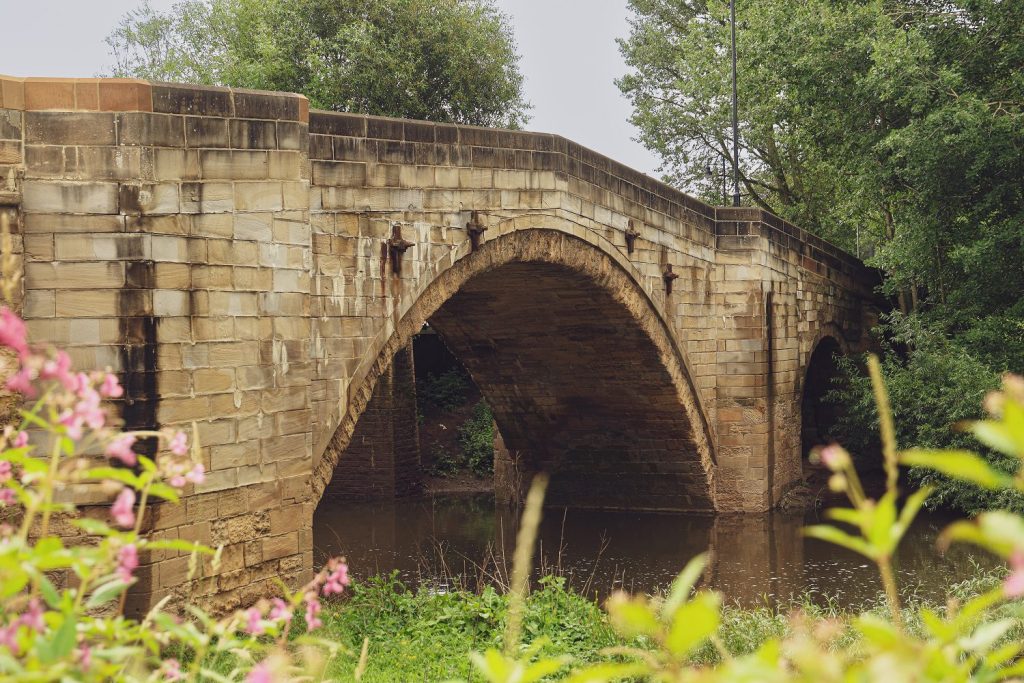

The historic Stamford Bridge in Yorkshire, built in 1727, has been restored ahead of schedule.
- Esh Construction undertook the restoration, completing it two weeks early despite various challenges.
- Traffic disruptions were minimised through extended working hours, benefiting local communities.
- The restoration required specialised techniques to preserve the bridge’s historic integrity.
- Modern safety features were added to ensure the bridge’s structural stability into the future.
Stamford Bridge, an 80-metre long bridge constructed in 1727, plays a crucial role in the village of Stamford Bridge by facilitating the A166 over the River Derwent. Recognised for its historical significance as a Grade II listed structure, the bridge had sustained considerable damage from several traffic incidents, necessitating urgent restoration efforts.
The East Riding Of Yorkshire Council appointed Esh Construction to perform the £350,000 restoration via the YORHub civils framework. Commencing in May, the project was distinguished by its completion two weeks ahead of schedule, achieved by extending work hours to minimise inconvenience to local traffic. Esh Construction’s approach mitigated significant disruptions effectively.
Addressing the delicate nature of the bridge, Esh Construction employed precise restoration techniques. As Steven Garrigan, their divisional director, noted, the project required a delicate balance, utilising large stone bricks and lime mortar deliberately to mend the damaged stone parapets. To bolster the bridge’s durability, stainless steel rods were incorporated, providing added strength and flexibility.
Modernisation efforts accompanied the restoration, incorporating energy-efficient traffic lights and installing warning bollards to enhance safety measures. These modifications reflect a forward-thinking approach to ensuring the bridge’s utility and safety in contemporary contexts, complementing the traditional restoration methods.
Paul West, from the East Riding of Yorkshire Council, expressed satisfaction with the results, acknowledging the necessary inconvenience during the repairs. He emphasised the project’s importance as a substantial investment in the local community, with the restoration returning the bridge to its former glory and ensuring its longevity.
The timely completion of Stamford Bridge’s restoration signifies a successful blend of historical preservation and modern engineering.

