
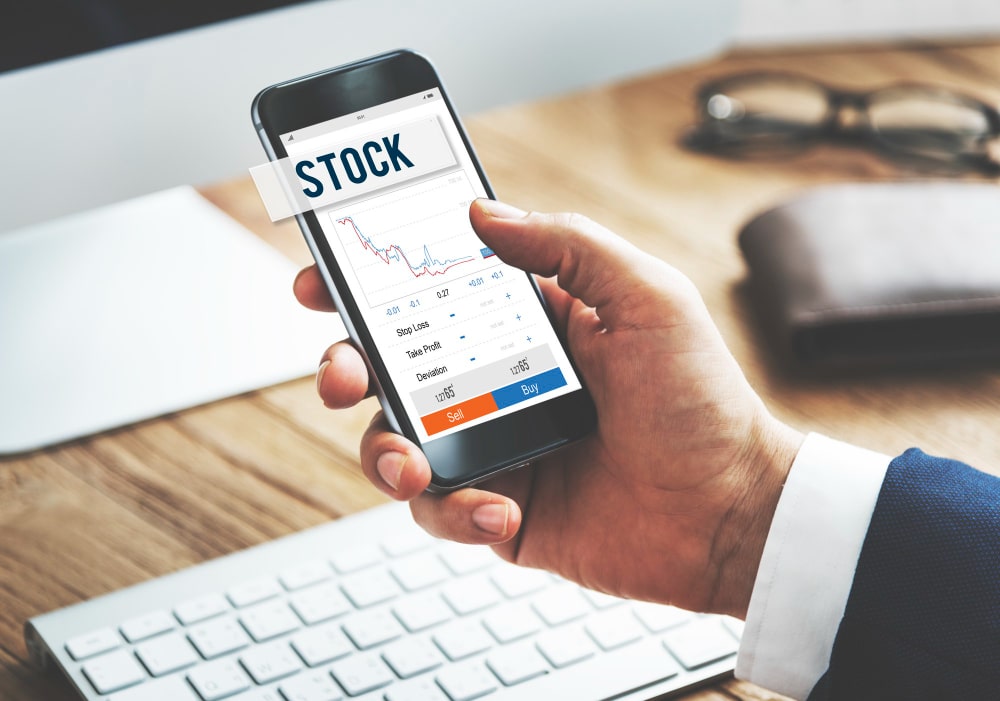

The trading floor no longer resembles the movies. Paper tickets thrown across desks and frantic hand signals are no longer present. Instead, a portfolio manager observes multiple screens flickering with price movements in a calm office with a view of Manhattan’s Hudson River. One of them is unavoidably SPY, the ticker that the majority of investors check first each morning.
In the traditional sense, SPY is not a glamorous stock. It doesn’t announce futuristic projects like Tesla or introduce new devices like Apple. Rather, it discreetly monitors the performance of the S&P 500, an index that comprises 500 of the biggest US publicly traded companies. Purchasing SPY is essentially purchasing a portion of the American economy.
| Category | Details |
|---|---|
| ETF Name | SPDR S&P 500 ETF Trust |
| Ticker Symbol | SPY |
| Exchange | NYSE Arca |
| Issuer | State Street Global Advisors |
| Current Price (approx.) | $662.29 |
| Assets Under Management | ~$698 Billion |
| Expense Ratio | 0.09% |
| Index Tracked | S&P 500 Index |
| Top Holdings | NVIDIA, Apple, Microsoft, Amazon, Alphabet |
| Reference Source | https://finance.yahoo.com/quote/SPY |
The fund’s massive growth could be attributed to its simplicity. SPY has grown to be one of the biggest exchange-traded funds ever established, with assets of almost $700 billion. It serves almost as a default option for many investors, particularly those who would rather have wide exposure than select specific stocks.
It’s simple to forget how groundbreaking the concept was when strolling through lower Manhattan’s financial district. Purchasing an entire index in a single trade felt almost experimental when the SPDR S&P 500 ETF first came out in the early 1990s. It’s almost a given now.
The same companies that comprise the S&P 500 index are held by SPY and are weighted based on their market value. This indicates that the portfolio is dominated by industry titans like NVIDIA, Apple, Microsoft, Amazon, and Alphabet. In actuality, over one-third of the fund’s assets are in the top ten holdings. It’s frequently like watching the tech industry breathe when you look at the ETF’s chart.
Over time, technology companies have become increasingly influential within SPY. Industrial and energy companies were more prominent twenty years ago. These days, a large portion of the movement is driven by software platforms and artificial intelligence companies. Investors who purchase SPY may believe they are placing a wide wager on the economy, but in reality, they are also placing a sizable wager on Silicon Valley.
Nevertheless, the simplicity of the ETF is what makes it so popular. Investors just purchase the index and wait, rather than attempting to forecast which company will perform better in the upcoming quarter. That approach has historically proven surprisingly effective over extended periods of time. The overall S&P 500 has increased by over 6,000 percent since 1980, withstanding market crashes, wars, recessions, and political upheavals.
This does not imply that SPY is impervious to fluctuations. Rising oil prices and geopolitical tensions have rocked markets in recent weeks. At one point, the VIX volatility index increased by almost 40 percent in just a few weeks while crude surged toward $100 per barrel. However, despite headlines warning of trouble, retail traders continued to purchase SPY in an oddly optimistic manner.
Investors may have become accustomed to crises. The market has withstood numerous geopolitical shocks, the COVID-19 pandemic, the global financial crisis, and the dot-com collapse in just the last three decades. Before markets eventually recovered, confidence was momentarily shaken by each event.
Online retail trading communities frequently view SPY as a cultural icon. You can find traders talking about it with surprising familiarity if you browse through financial forums. Some purchase it as a secure long-term investment. Others engage in aggressive trading, placing bets on short-term market fluctuations using leverage and options.
SPY is unique because of its dual identity as a trading vehicle and a stable investment. Day traders monitor its minute-by-minute fluctuations, while institutional investors hold it for pension funds and retirement portfolios. Few financial products function well in both contexts.
Additionally, SPY investing has an emotional component that is uncommon in spreadsheets. Owning the ETF feels to many investors like taking part in the larger story of American capitalism. An increase in the market is a sign of economic growth, corporate expansion, and innovation. When it declines, it frequently reflects more general future uncertainty.
Naturally, detractors caution that the S&P 500’s concentration of large tech companies may become a vulnerability. The entire index, and thus SPY, could be affected if a few leading companies falter. Whether diversification within the index is still as widespread as it once was is still up for debate.
It’s difficult to ignore how much attention one straightforward ticker receives when you watch the market open every morning and see SPY’s price fluctuate by fractions of a dollar. It has evolved into a sort of acronym for the whole stock market for traders, analysts, and regular investors.
And that might be the story’s most intriguing aspect. Excitement is not promised by SPY. It doesn’t present a compelling story about a single company transforming the world. Rather, it subtly depicts the combined performance of hundreds of companies navigating economic cycles.
Rising at times. falling occasionally. watched all the time.

