
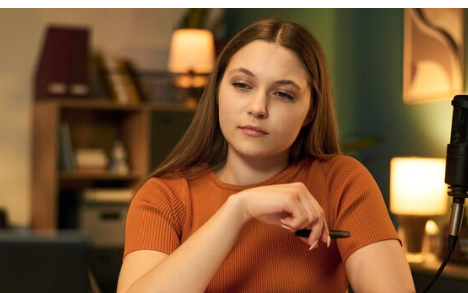

In the last ten years, the creator economy has created many amazing financial stories, but very few of them begin with food stamps and reach $100 million in just eighteen months. Born in Miami in 2004 or 2005, Sophie Rain has been active on OnlyFans since 2023. In January 2026, she said that her total earnings from the platform had exceeded that amount. On its own, the number is powerful enough. It is one of the more really remarkable stories in the contemporary attention economy because of the surrounding context, which includes the co-founded creator collective, the charity commitment, the ongoing cultural debate, and the open discussion of her Christian faith alongside the explicit stuff she creates.
Her publicly stated income trend is sufficiently detailed to be followed. According to reports, she made almost $43 million in her first year on the platform. She made this announcement in late 2024, and it garnered a lot of media attention. Cumulative gross earnings for a year and a half were little over $76 million, according to a snapshot posted in June 2025. After deducting the platform’s revenue share and associated expenses, reported gross earnings reached $85 million by March 2026, with a net profit of more than $50 million.
| Category | Details |
|---|---|
| Name | Sophie Rain |
| Date of Birth | 2004 or 2005 |
| Age | 20–21 |
| Birthplace | Miami, Florida, USA |
| Occupation | Internet personality, content creator |
| Years Active | 2023–present |
| Reported Net Profit (Early 2025) | $50+ Million |
| Reported Gross Earnings (March 2026) | $85+ Million |
| Confirmed Earnings (January 2026) | $100+ Million |
| First Year Earnings (reported) | ~$43 Million |
| Co-Founded | Bop House (with Aishah Sofey, December 2024) |
| Current Base | Tampa, Florida (farm) |
| Reference Website |
Since OnlyFans takes a 20% cut of creator revenue, the gross-to-net disparity is a result of the conventional structure being used on an exceptionally large scale. The underlying sales statistics are substantial enough that the differences at the margin don’t significantly alter the narrative, regardless of the exact approach she uses to define “net profit” in public remarks.
The creator collaborative Bop House, which she co-founded in December 2024 with fellow creator Aishah Sofey, began as a partnership in a Fort Lauderdale Airbnb before moving to a Brickell tower following a string of landlord and security issues. By early January 2025, the collective had 1.3 million followers on its own accounts, while the original eight producers in the home had at least 33 million TikTok followers.
A professional logic that influencer marketing has been using for years in other categories is reflected in the model—creators creating cross-promotional content together, combining audience access and production infrastructure—adapted for a subscription content context where audience size translates into direct subscription revenue rather than brand deal income. Although Rain continued working remotely with other members, she moved out of the house in July 2025 to spend more time on her farm in Tampa.
One aspect of Rain’s public campaign is captured by the August 2025 MrBeast charity stream appearance. At a time when her OnlyFans profile promoted sexual content, calling into a high-profile charity event and offering $1 million is the kind of move that elicits quite diverse reactions depending on who is watching. For some, it’s proof that substantial profits from adult content may be used extensively for charitable purposes.
Others see it as an illustration of the kinds of cultural paradoxes that the platform economy creates. In a way that has drawn criticism from traditional religious communities as well as admiration from those who find the consistency of her self-presentation more intriguing than the contradiction itself, Rain herself has addressed these contradictions directly and publicly, discussing her Christian faith in the same social media platforms where she promotes subscription content.
Early in 2026, Florida governor candidate James Fishback publicly accused OnlyFans of abusing Rain, adding a political element. With the specific authority of someone who has amassed more wealth on one of those platforms than nearly anyone in its history, she entered a political debate about the regulation of adult content platforms by outright denying this and opposing his proposed 50% “sin tax” on OnlyFans creator income. Her desire to confront the issue head-on rather than sidestep the controversy is consistent with the larger pattern of a public figure who has not been particularly concerned in controlling her image through silence, even when it is actually unclear whether her intervention affects the policy outcome.
Tracking the Sophie Rain story from Fort Lauderdale Airbnbs to a Tampa farm to a $100 million confirmation gives me the impression that the creator economy is still in its early stages of development and that the cultural frameworks we use to assess its most extreme outcomes haven’t fully processed them yet. The funds are sufficiently verifiable to be taken seriously. In the platform economy, the rate at which it was acquired is truly unprecedented. One platform upgrade and one political proposal at a time, the implications for individuals who earn it, the platforms that facilitate it, and the more general problems about labor, autonomy, and value that the adult content subscription sector continues to raise are still being worked out.
