
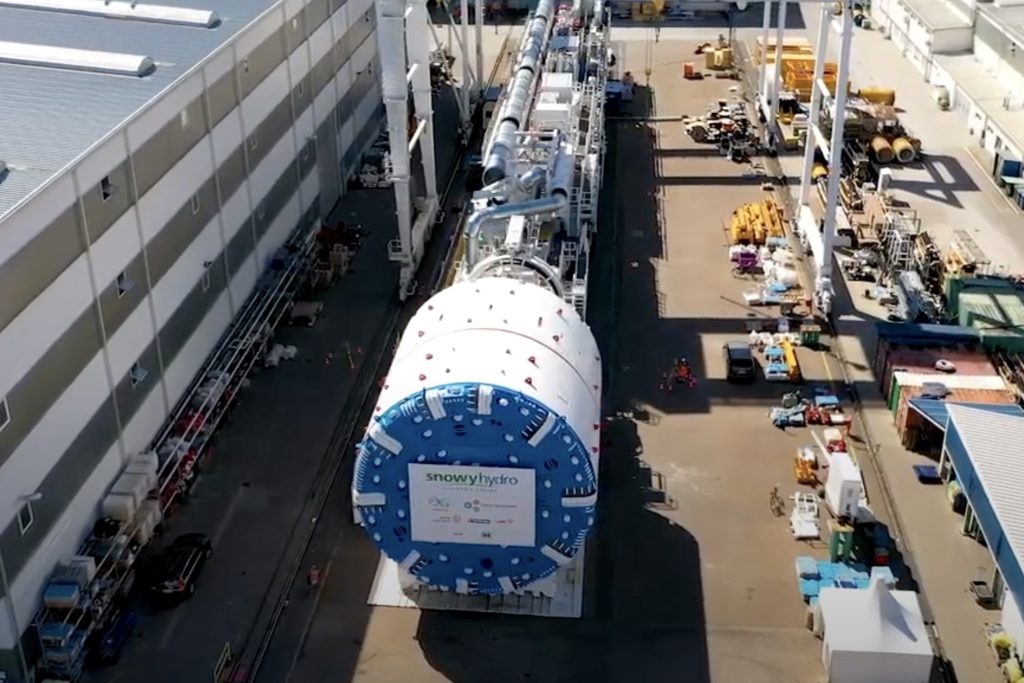

The Snowy 2.0 hydro project in New South Wales faces significant setbacks, necessitating strategic adjustments.
- An additional tunnel boring machine (TBM) costing £38.4M is being procured due to Florence’s underperformance.
- Complex geology revealed new challenges, prompting a reassessment of design and construction methods.
- The project’s budget has soared to £6.1bn with completion delayed by six years to 2028.
- Future Generation, a joint venture, remains confident in overcoming these hurdles without extra funding.
The ambitious Snowy 2.0 pumped hydro project, integral to New South Wales’ renewable energy future, has confronted substantial technical and financial obstacles. Initially budgeted at significantly lower costs, the project’s expenses have now escalated to £6.1bn, a rise starkly attributed to unexpected geological complexities and the underperformance of TBM ‘Florence’.
As reported, Florence became immobilised due to a series of operational missteps, including an incorrect trajectory and challenging ground conditions. This prompted the decision to invest in a new £38.4M tunnel boring machine to secure the project’s continuity and mitigate further delays. The new machinery aims to navigate an intricate 800-metre fault zone, anticipated to be reached in two years.
Official reports have outlined difficulties Florence faced, notably becoming stationary for eight months after encountering soft ground conditions. This incident highlighted initial design flaws in addressing the demanding geological landscape, necessitating comprehensive design reassessments.
Snowy Hydro’s CEO, Dennis Barnes, advocated the procurement of an additional TBM, describing it as “the right course of action” to address these newfound challenges. He stressed that updated geological assessments demonstrated the fault zone’s complexity was greater than prior data suggested, thus necessitating enhanced engineering solutions.
Future Generation, responsible for the project, remains committed to adhering to the revised timeline of December 2028, emphasising that no further financial input will be required. Meanwhile, approvals are awaited from the NSW government to implement the new construction strategies.
Strategic adaptations continue to drive Snowy 2.0 towards its green energy goals despite ongoing challenges.

