
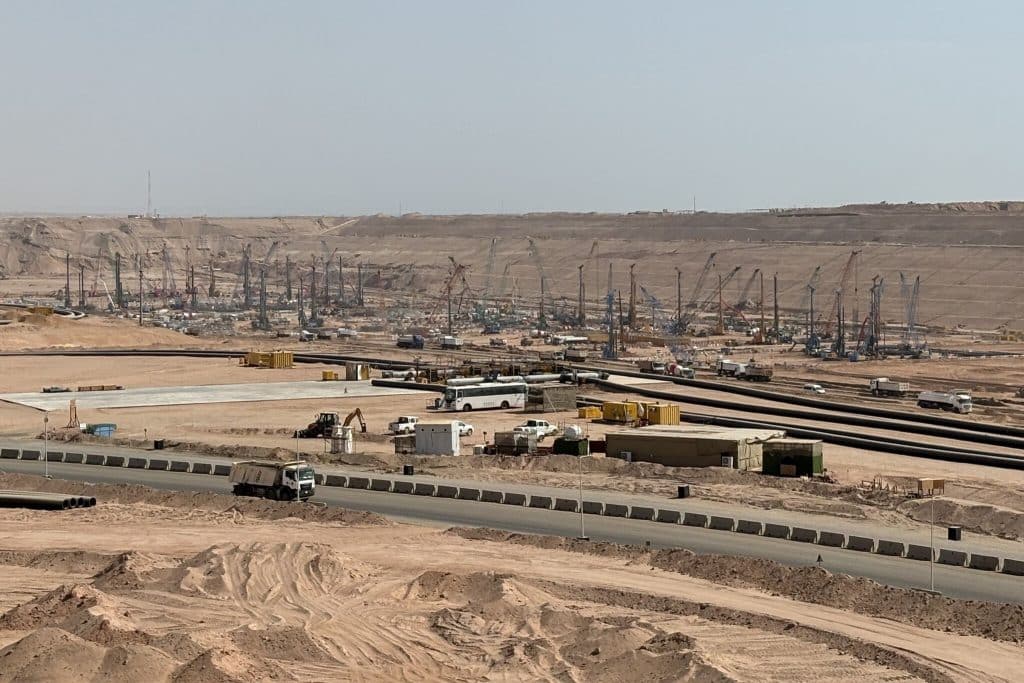

A recent exposé has spotlighted the silent stance of civil engineering firms working in Saudi Arabia, amidst allegations of thousands of worker fatalities.
- ITV’s documentary unveils that 21,000 workers have reportedly died during Saudi’s Vision 2030 project.
- Civil engineering giants remain unresponsive to these allegations, despite significant involvement in mega-projects like Neom.
- The documentary highlights severe worker conditions and alleged human rights abuses in Saudi Arabia.
- Responses from Saudi authorities and involved firms remain largely unaddressed, raising further concerns.
An investigative report by ITV has cast a spotlight on the unsettling silence from civil engineering companies involved in Saudi Arabia’s ambitious Vision 2030 project. Despite the project’s grand scale and high-profile nature, these firms have refrained from commenting on the reported 21,000 worker deaths associated with the initiative. The documentary asserts that Neom, a flagship project under Vision 2030, remains particularly opaque in its communications.
According to ITV’s Kingdom Uncovered, the project aims to bolster Saudi Arabia’s international standing, especially as it prepares to host the FIFA World Cup. Yet, the revelations concerning worker safety cast a shadow over these aspirations. The Neom development, a strikingly ambitious 170km urban project, is funded by Saudi Arabia’s sovereign wealth fund and managed by an array of unnamed professionals, whose reticence on the worker death toll is concerning.
The undercover report highlights distressing numbers: over 2,000 Nepali workers have died since the project’s inception, with a third of these deaths being classified as unexplained. Further, over 5,000 Bangladeshi and 14,000 Indian workers have reportedly perished within the same timeframe. These statistics, gathered from various sources, paint a grim picture of the realities behind the glitzy façade of progress.
Human rights abuses are also a significant focus of the documentary, including reports of increased but largely unpublicised executions, the imprisonment of women advocating for their rights, and poor treatment of foreign workers involved in the construction of The Line – a key component of Neom. The project’s scale is matched by the severity of the issues reported, with indigenous communities facing forced displacement and lethal violence from authorities.
The case of Abdulrahim Ahmed Al-Huwaiti, an indigenous leader who opposed Neom’s developments, underscores these bleak narratives. His vocal resistance—documented in various videos—culminated in his death during a confrontational raid by security forces, who later labelled him a terrorist. Allegations that weapons were planted posthumously to justify this narrative have been brought forward by an ex-Saudi intelligence officer.
On the ground, workers endure grueling conditions with excessive hours and inadequate rest, frequently working 12-hour shifts and facing long commutes. Despite regulations entitling workers to a day off per week, reports suggest compliance is sporadic. One employee highlighted the continuous cycle of two-week work periods with minimal breaks as normal. A particularly stark testimony from drivers detailed extreme exhaustion leading to frequent accidents, underscoring the perilous nature of these operational standards.
Despite the grave accusations, firms like Aecom, Bechtel, and Keller have maintained a tight-lipped stance. While some firms like Deme outright refused to comment, most did not respond to enquiries about the allegations. This silence contrasts with the high-profile roles these companies play, as evidenced by their significant contract awards and frequent recognition within the industry, such as nominations at the Construction Week Awards 2024.
A Neom spokesperson’s claim of enforcing stringent compliance with international labour standards rings hollow amid these allegations. The broader silence and lack of accountability from involved entities highlight a potential gap between stated policies and the realities on the ground. Saudi Arabia’s reluctance to permit independent journalism only compounds these concerns, leaving much of the story obscured from view.
The continued silence from civil engineering firms and the Saudi authorities, juxtaposed with serious allegations, warrants urgent scrutiny.

