
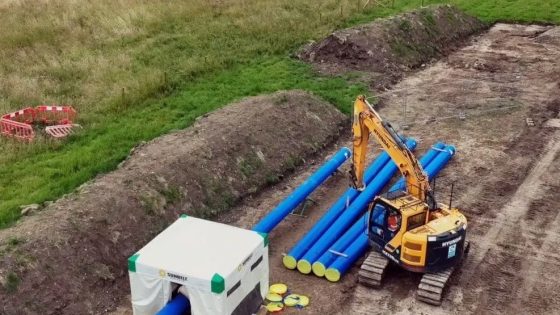

The £46M pipeline installation in Guildford is progressing steadily, with 5.8km already laid out of a planned 9km stretch.
- The new pipeline will connect Pewley Reservoir and Netley Mill water treatment works, enhancing water supply reliability for 9,000 homes.
- Completion of this project is expected by winter 2025, aiming to transfer up to 14M litres of water daily.
- Thames Water’s comprehensive upgrades encompass improvements at Shalford and Mousehill, ensuring water treatment reliability and availability.
- Officials acknowledge that the pipeline will support a backup supply to mitigate future disruptions, vital for local communities.
Guildford’s ambitious £46M pipeline installation project has reached a significant milestone, with 5.8 kilometres of the planned 9-kilometre pipeline already laid. This project is a crucial development in reinforcing the water supply infrastructure for Guildford and its surrounding areas.
The new pipeline, stretching between Pewley Reservoir and Netley Mill water treatment works, is designed to serve as an additional source of water supply for 9,000 homes. These homes, currently reliant on the Netley Mill facility, include residents of Cranleigh and nearby villages. This initiative is part of Thames Water’s larger programme to modernise and strengthen the water network in the Guildford region, involving a total investment of £93.1 million.
Upon completion, slated for winter 2025, the pipeline will have the capacity to transfer up to 14 million litres of water daily. This development is expected to significantly enhance the reliability of water supply across the area, which currently functions as a solitary water supply zone.
Beyond the main pipeline installation, Thames Water is executing a range of upgrades at several sites. At Shalford, improvements aim to bolster the reliability of the water treatment process. Meanwhile, at Mousehill, efforts focus on augmenting water availability. Additionally, the installation of a new power generator at the Ladymead site, along with control monitors at various booster stations, aims to mitigate power surge impacts and minimise supply interruptions.
These enhancements are complemented by upgrades at the water treatment facilities at Ladymead, Netley Mill, and Mousehill. Together, these strategic improvements are geared towards fortifying the resilience of the region’s water infrastructure.
Paul Wetton, Thames Water’s strategic programme director for water, emphasised the importance of the new pipeline: “We’ve made significant progress to improve resilience and reliability to water supply across the Guildford area, carrying out a series of upgrades to our water treatment sites and laying over half of our new water transfer pipeline between east and west. The Guildford area currently operates as an ‘island’ water supply zone and the new pipeline is particularly important in helping prevent future supply interruptions across the local area.”
The pipeline project has received political backing as well. Jeremy Hunt, the MP for Godalming and Ash, acknowledged the necessity of this investment for the community’s future water security. “It’s encouraging to see Thames Water make much needed progress to improve the reliability of local water supply. The investment is long overdue and essential for our community’s future water security,” he stated, noting the community’s past struggles with water outages.
The new Guildford water pipeline is set to significantly enhance water supply reliability for the region’s residents upon its completion.

