

The Shetland Islands have made a significant leap towards energy integration.
- For the first time, Shetland connects to the GB electricity grid via a new 260km offshore link.
- The link comes alongside the energisation of the Viking Wind Farm, heralding a new era for renewable energy.
- The initiative promises to transform energy security with a substantial investment in clean energy.
- Shetland’s project sets a precedent as the first multi-terminal HVDC link in Europe.
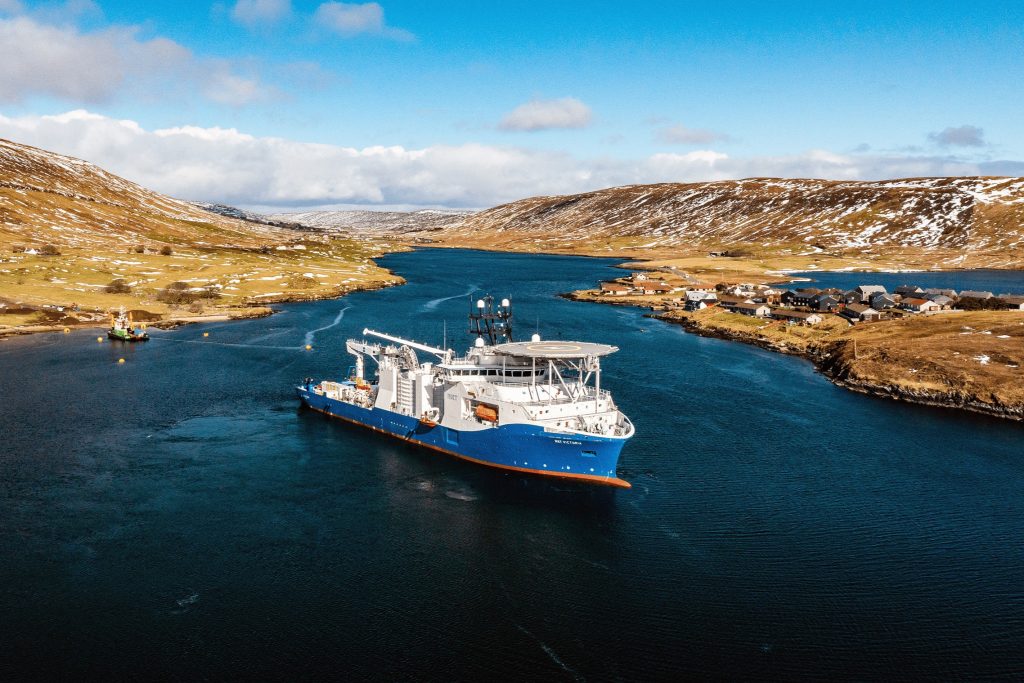
The Shetland Islands have been connected to the Great British electricity grid for the first time, marking a pivotal moment in energy integration. This milestone was achieved with the powering up of the 260km High-Voltage Direct Current (HVDC) offshore Shetland Link. Final energisation occurred earlier this month following the completion of two key projects: SSE Renewables’ Viking Wind Farm and SSEN Transmission’s subsea transmission cable. Together, these advancements signify substantial progress towards clean energy commitments.
The Viking Wind Farm, which began generating power in June, is poised to become the UK’s most productive onshore wind farm. It boasts an installed capacity of 443MW, with an expected annual output of approximately 1.8TWh of renewable electricity. This, paired with the subsea transmission link, represents a £1bn investment, hailed by SSE as one of the largest private commitments to clean energy in the UK.
Following recent developments, efforts are underway to connect Shetland’s existing electricity distribution network to the broader transmission grid. This involves constructing a new Grid Supply Point at Gremista in Shetland. The installation of overhead lines and underground cable circuits between Kergord and Gremista is progressing, with completion expected by 2025. This expansion is critical for integrating Shetland’s homes and businesses into the national grid.
The project has faced its share of challenges, including environmental concerns. Shetland Islands Council had advised SSEN Transmission to consider the unique environmental conditions after a peat slip incident. Despite these hurdles, the initiative aims to provide Shetland with 600MW of low carbon power, contributing significantly to the UK and Scotland’s net-zero and energy security targets.
The HVDC link features a cutting-edge design and is the first multi-terminal version in Europe. Energy from Shetland is not only directed towards the mainland but is also channeled to dual converter stations at Spittal and Blackhillock, enabling flexible energy flow. This project positions itself on the global stage, being only the second of its kind in the world, following a similar development in China.
SSEN Transmission collaborated with notable partners, including Bam Nuttall, which managed civil construction, and Hitachi Energy, which supplied crucial HVDC technology. NKT contributed the HVDC cable system and expert installation services. The concerted efforts of these partners culminated in a project celebrated for its early completion, budget adherence, and safety.
Statements from key figures highlighted the project’s success. Huw Jones from Bam Nuttall expressed pride in contributing to a greener future, while SSEN’s Rob McDonald emphasized the achievement’s significance in the journey towards clean energy. Hitachi Energy’s involvement underscored the importance of innovative solutions in achieving energy objectives.
This pioneering project exemplifies innovation and collaboration in advancing Shetland’s clean energy landscape.

