
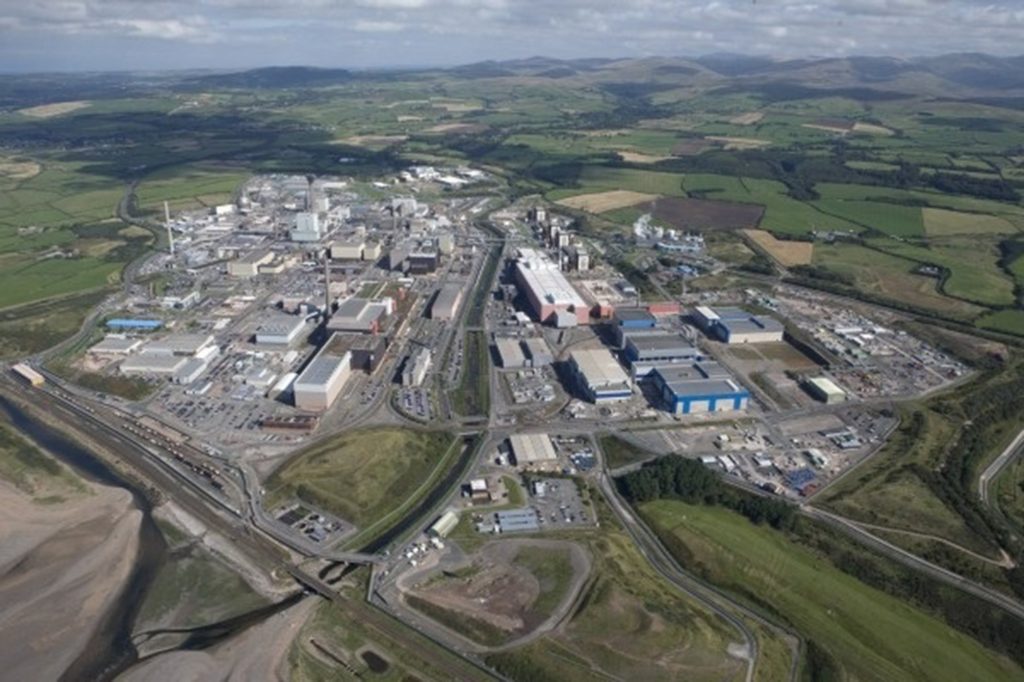

Sellafield Ltd’s recent admission underscores serious cybersecurity and waste management lapses, raising national security concerns.
- The Guardian’s investigation revealed that potentially dangerous information was unguarded for four years.
- Sellafield acknowledged its historical cybersecurity failures and pledges ongoing improvements.
- Campaigners argue this incident exemplifies the inherent risks of nuclear facilities and call for policy changes.
- The UK Government and ONR remain vigilant in ensuring the robustness of national nuclear infrastructure.
In a striking development, Sellafield Ltd, the entity overseeing Europe’s largest nuclear waste site, recently confessed to cybersecurity inadequacies, prompting national security alarms. The admission followed a damning report from The Guardian’s Nuclear Leaks investigation, which highlighted that information critical to national security had been accessible for an alarming duration of four years.
This disclosure prompted legal proceedings with the Office for Nuclear Regulation (ONR) as the prosecuting body. During a session at Westminster Magistrates’ Court on 8 August 2024, Sellafield was indicted for its non-compliance with a sanctioned security plan. The scrutiny arises amidst the nuclear sector’s endeavours to build a reputation centred around security and safety, especially given the high-stakes nature of nuclear waste management.
A representative from Sellafield communicated a firm position on cybersecurity, conveying that their guilty plea aligns with the gravity they attribute to cyber threats. They clarified, ‘We have not experienced a successful cyber-attack or any loss of sensitive nuclear information.’ The organisation further reported substantive enhancements to its IT systems aimed at bolstering defence mechanisms and resilience.
The ONR, on its part, acknowledged Sellafield’s prior plea of guilt to these offences in June. Although proceedings continued with no immediate sentencing, ONR plans to extend details post-sentencing in September. They reiterated the importance of maintaining stringent oversight, considering the persistently evolving nature of threats.
The Department for Energy Security and Net Zero expressed unequivocal backing for ONR’s independent regulatory function, underscoring the primacy of cybersecurity. The department remains committed to collaboration with Sellafield to fortify the reliability and safety of the UK’s nuclear apparatus.
The repercussions of Sellafield’s admission have reverberated beyond the courtroom, igniting calls from anti-nuclear campaigners for drastic policy reform. CND General Secretary Kate Hudson criticised Sellafield’s conduct, describing the acceptance of guilt as a ‘damning admission’ and urged the government to reconsider nuclear strategies. Hudson emphasised the need for a pivot in focus towards decommissioning and mitigating the environmental impact of the nuclear legacy.
In the broader context, threats against critical national infrastructure have intensified, exacerbated by geopolitical tensions with nations such as Russia and China. A cybersecurity specialist highlighted that the safeguarding of crucial assets necessitates heightened awareness and adaptive strategies, a task that needs to match the agility of emerging cyber threats.
Further complicating the issue, geopolitical developments have spotlighted nuclear safety concerns beyond national borders. Notably, earlier events at Ukraine’s Zaporizhzhia Nuclear Power Plant surfaced as a stark reminder of the vulnerabilities within such critical infrastructures. The UK Government’s reliance on nuclear power as part of its net-zero ambition adds urgency to these security considerations.
The Sellafield case serves as a stark reminder of the critical importance of rigorous cybersecurity measures in the nuclear sector.

