
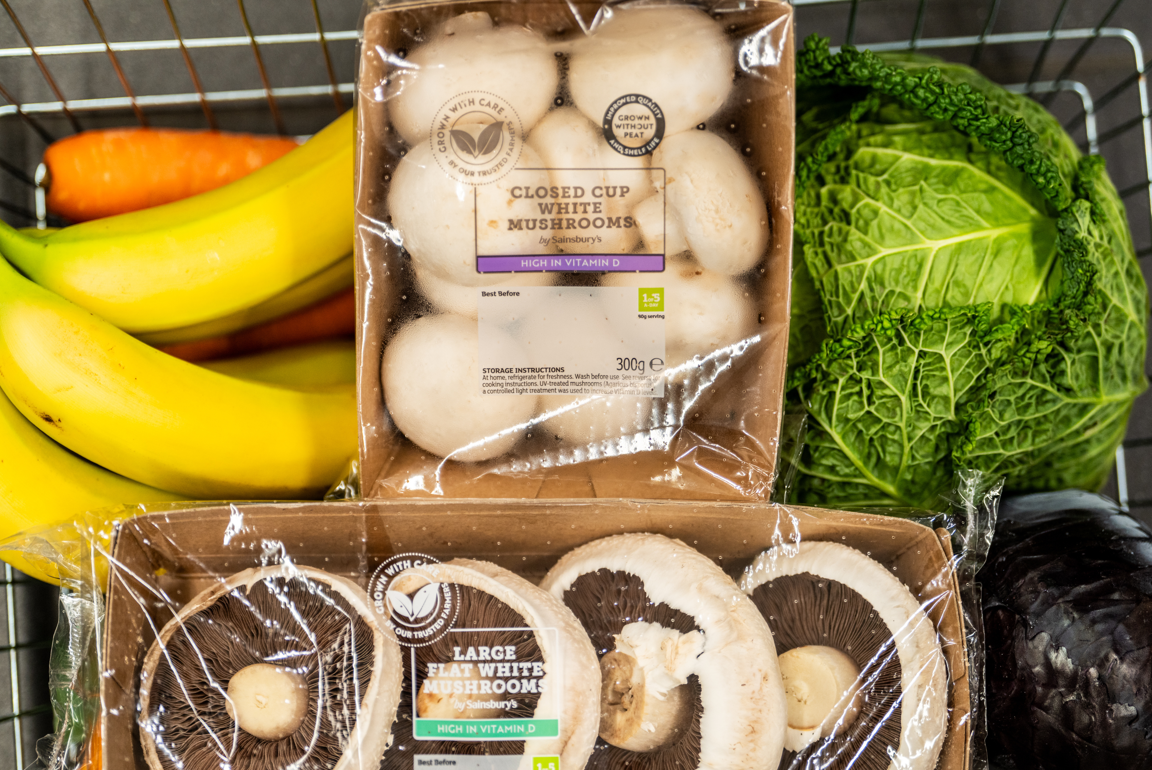

Sainsbury’s has taken a pioneering step towards sustainability by being the first UK supermarket to offer “greener” mushrooms grown without peat, aiming to significantly reduce its environmental impact.
- The supermarket is rolling out firmer and whiter mushrooms that use recycled materials instead of peat, cutting peat use by over 20,000 tonnes annually.
- These innovative mushrooms also boast a longer shelf life compared to their conventional counterparts and are set to be available in 200 stores.
- The initiative aligns with Sainsbury’s commitment to a sustainable food system, as echoed by their director of fresh food, Richard Crampton.
- With growing concerns over peat-related carbon emissions, Sainsbury’s move marks a significant stride towards environmental responsibility in the food retail sector.
In a strategic move towards sustainability, Sainsbury’s has become the inaugural UK supermarket to sell mushrooms grown without the traditional use of peat. This development marks a significant advancement in environmentally friendly food production methods. By employing natural recycled materials and agricultural by-products as a casing layer, the mushrooms not only promise a reduction in carbon footprint but also an innovative production approach spearheaded by producer Monaghan.
The newly introduced mushrooms are distinguished by their firmer texture and whiter appearance compared to those grown in peat. Additionally, these mushrooms are designed to last longer, extending their shelf life to 11 days, a practical improvement over the conventional 10-day lifespan. The initiative will see these mushrooms available across 200 Sainsbury’s stores, representing a transformative change for one-fifth of Sainsbury’s mushroom offerings.
Sainsbury’s director of fresh food, Richard Crampton, highlighted that this change is part of a broader commitment to reducing carbon emissions and protecting nature. He stated, “Our new peat-free mushrooms will help us to get another step closer to achieving these goals in our supply chain.” This effort underscores the retailer’s dedication to facilitating responsible consumer choices without sacrificing quality.
The initiative is timely, addressing escalating concerns regarding carbon emissions from peat use. The National Trust has already limited peat-grown mushrooms in its cafes, citing their significant ecological impact. Peat, although beneficial for its moisture retention and yield efficiency, is detrimental due to its carbon emission potential, often equated to emissions from over 2,600 cars annually. As such, Sainsbury’s adoption of peat-free alternatives is a noteworthy attempt to mitigate these environmental concerns.
While Sainsbury’s leads in this innovative endeavour, it is not alone in experimenting with alternative growing techniques. Waitrose, for instance, explored the use of coconut husk fibre in mushroom cultivation on its Hampshire estate, although it has yet to be commercialised. These ongoing efforts by various retailers are reflective of a broader industry commitment to sustainable horticulture, aligning with government pledges, like the Labour party’s promise to phase out peat by 2028.
Sainsbury’s pioneering peat-free mushroom initiative signifies an influential step towards sustainable agricultural practices within the supermarket industry, emphasising environmental responsibility.

