
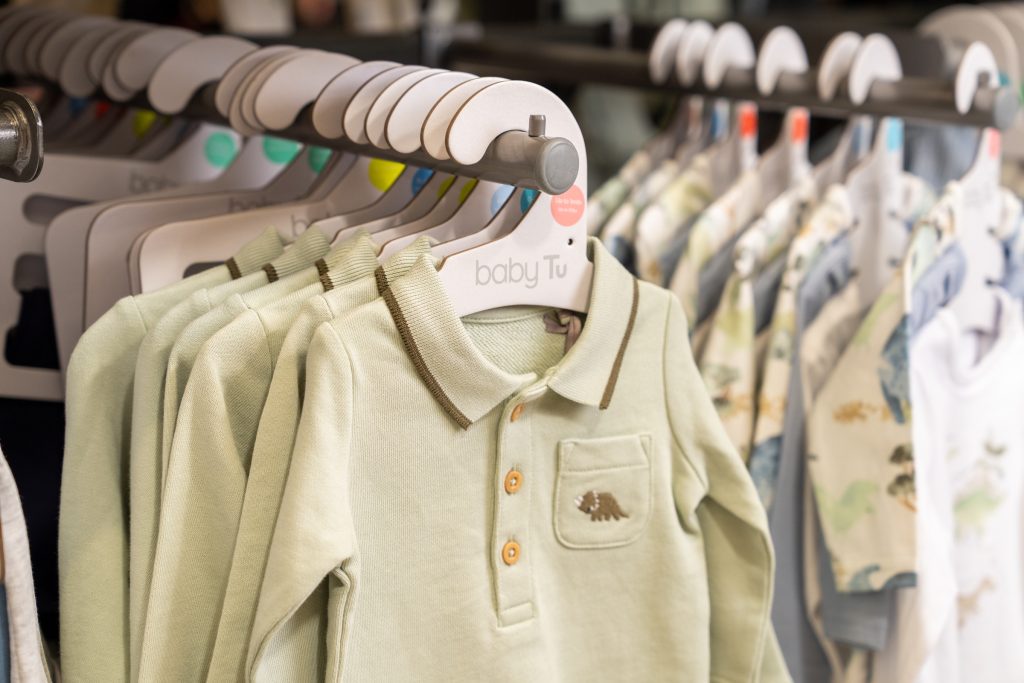

Sainsbury’s has taken a pioneering step in its sustainability journey by introducing cardboard hangers across its Tu Clothing Baby range. This initiative replaces five million plastic hangers, contributing significantly to reducing plastic waste.
Customers can now recycle the new cardboard hangers at home, or utilise Sainsbury’s in-store recycling service for previously used Tu Clothing plastic hangers. This change aligns with Sainsbury’s commitment to environmental responsibility, following a successful trial.
The implementation of cardboard hangers is set to save an impressive 103 tonnes of plastic annually. By switching from plastic to cardboard, Sainsbury’s is not just cutting down on plastic waste but also setting a standard for sustainable practices in the retail industry. This move is a part of a broader effort to enhance environmental responsibility.
In addition to in-store recycling, customers can also recycle the new cardboard hangers at home. This dual approach not only simplifies recycling processes but also engages consumers in the sustainability narrative, reinforcing the significance of their individual contributions.
Moreover, these efforts foster a competitive environment where businesses strive to outdo each other in sustainability, spurring innovation. This has led to various creative approaches, such as implementing pillow packs by Tesco and ocean plastic usage by Lidl, setting new benchmarks in sustainable packaging.
This shift not only reduces plastic use but also encourages other retailers to follow suit, further amplifying the impact of Sainsbury’s environmental initiatives. By consistently integrating sustainable practices, Sainsbury’s is carving a niche as a leader in environmentally conscious retailing.
Moreover, consumer feedback enables Sainsbury’s to refine its approaches and introduce even more effective sustainability measures. Listening to customers ensures that the company’s efforts resonate well with its audience, leading to the successful adoption of green practices.
This momentum reflects a wider industry trend as businesses adapt to meet rising consumer demands for sustainability. Sainsbury’s progress, highlighted by the switch to cardboard hangers, signifies a significant step forward in this green transformation journey.
The supermarket’s leadership in this area not only champions environmental responsibility but also inspires industry-wide change, encouraging other retailers to adopt similar sustainable practices. By continually advancing such initiatives, Sainsbury’s reaffirms its role as a leader in shaping a sustainable future.
Sainsbury’s cardboard hanger initiative embodies a commitment to sustainability and consumer engagement. This innovative approach not only reduces plastic waste significantly but also sets a benchmark for eco-conscious practices in the retail sector.
By making sustainability a core aspect of its operations, Sainsbury’s is not only meeting but influencing consumer expectations and industry standards. Looking ahead, this strategy continues to shape the future of retail towards a more sustainable and responsible model.

