
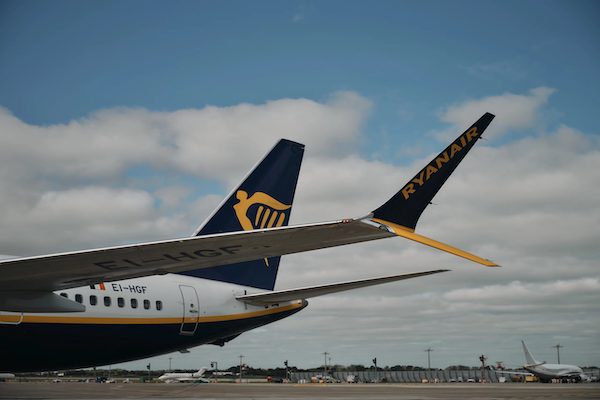

Ryanair posted an impressive 9% increase in passenger numbers in December despite significant headwinds.
The airline navigated the removal of its flights by key online travel agencies and cancellations due to geopolitical conflicts, yet sustained strong operational performance.
Ryanair’s December Performance
Ryanair experienced a remarkable 9% increase in carryings during December, even amidst significant challenges. The airline encountered the removal of its flights from the websites of major online travel agencies, including Booking.com, Kiwi, and Kayak. Nevertheless, Ryanair’s operations demonstrated resilience, carrying 12.54 million passengers at a load factor of 91% over 72,500 flights during the month.
This commendable performance came despite the cancellation of 900 flights, a consequence of the ongoing Israel-Gaza conflict. Ryanair’s annual figures also depicted an upward trend, with a 13% boost in yearly carryings, reaching 181.8 million passengers, compared to 160.4 million in 2022.
Impact of OTA Flight Removal
The removal of Ryanair flights from several prominent OTA platforms has raised questions about potential impacts on the airline’s future load factors and yields. Despite the disruption, Ryanair projected only a minor 1% to 2% impact on short-term load factors in December and January.
The airline speculates that the OTAs’ actions might have been influenced by consumer protection agencies or could be a response to a December Irish High Court ruling. This ruling granted Ryanair a permanent injunction against OTAs for ‘screenscraping’ its website.
Ryanair’s Strategic Response
Ryanair has declared that the recent OTA flight listing removals are not likely to significantly affect their fiscal year 2024 traffic or profit after tax guidance. The airline plans a proactive approach to mitigate any potential short-term yield declines by making more low fares available directly to consumers.
Emphasising the importance of direct bookings, Ryanair intends to lower fares where necessary, encouraging passengers to use their direct website. The airline continues to make its fares available through OTAs like Google Flights, which do not add hidden mark-ups to prices, thereby directing passengers to book directly.
Industry Comparisons and Rival Performance
In comparison, Wizz Air, a rival in the budget airline sector, reported a significant 19% rise in their December carryings. The central and Eastern European airline flew close to five million passengers, marking an 18.8% increase over December 2022.
Wizz Air ended the year with a 32% increase in annual carryings to 60.3 million passengers as they expanded their capacity by 26% to offer 66.4 million seats. The performance of both airlines highlights the competitive dynamics within the budget airline sector.
The Ongoing Dialogue with OTAs
The ongoing dialogue between Ryanair and OTAs about flight listings underscores a key issue in the airline industry. Ryanair’s relationship with OTAs has been contentious, with allegations against OTAs of marking up fares without the airline’s approval.
Ryanair’s decision to limit partnerships to OTAs that do not add extra mark-ups demonstrates its strategic priority of maintaining fare integrity and transparency for its customers.
Ryanair’s initiative to drive direct bookings also aligns with a broader industry trend where airlines are seeking to strengthen direct consumer relationships to avoid dependance on OTA intermediaries.
Looking Ahead
Ryanair looks ahead with confidence despite the recent OTA challenges, setting a reassuring tone for its continued growth and operational stability. By ensuring competitive fare offerings and direct booking incentives, the airline aims to uphold its position as Europe’s leading low-cost carrier.
The resilience demonstrated by Ryanair amidst market disruptions suggests its strategic plans are robust, further setting a positive trajectory for the year ahead.
Ryanair’s December results underscore its operational resilience and strategic adaptability.
The airline’s proactive measures and direct engagement with consumers bolster its position against market uncertainties.
