
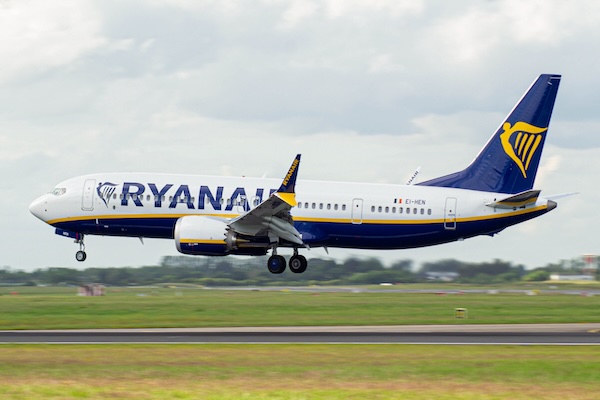

Ryanair recently criticised extensive flight delays arising from European air traffic control (ATC) staff shortages, describing the situation as ‘unacceptable.’
The delays affected nearly 20% of their early morning departures, highlighting systemic issues within the ATC framework.
Impact of Air Traffic Control Delays
Ryanair has expressed significant dissatisfaction with the current state of European air traffic control (ATC) services, attributing the delays of almost 20% of its peak morning flights to this issue. The airline reported that 103 out of 583 scheduled aircraft departures faced disruptions early on Tuesday, largely due to staff shortages within the ATC sector.
Despite the absence of French ATC strikes this summer, Ryanair claims that ATC services continue to fall short of acceptable standards. The problem persists despite flight volumes being approximately 5% below 2019 levels. Ryanair’s statement highlighted that ‘these repeated flight delays due to ATC mismanagement are unacceptable.’
Operational and Financial Repercussions
The ripple effect of these delays not only affects passengers and schedules but also has substantial financial implications for airlines. Ryanair has cited the performance of the Maastricht control centre as a particular concern, attributing over 30% of flight delays in late June to its inefficiencies.
Neal McMahon, Ryanair’s Chief Operations Officer, noted that while Europe’s ATC fees have surged to unprecedented levels over the last three years, the quality of service and staffing levels have deteriorated. Such circumstances amplify operational costs and complicate logistical planning for airlines.
Calls for Systemic Reform
Recent warnings from Eurocontrol shed light on the structural issues within the ATC system. According to the organisation, current delays cannot be mitigated without a comprehensive transformation of air traffic management processes.
Eurocontrol has emphasised the need to reassess the operational framework amid significant pressure to cut costs, which hampers the ability to maintain adequate staffing levels. Their report highlights ‘considerable fragmentation’ in the system that exacerbates these challenges.
Amid these pressures, Eurocontrol urges a strategic rethink to overcome systemic inefficiencies and ensure that ATC services can meet future demands effectively.
European Airlines: A Shared Struggle
Ryanair is not alone in facing these challenges; European airlines collectively experience the repercussions of ATC inefficiencies. The delays have sparked widespread industry frustration as carriers are forced to manage the operational fallout of ATC shortfalls.
In light of these ongoing difficulties, Ryanair has continued its critique of European ATC, advocating for more reliable and consistent service to support the continent’s aviation ecosystem.
The airline reiterated its commitment to minimising passenger inconvenience, despite the operational hurdles imposed by ATC mismanagement beyond its control.
Passenger Experience and Response
Passenger frustration has grown as a result of these delays, exacerbating dissatisfaction and affecting overall travel experiences. Many passengers have expressed concerns over recurring issues that seem beyond the airlines’ purview.
Ryanair, acknowledging these grievances, has extended apologies to affected passengers, emphasising its efforts to manage situations escalated by unreliable ATC services.
Despite the disruptions, Ryanair pledges to continue seeking solutions to enhance service reliability and mitigate impacts on passengers.
Future Outlook for European Aviation
The ongoing ATC challenges raise questions about the future resilience and capability of the European aviation industry. Airlines are urged to continually adapt to evolving structural complexities.
The necessity for regulatory bodies to enforce systemic improvements is increasingly apparent, as stagnation could hinder the industry’s growth potential.
By prioritising technological advancements and strategic reforms, the sector could better navigate challenges and enhance operational efficiency as a whole.
Ryanair’s Position and Industry Implications
Ryanair remains a vocal critic of ATC inefficiencies, illustrating its significant impact on airline operations throughout Europe. Neal McMahon’s insights reflect broader industry concerns over administrative and operational shortcomings within ATC systems.
Addressing these issues is crucial for sustaining competitive and efficient airline services, as persistent delays hinder the overall travel experience.
The airline continues to push for change, aiming to align services with passenger expectations and operational excellence.
Addressing ATC inefficiencies is imperative for improving airline punctuality and passenger satisfaction.
Ryanair calls for urgent reforms to enhance operational reliability across the European aviation sector.

