
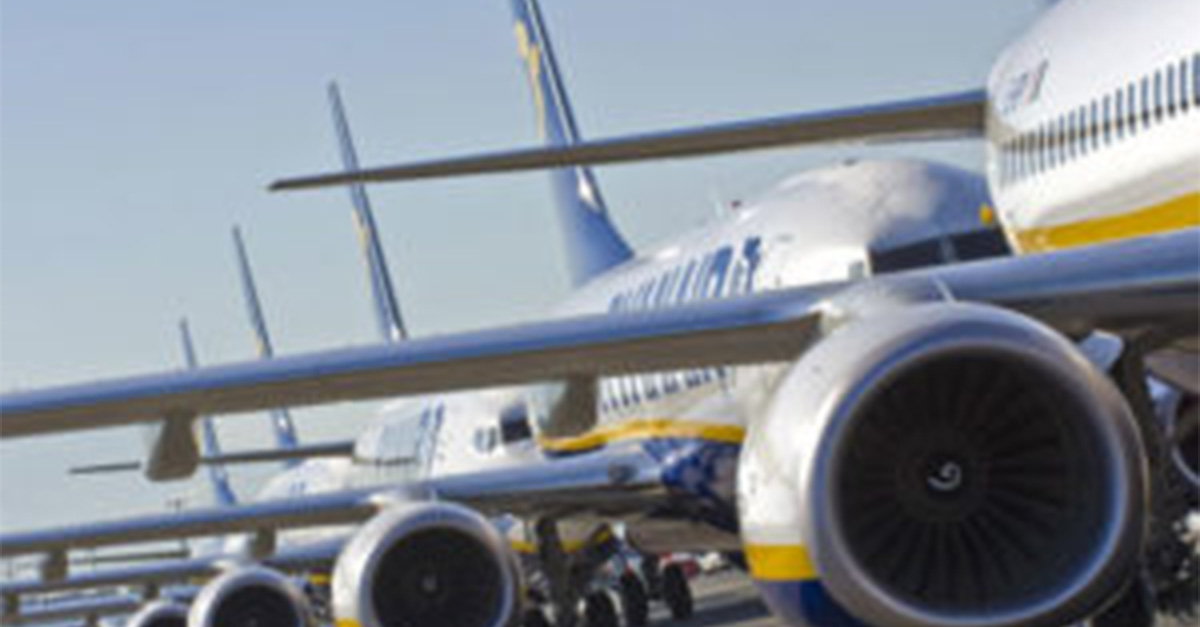

Ryanair, a leading European airline, has set a new record in August, achieving unprecedented passenger numbers. The airline transported 20.5 million passengers, marking an 8% increase from last year.
Record-Breaking Passenger Numbers
Ryanair, Europe’s largest low-cost airline, achieved a milestone in August by transporting a record 20.5 million passengers. This achievement marks an 8% increase compared to the same month in the previous year. Despite this substantial growth in passenger numbers, the airline reduced its fares by 5% in a strategic move to boost demand, demonstrating an agile response to current market conditions.
Financial Implications and Market Strategy
Group Chief Executive Michael O’Leary acknowledged that the airline is unlikely to see fares return to 2023 levels before summer 2025. Despite generating more passenger traffic, the lower fare strategy has impacted shareholder returns. However, O’Leary stressed that lower fares were a necessary measure to maintain Ryanair’s competitive edge and stimulate consumer interest amid economic pressures. The airline’s load factor was consistently high, at 96% for August, mirroring the same period last year.
Comparative Performance of Competitors
In the broader airline industry, Ryanair’s competitors also noted a surge in passenger numbers. Budget airline Wizz Air transported a notable 6.2 million passengers in August, marking a 1% year-on-year increase. Despite a reduction in operated seat capacity due to operational challenges, Wizz Air sustained a robust load factor of 95.4%, demonstrating its ability to draw travellers even under constraints. The airline’s annual figures reflected an impressive 9.6% growth in passenger numbers, underscoring its market resilience.
Innovative Approaches in the Industry
Wizz Air’s introduction of an ‘All You Can Fly’ annual membership scheme underscores a shift towards innovative customer engagement strategies. The rapid sell-out of this offer, within 48 hours of its launch, reflects a strong consumer appetite for flexible travel options. Another low-cost carrier, Norse Atlantic, also celebrated record performance in August, with a 26% year-on-year increase in passengers transported and an 87% load factor.
Norse Atlantic’s Chief Executive, Bjorn Tore Larsen, attributed this success to the airline’s value proposition and dedicated team. He highlighted that Norse Atlantic had already surpassed its 2023 segment sales by the end of August 2024, indicating a robust recovery and growth trajectory within the competitive landscape.
Challenges and Outlook
The competitive landscape remains challenging, with airlines needing to balance fare competitiveness and yield management sharply. Ryanair’s strategic decision to lower fares is indicative of the pressure to maintain market share amidst rising consumer expectations for affordable travel options.
O’Leary’s remarks suggest that while lower fares may pressurise short-term profitability, such strategic pricing is central to sustaining long-term growth in passenger volume. Ryanair’s sustained high load factors reinforce the effectiveness of this approach, even as airlines navigate post-pandemic recovery dynamics.
Industry-Wide Growth Trends
The airline industry’s growth is not isolated to Ryanair, as evident from the performance of other carriers. Wizz Air’s growth trajectory, complemented by strategic innovations, underscores broader recovery patterns in the aviation sector. Similarly, Norse Atlantic’s performance reveals an industry-wide shift towards increasing load factors and passenger numbers, suggesting a sustained demand for air travel.
Despite operational challenges, airlines are leveraging innovative solutions to engage consumers and enhance value propositions, thereby ensuring robust recovery paths post-pandemic.
Concluding Thoughts
Ryanair’s record passenger numbers in August, alongside competitive fare strategies, highlight the dynamic changes within the aviation sector. The airline’s approach underscores a proactive strategy to navigate economic pressures while maintaining a robust market position.
Ryanair’s strategic fare reduction and record-breaking passenger numbers demonstrate its agile response to market challenges, reaffirming its position as a key player in the airline industry.

