
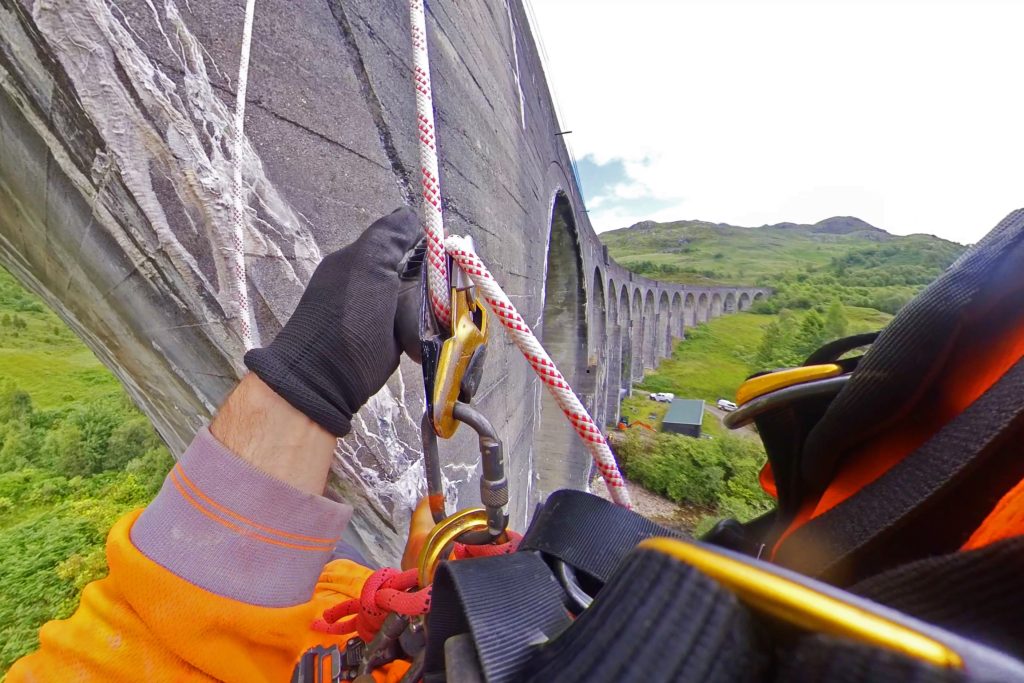

Rope access is revolutionising engineering restoration at iconic landmarks.
- The Glenfinnan Viaduct is undergoing essential repairs by AmcoGiffen for Network Rail using this innovative method.
- Chosen for its efficiency and lower environmental impact, rope access allows access to otherwise unreachable areas.
- Restoration includes assessing, strengthening, and repairing the viaduct’s concrete structure.
- The £3.4M project highlights the increasing importance of sustainable engineering solutions.
In a significant endeavour, rope access engineers are currently engaged in the restoration of the historic Glenfinnan Viaduct. Managed by AmcoGiffen for Network Rail, this crucial task involves a comprehensive assessment of the viaduct’s condition and structural integrity. Subsequently, the engineers are tasked with executing concrete repairs and enhancing measures beneath the tracks to ensure the stability of the stone ballast.
The decision to utilise rope access rather than traditional scaffolding was driven by its superior efficiency and reduced ecological footprint. This method provides engineers with the necessary reach to work on areas that are otherwise inaccessible, ensuring minimal intervention in the surrounding environment.
Ground-level operations are addressing the impact of the River Finnan on the viaduct’s piers. Network Rail underscores the urgency of these protective measures, particularly as climate change contributes to increasingly warmer and wetter weather patterns, which exacerbate erosion risks.
The Glenfinnan Viaduct, a category A listed structure, stands as Scotland’s longest concrete railway bridge at 381 metres. Its historical significance, compounded by its role in the Harry Potter film series, attracts nearly 200,000 tourists annually. This tourist interest generates an estimated £35 million each year, underlining the viaduct’s dual role as both an engineering marvel and a cultural icon.
Originally constructed between 1897 and 1901, the viaduct has faced various challenges. In 2020, efforts began to mitigate landslide and rockfall threats. These measures included the removal of loose vegetation and the installation of rock netting. Additionally, boundary fences were erected to safeguard visitors along the tourist paths.
Recent investigations, prompted by freedom of information requests, have revealed reports dating back over five years regarding the viaduct’s safety. These identified multiple fractures within the bridge, prompting Network Rail to plan urgent repairs. An application for listed building consent was submitted to Highland Council to address these structural concerns.
Alan Ross, Network Rail’s Director of Engineering and Asset Management, has expressed pride in the ongoing restoration efforts. Emphasising the importance of the viaduct’s heritage, Ross noted that rope access allows for more efficient repairs without compromising the scenic views cherished by the vast number of visitors.
The Glenfinnan Viaduct restoration exemplifies sustainable and innovative engineering practices, ensuring its structural preservation and enduring legacy.

