

Basecamp Research has recently secured $60 million to advance its groundbreaking AI-driven exploration of biological systems. This funding marks a pivotal moment in integrating biodiversity with technological innovation.
With significant backing from renowned investors, Basecamp Research is poised to intensify its efforts in decoding nature’s complexities. This initiative reflects a renewed commitment towards transforming the biopharma landscape through pioneering AI strategies.
Investment Details
The recent $60 million Series B financing round for Basecamp Research underscores the increasing intertwining of artificial intelligence with life sciences. Led by Singular, itself known for investments in Soda and Synthflow, this round saw participation from industry luminaries such as André Hoffmann, Vice-Chairman of Roche, and Feike Sijbesma, former CEO of DSM. The influx of capital is poised to significantly expand Basecamp Research’s data-driven approach to biological systems design, enhancing its foundational dataset which surpasses public pharma databases by 100-fold.
Collaboration with Liu Lab
In the realm of genetic medicines, Basecamp Research’s partnership with Dr. David R. Liu’s lab at the Broad Institute signifies a monumental leap. This collaboration aims to advance new strategies in programmable genetic medicines, potentially revolutionising treatments across a spectrum of diseases. The synergy between Basecamp’s AI capabilities and the cutting-edge research at the Liu Lab is anticipated to pave the way for groundbreaking innovations in genetic therapy.
Insights from Investors
Investors are heralding Basecamp Research as a pivotal player in life sciences, with S32’s Andy Conrad highlighting its novel approach to tackling unsolved questions in biopharma. Raffi Kamber of Singular echoed this sentiment, praising Basecamp’s AI models that provide unprecedented understanding of biological complexity. This validation from investors not only strengthens the company’s position in the sector but also solidifies its potential to redefine the biopharma landscape.
Pioneering AI in Biotech
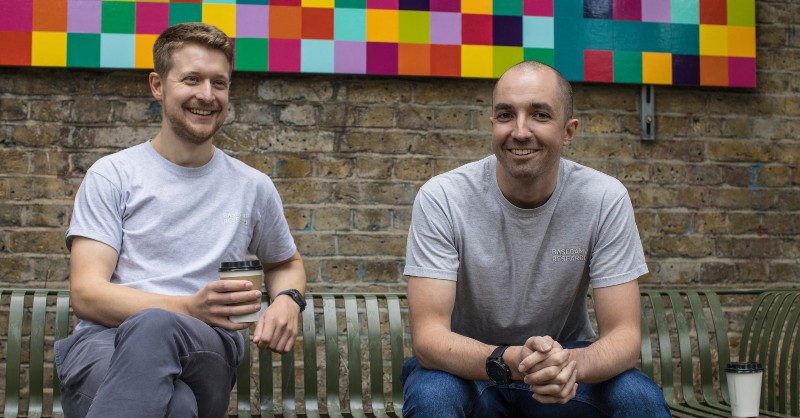
Basecamp Research stands at the forefront of employing AI to decode biodiversity for the design of biological systems. Founded by Glen Gowers and Oliver Vince, the company utilises BaseGraph, a pioneering AI platform enabling the design of proteins tailored for specialised industrial, therapeutic, and diagnostic applications. By leveraging a high-resolution map of global genetic diversity, Basecamp bypasses traditional and costly evolutionary methods, dramatically increasing efficiency and precision in protein design. “We are pushing past AI’s limits in biological design,” affirms Dr. Glen Gowers, underscoring the transformative potential of their technology in shaping the future of biotech.
Strategic Focus on Biodiversity
The strategic focus on biodiversity distinguishes Basecamp Research from its peers, potentially outmaneuvering competitors like DeepMind’s AlphaFold 2. By harnessing under-explored biodiversity data, the company provides cutting-edge solutions that not only advance drug discovery but also champion sustainability. Central to their operations is the extensive use of AI to penetrate untouched biological data, enhancing their pioneering position in transforming biological research and development.
Future Outlook and Expansion
With the injection of funds, Basecamp Research plans to escalate the breadth and depth of its operations, aiming to double down on its robust data collection processes. The company is also set to fortify its management with Anupama Hoey as Chief Commercial Officer, whose extensive track record in biopharma spans over 20 years. Her experience is expected to play a crucial role in navigating Basecamp toward new commercial and strategic horizons, ensuring sustained development and innovation.
Basecamp Research stands at the cusp of a biotechnological revolution, poised to reshape biological systems design with AI.
The company’s strategic advancements and collaborations signal a promising future in the life sciences sector, potentially heralding a new era of innovation and sustainability.

