

The Civil Aviation Authority (CAA) has introduced a new policy enabling drones to operate beyond visual line of sight (BVLOS) for infrastructure inspection and site security.
- Traditionally restricted to trials, the new rules allow drones to operate in atypical air environments (AAE), areas with fewer conventional aircraft.
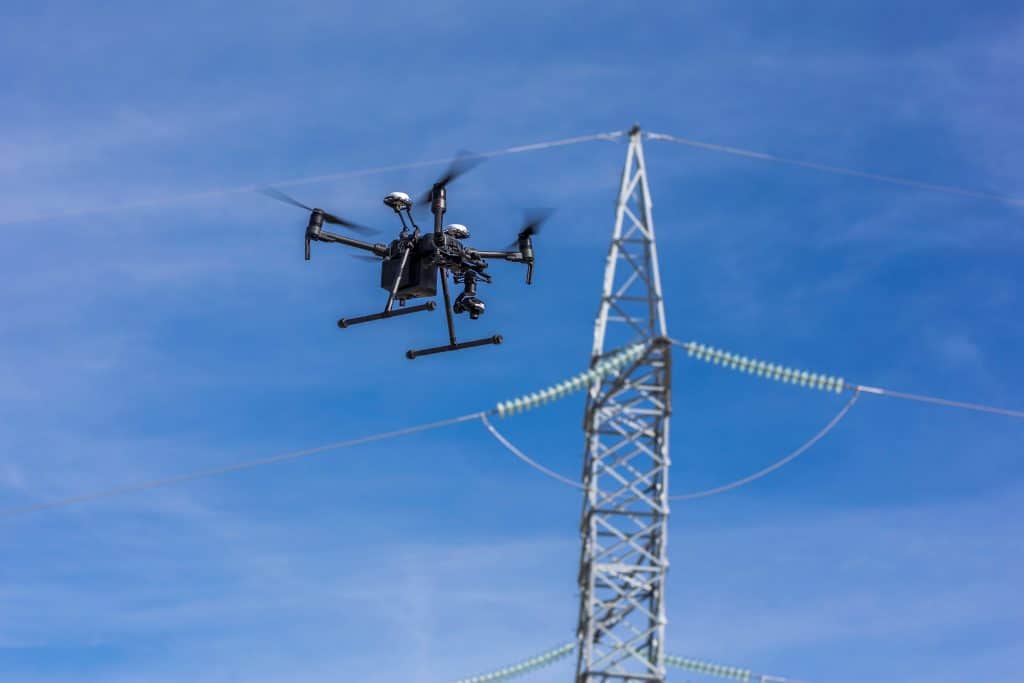
- Drones offer efficient inspection solutions for power lines, wind turbines, and enhanced site security as ‘flying guard dogs’.
- The phased policy approach includes collaborations with industry leaders like sees.ai to ensure safety and scalability.
- This development marks a milestone in integrating drones into everyday operations, with significant benefits across multiple sectors.
The UK’s aviation regulator, the Civil Aviation Authority (CAA), has announced a transformative policy to allow drones to operate beyond the visual line of sight (BVLOS). This change is primarily aimed at enhancing infrastructure inspection and site security, a move that represents a significant evolution in how drone technology can be integrated into commercial and industrial practices.
Previously, the use of BVLOS drone flights was heavily restricted within the UK, only permitted under controlled trial conditions. Notable examples included AmeyVTOL’s initial trial in 2020 and Network Rail’s record-breaking 25km flight over East West Rail in 2021. These instances required extensive preparation, limiting the potential for widespread adoption.
The CAA’s new policy addresses these limitations by defining ‘atypical air environments’ (AAE). These are zones where the presence of conventionally piloted aircraft is minimal due to the surrounding infrastructure. This strategic categorisation allows drones greater operational scope for tasks traditionally hindered by flight path restrictions.
Moreover, drones, under the new policy, are poised to play a crucial role in the inspection of power lines and maintenance of wind turbines. Their capability to function as ‘flying guard dogs’ offers enhanced security measures for various sites, reflecting the broadening scope of drone applications.
The progression towards routine BVLOS operations is managed through a phased approach. The programme is initially focusing on collaborative efforts with industry pioneers such as sees.ai, which, together with National Grid Electricity Transmission, aims to leverage drones for aerial inspections and rapid response tasks. This strategic partnership highlights a shift towards modernising network management across expansive infrastructures.
Key figures in the industry have underscored the importance of this policy. Sophie O’Sullivan, Director of Future of Flight at the CAA, emphasised the dual focus on enhancing drone capabilities while ensuring safety and societal benefits. Similarly, sees.ai CEO John McKenna and National Grid’s Kathryn Fairhurst have hailed the policy as a pivotal step towards integrating drones into public airspace, complementing existing tools and processes.
The CAA’s new policy marks a decisive step forward in the integration of drone technology into infrastructure management, promising enhanced efficiency and safety.

