
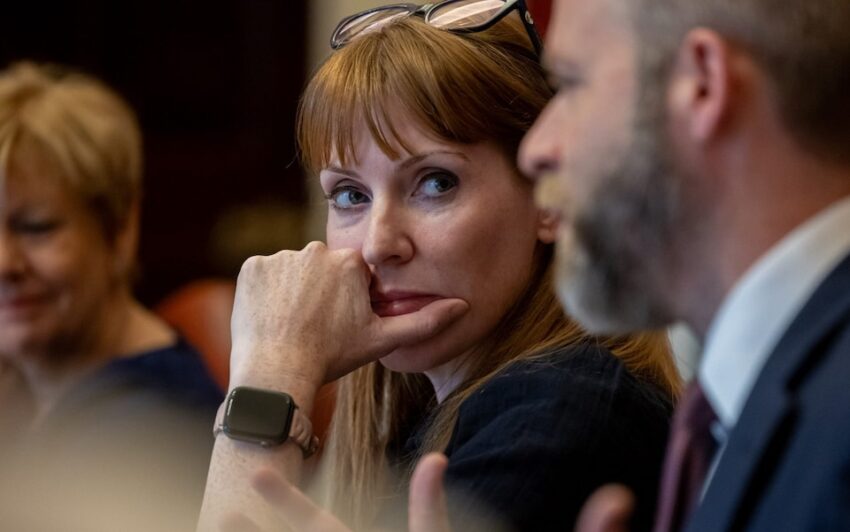

Angela Rayner’s clash with Business Secretary Jonathan Reynolds over proposed workers’ rights reforms highlights significant tensions within Labour’s ambitions.
Their debate primarily revolves around the duration of probation periods, with Rayner advocating for immediate employment rights, while Reynolds suggests a longer period.
Debate on Probation Periods
The crux of the disagreement lies in the implementation of probation periods in the new system, part of Labour’s broader initiative to overhaul workers’ rights within the first 100 days of government. Rayner is advocating for employees to gain full employment rights, including the ability to bring unfair dismissal claims, after a short probation period. At present, employees must complete at least two years of service to qualify for such protections.
Reynolds’ Perspective
In stark contrast, Reynolds supports extending the probation period to up to nine months. He argues this duration provides a fair balance between ensuring employee rights and addressing business needs. This divergence in viewpoints has led to what a Whitehall source described as an “intense” debate.
Business Community Concerns
The proposed reforms have sparked mounting discontent among business leaders. They argue that removing or significantly shortening probation periods could deter hiring and stifle growth. Probation is viewed as a critical period for assessing new hires. Concerns have been raised that these changes could lead to a surge in costly and time-consuming unfair dismissal claims.
A survey conducted by the Confederation of British Industry (CBI) underscores these concerns. 62% of members, including major companies like AstraZeneca, Drax, and PwC, believe the UK is becoming a less attractive place to do business and invest. The impending job market reforms are cited as the primary reason for these sentiments.
Broader Labour Party Dynamics
This disagreement between Rayner and Reynolds is not an isolated incident. It follows other internal divisions within Labour’s cabinet, such as the recent controversy over scrapping the winter fuel allowance. Health Secretary Wes Streeting recently voiced displeasure with this policy, highlighting broader tensions within the party.
The Labour Party faces a challenging balancing act between reform ambitions and economic concerns. With ministers pledged to introduce the employment rights bill within the first 100 days of taking office, it remains “unclear” if a consensus on day one rights will be achieved in time.
Labour’s Pledged Reforms
Rayner’s proposed reforms are part of Labour’s manifesto commitments to strengthening workers’ rights. These include ending zero-hour contracts, banning “fire and rehire” practices, raising the minimum wage, and enhancing the right to request flexible working. The aim is to provide basic individual rights from the first day of employment, ending the current two-year wait for protections against unfair dismissal, parental leave, and sick pay.
Joint meetings have been held with CEOs, unions, and lobby groups to outline the proposed changes. Despite these consultations, business leaders have expressed significant concerns about the potential impact on hiring practices and business growth.
The Institute of Directors’ economic confidence index supports these concerns, revealing a sharp decline from +7 in July to -12 in August. Recent news about employment rights has been a significant factor in this downturn, reflecting the apprehensions among business leaders.
Government’s Stance
A government spokesman reiterated that the main priority remains economic growth and wealth creation, stating, “Our plan for better workers’ rights is designed to help people into secure work and lead to a more productive workforce.” This highlights the ongoing efforts to balance improving workers’ rights while supporting the business environment.
As Labour navigates these complex negotiations, the outcome will be closely monitored by both employees and employers, with significant implications for the UK’s labour market and economic outlook.
The outcome of the clash between Rayner and Reynolds over workers’ rights reforms remains uncertain, with significant implications for both employees and businesses. The resolution of this debate will be closely watched, as it will determine the future landscape of the UK labour market.

