
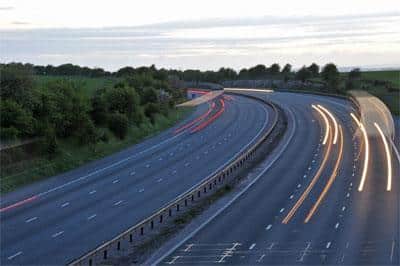

One year after halting new smart motorway projects, the RAC demands the reinstatement of hard shoulder lanes, citing increasing safety concerns.
- Fatal accidents on smart motorways have raised alarms, prompting the government to pause 11 projects and abandon three more.
- Despite investments in radar technology and emergency areas, public confidence in smart motorways remains low.
- A National Highways report indicates a threefold increase in the dangers of breakdowns on motorways without hard shoulders.
- 40% of courier firms identify smart motorways as the greatest health and safety risk, raising substantial concerns.
The call for reinstating hard shoulder lanes comes from the RAC, a prominent motoring organisation, in light of persistent safety issues surrounding smart motorways. One year post the government’s decision to halt new projects due to safety apprehensions, the RAC’s demand reflects growing public disquiet. Fatal incidents involving stationary vehicles have heightened scrutiny over these roads, leading to the suspension of multiple schemes.
The government’s cancellation of smart motorway projects, initially explained by financial constraints, now underscores persistent public mistrust. Initially, 11 projects were delayed and three were abandoned, with hopes to gauge public sentiment over time. Nevertheless, the 400 miles of existing smart motorways remain unchanged with no reintroductions of hard shoulder lanes.
The December report by National Highways presented alarming statistics, highlighting the increased risks on roads lacking hard shoulders. The report claimed a threefold increase in the lethality of breakdowns and a 10% increase in serious injury incidents. These findings have fortified arguments for restoring the hard shoulder, as current safety measures appear insufficient.
Simon Williams, head of policy at the RAC, articulated concerns about the financial inefficiency of current safety investments in smart motorways. While significant funding has been allocated for new technology and emergency areas, Williams suggests that reallocating such funds towards restoring the hard shoulder could prove more effective. His statements reflect a broader sentiment against the premature rollout of all-lane running motorways.
In a recent debate in the House of Commons, Sarah Champion, MP, echoed these concerns, pointing out the grave risks of ‘cost-saving’ smart motorway expansions. Her comments align with National Highways data, identifying smart motorways as disproportionately hazardous, especially for broken-down vehicles. Moreover, a survey highlights that 40% of courier firms consider these roads a primary safety threat, surpassing concerns of driver fatigue.
The push for hard shoulder reinstatement gains traction amid rising safety concerns on smart motorways.

