
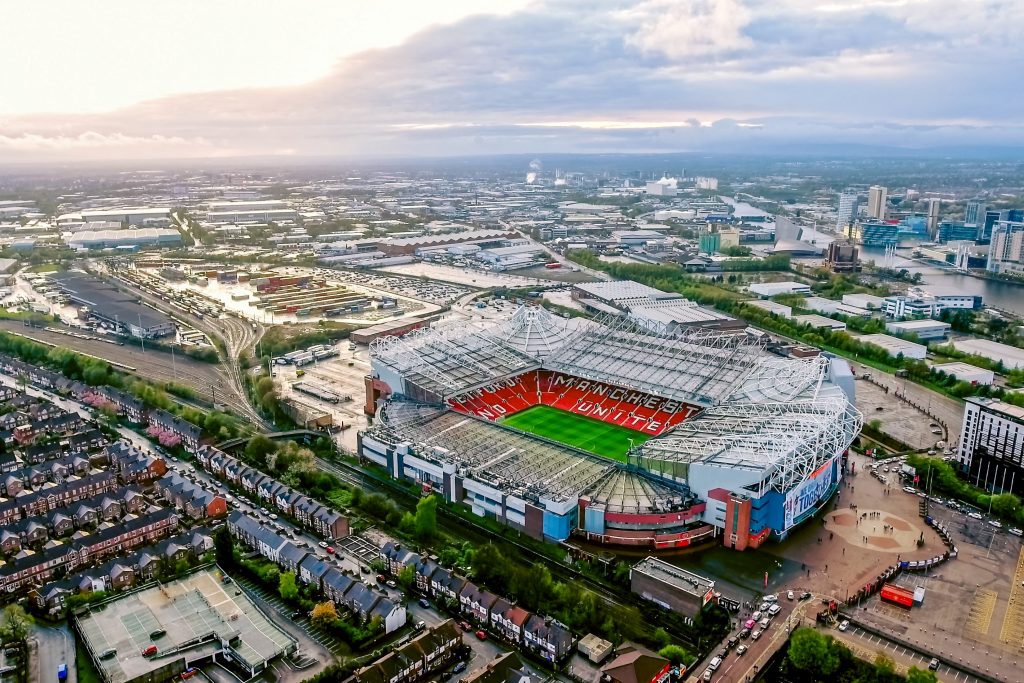

Manchester United’s £2bn stadium development in Trafford has reached a significant milestone with local partnerships.
- The club’s task force recommends building a new stadium to enhance fan experience and community benefits.
- Key local authorities have joined forces to develop a vision for the area’s socio-economic regeneration.
- A new advisory team will sync plans with existing regional initiatives, aiming to create a world-class venue.
- Leaders highlight the project’s potential to link with Greater Manchester’s broader growth and innovation strategies.
Manchester United’s plans for a £2bn stadium in Trafford have advanced significantly as the club secured crucial partnerships with Trafford Council and the Greater Manchester Combined Authority. This collaborative effort is set to drive growth and regeneration in the Trafford Wharfside area, aligning with the club’s ambitious vision for a world-class football stadium.
In July, Manchester United’s Old Trafford Regeneration Task Force recommended the construction of a new stadium instead of renovating the existing Old Trafford. This recommendation was made to transform the match-day experience for fans and provide meaningful benefits to the surrounding community. By opting for a new stadium, the club aims to enhance both the local economy and social fabric.
Crucial to the development is the appointment of a new advisory team led by an independent director. This team will work on creating a comprehensive vision for the Old Trafford area, ensuring synchronisation with the existing Trafford Wharfside masterplan and the task force’s objectives. The advisory team will also offer technical and project management support to Manchester United, Trafford Council, and GMCA as planning efforts gain momentum.
The potential of the project extends beyond football infrastructure. Task Force chair Lord Coe expressed that the new stadium could link the Trafford Wharfside regeneration with Media City in Salford and Greater Manchester’s growth initiatives, creating a project of national significance. This collaboration aims to unlock the region’s potential and expand social and economic benefits.
Mayor of Greater Manchester, Andy Burnham, praised the city’s football legacy, emphasising the opportunity to shape Old Trafford’s future carefully. With the expertise and vision provided by the partnership, the redevelopment is expected to bring considerable benefits to the community, fans, and the wider northern economy.
Council executive Liz Patel outlined ambitious plans for the area, including the development of up to 5,000 new homes, retail opportunities, and better connectivity with Salford and Manchester city centre. As a host to Manchester United, the area attracts numerous visitors, and this transformation is expected to make Trafford an attractive investment destination.
The new stadium, expected to seat around 100,000 fans, will become the largest in the UK. Positioned on land adjacent to Old Trafford, the construction will allow the existing stadium to remain operational until project completion, estimated within six years. Public-private partnerships are among the potential funding avenues being explored to realise this vision.
While Manchester United plans to develop the new stadium, it is also committed to preserving Old Trafford’s legacy by reducing its capacity to about 30,000 seats for the women’s team and academy, thus safeguarding its historical significance. The club is drawing inspiration from successful projects like Los Angeles’ SoFi Stadium and Real Madrid’s Santiago Bernabéu.
Engagement with stakeholders, fans, and residents continues, ensuring that the community’s aspirations are well represented in the final recommendations of the task force. The avenue of public consultations underlines Manchester United’s commitment to aligning the project outcomes with community needs.
Manchester United’s development of a new stadium, driven by strategic partnerships and community engagement, promises a transformative impact on the Trafford region.

