
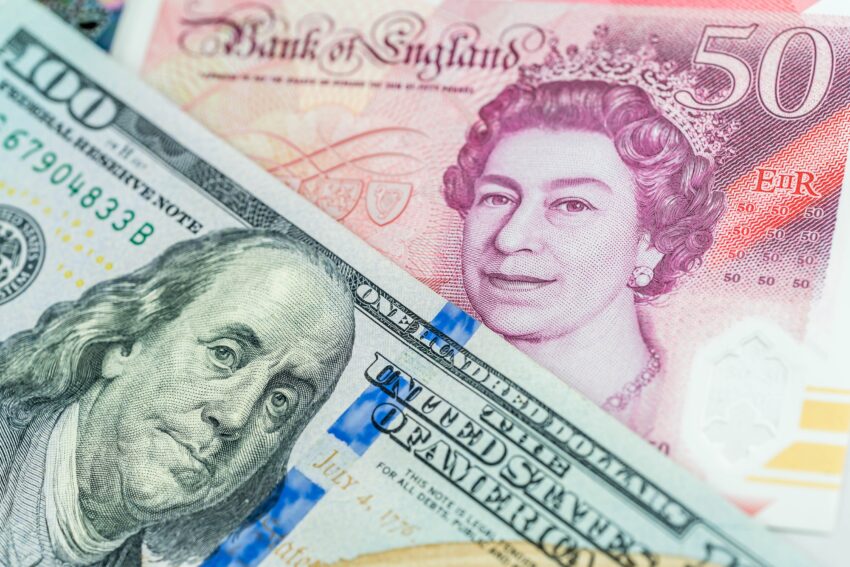

The pound sterling soared to its highest level in two years, achieving $1.33 following the Bank of England’s decision to hold interest rates steady. This unexpected move triggered substantial market reactions.
Analysts forecast continued gains, though concerns about the UK economic outlook persist. The monetary policy decision has substantial implications for various economic sectors.
Sterling’s Rise Amid Steady Rates
Sterling rose by as much as 0.7% against the dollar, hitting $1.331 following the Bank’s decision. The currency also gained 0.3% against the euro, reaching €1.19, its strongest level since July. This surge occurred after the US Federal Reserve implemented a larger-than-expected half-point rate cut.
High interest rates generally bolster a currency’s value by attracting investors seeking better returns. Despite the UK’s slower cutting cycle compared to the US and the eurozone, traders expect just one more rate cut from the Bank of England in November, keeping the pound competitive.
Market Reactions and Predictions
Analysts at Nomura predict that sterling could hit $1.35, a level not seen since January 2022. Despite inflation falling to 2.2%, close to the Bank’s 2% target, the Monetary Policy Committee (MPC) indicated it would gradually remove policy restraints, with inflation expected to rise to 2.5% by year-end.
The decision to pause rate cuts has impacted UK government bonds, driving 10-year gilt yields up by four basis points to 3.88%. Meanwhile, the FTSE 100 and FTSE 250 indices both rallied, closing up 0.9% and 1.6%, respectively.
Potential Risks and Future Outlook
Nick Andrews, senior FX strategist at HSBC, cautions that sterling’s gains might be temporary. He predicts that the pound could weaken as the Bank of England may eventually need to cut rates more aggressively than currently anticipated.
“The outlook for the UK economy may weaken relative to the US, which will weigh on the pound/dollar,” Andrews commented.
While the immediate market reaction has been positive, sustained economic growth remains uncertain given potential rate cuts and other external factors influencing the economy.
Bond Market and Inflationary Trends
The Bank of England’s decision to maintain current interest rates has had a notable impact on the bond market. The yields on 10-year gilts increased by four basis points to 3.88%, suggesting investor concerns about future economic stability.
Despite inflation nearing the Bank’s 2% target, a gradual policy loosening is expected, with inflation predicted to rise to 2.5% by the end of the year. This could invite further scrutiny from investors and policy-makers alike.
Equity Market Reactions
The FTSE 100 and FTSE 250 indices have responded positively, closing up by 0.9% and 1.6% respectively. This indicates a level of confidence among investors despite the cautious outlook on interest rates.
This rally reflects investor sentiment that the Bank of England’s decision provides a stable economic environment for equities to perform. However, the long-term effects on the equity market remain to be seen.
Comparative International Context
The pound’s performance is particularly noteworthy when compared to other major currencies. While the Bank of England has held its rates steady, the US Federal Reserve’s unexpected half-point rate cut highlights differing economic strategies.
These contrasting approaches underline the complexities and uncertainties of the global economic landscape, where national policies can have far-reaching impacts on currency values and investor confidence.
Conclusion
In conclusion, the pound’s two-year high is a significant milestone, influenced by the Bank of England’s steady interest rates. However, this achievement is set against a backdrop of potential economic volatility.
Future economic stability will depend on a myriad of factors, including domestic policy decisions and international economic trends. The cautious optimism seen in the markets today reflects a nuanced but uncertain outlook for the UK economy.
The pound’s remarkable rise to a two-year high demonstrates significant investor confidence following the Bank of England’s decision to hold interest rates steady.
While both opportunities and risks accompany this development, the cautious approach by the Bank of England signals a careful balance is being sought to foster economic stability. Future market responses will be closely monitored.

